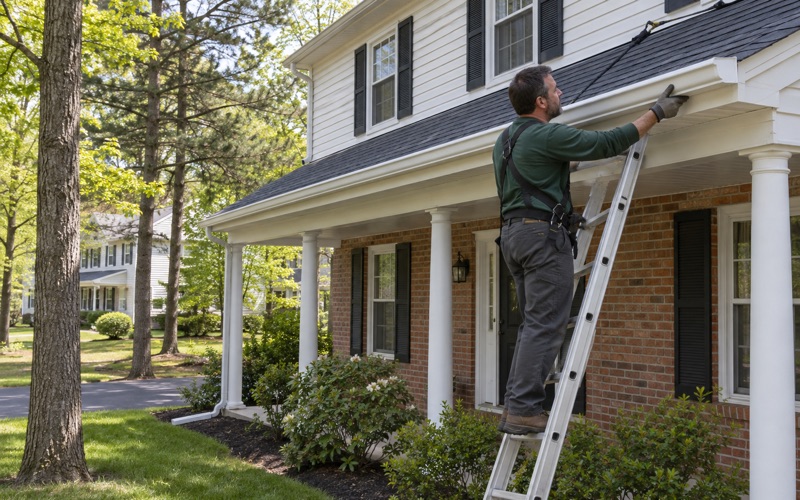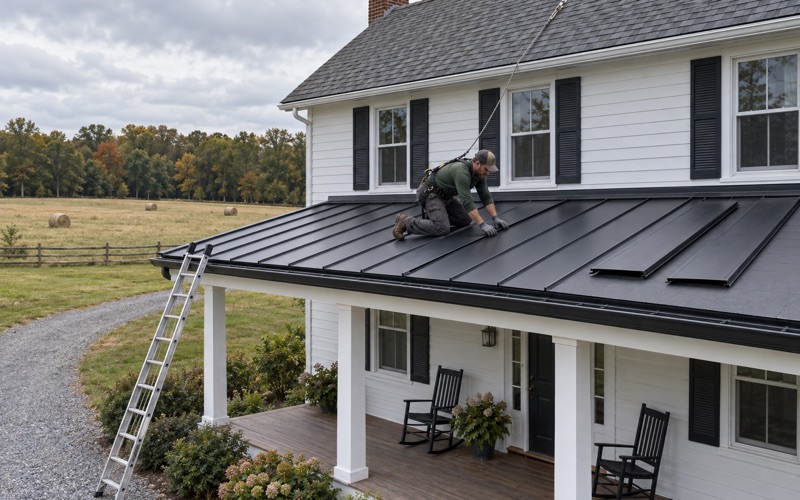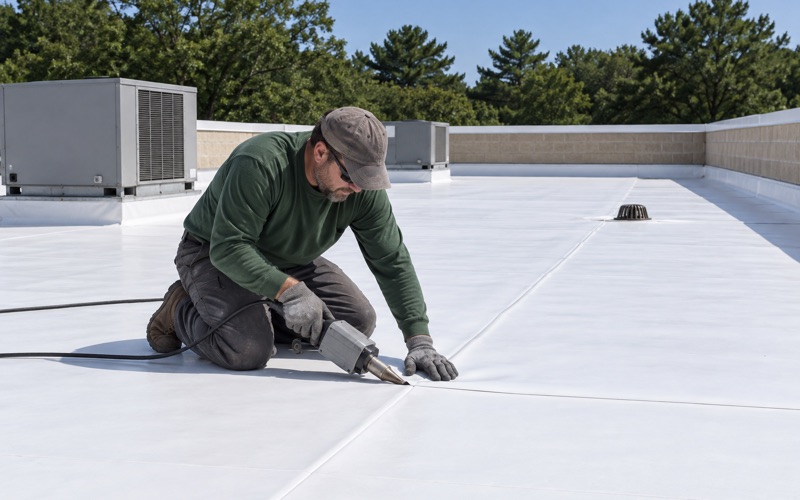
Howell Quality Roofing has spent more than 20 years on roofing in Wanamassa and across Monmouth County, and our work here starts with a plain question: where does the water go once it leaves the shingles? On a house near the lake, that answer matters as much as the roof covering itself. We repair, replace and re-gutter detached homes throughout this part of Ocean Township.
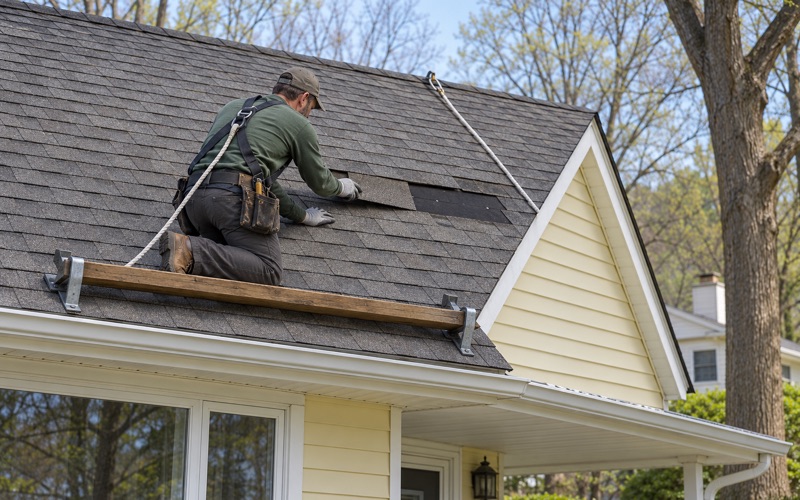
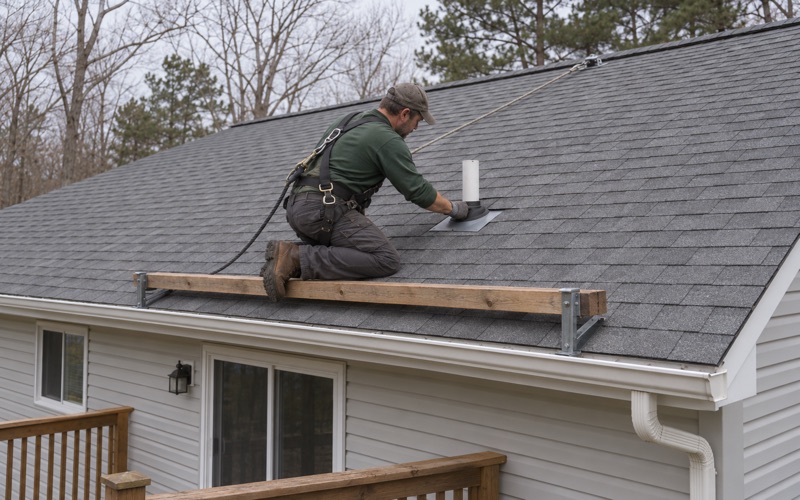
Before we price anything, we tell you straight whether the roof can be repaired, and replacement only comes up when a repair would not hold. Every leak call includes a trip into the attic as well as onto the roof, so we find the point where water actually enters rather than guessing from a ceiling stain. That habit saves owners money on houses where a gutter, not a shingle, turns out to be the real culprit.
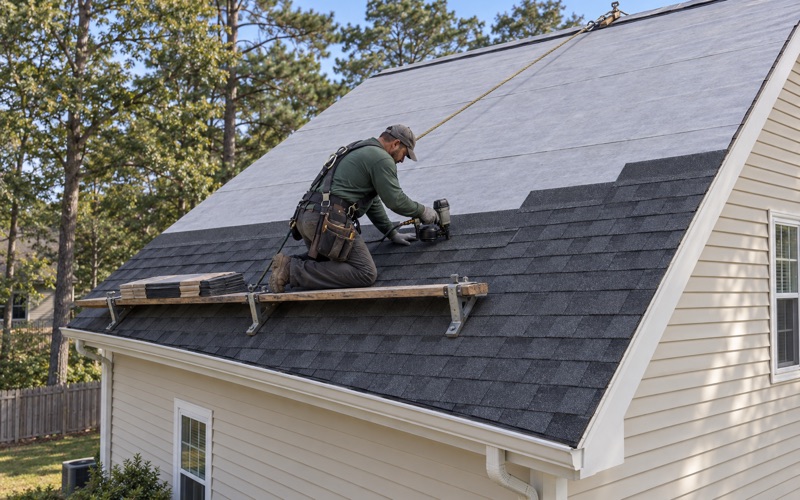
When replacement is the right call, our written scope breaks out tear-off, decking, underlayment, flashing, ventilation and gutters as separate lines. You can lay our estimate beside anyone else’s and compare it item by item. Contracts follow New Jersey’s home improvement rules, including the three-day cancellation notice.
Seven Inches in an Afternoon: September 29, 2023
On September 29, 2023, a plume of tropical moisture pushed bands of extreme rain from New Jersey into New York and southern New England. The National Weather Service’s Middle Atlantic River Forecast Center later published a preliminary flood summary, and at the top of its 48-hour rainfall table sat Ocean Township, Monmouth County, at 7.88 inches, tied with Long Branch. Sea Girt came in at 5.68 inches and Wall Township at 4.80, so the heaviest totals in the region landed on the township that governs Wanamassa.
How fast it fell
The total is only half the story. The Deal Lake Commission’s chair wrote that same day that the seven-inch dump happened mostly between 10 a.m. and 2 p.m., with at least four to six inches falling in that window. He described most streets as running like rivers and noted that homes and businesses were flooded.
Rain at that rate is a different test than a slow, all-day soaker. A sound roof sheds water at almost any rate, but the gutters, leaders and outlets below it have a fixed capacity, and four hours at that intensity can exceed it.
What the record does and does not say
The summary does not name the gauge or estimate point that produced the 7.88-inch reading, so we do not pin that figure on any particular street. We also found no reports of roof or gutter damage in Wanamassa from that storm.
What the record does show is that eastern Monmouth can get a cloudburst far heavier than the drainage on many older houses was sized for. That is a fair reason to look at gutters and leaders before the next one rather than after it.
Watching the forecast zone
The National Weather Service office in Mount Holly places Wanamassa in its Eastern Monmouth forecast zone. That is a forecast area rather than a climate record, but it is the zone to watch when a tropical rain band is on the way.
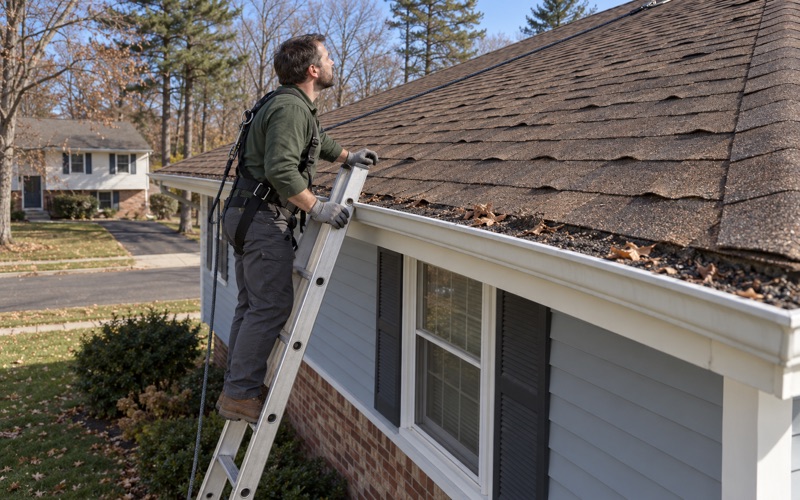
When a warning goes up for that zone, checking whether your gutters are clear is one of the cheapest things an owner can do. Leaves and grit sitting in a trough cut its capacity well before the first heavy band arrives.
Looking for roofing closer to Manasquan? See Manasquan Roofing.
Wanamassa’s Older Roofs on Deal Lake’s Shore
Wanamassa sits on the northern shore of Deal Lake, a 158-acre lake bordered by seven municipalities, with Route 35 forming the community’s western edge. It is an unincorporated community and census-designated place within Ocean Township, named for a 17th-century Native American leader. Around the turn of the last century it was largely a lakefront community, a popular place to rent a bungalow and a canoe.
Bungalows from the early 1900s
Residential building here began after 1900. In 1907 some 250 lots were sold from a YMCA tract along Wanamassa Point, north of Sunset Avenue, and that success led the Wanamassa Realty Company to build more bungalows south of Sunset.
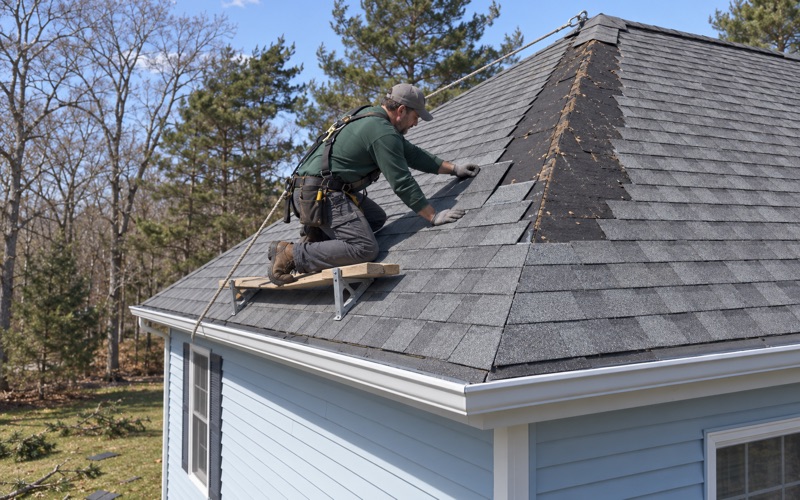
A house from that era has usually been re-roofed more than once, and we often find stacked shingle layers, old board sheathing and flashing that was patched rather than replaced. When the old roof comes off, any damaged decking is photographed and shown to you before it is replaced, at a per-sheet price fixed in the contract.
G.I.-era houses of the 1940s and 1950s
The building boom that reshaped the township began in the 1940s, when veterans with G.I. mortgages bought homes going up in the open spaces of Ocean Township, and in Wanamassa in particular. By mid-century the community had become a densely populated residential neighborhood.
Census estimates bear that out: the American Community Survey puts 74.3 percent of Wanamassa’s 1,686 homes before 1960, with the 1950s the largest single decade. Those estimates carry wide margins for a community this size, but the pattern is clear enough to plan around.
Mostly detached, mostly owner-occupied
The same survey counts 89.4 percent of homes as detached houses, and it places the owner-occupied homes it counted in that group. For most households here, the roof decision belongs to the person who lives under it, with no association in the middle.
It also means the gutters, leaders and downspout outlets on most lots are the owner’s to size and maintain. On a mid-century house, those were often installed decades ago and never upgraded when the roof above them was.
Gutters and Leaders in a Cloudburst
When a four-hour downpour hits, the first thing to give on an older house is rarely the shingle field. More often it is the gutter that overflows at an inside corner, the leader that cannot carry what the trough collects, or the outlet that dumps water against the foundation. We treat the drainage as part of the roof, because water that backs up at the eave can still find its way inside.
Sizing troughs and leaders
Plenty of mid-century houses still carry narrow gutters and small leaders. When we replace them, we install seamless aluminum gutters and leaders, and we look at where an added leader would shorten the run a single downspout has to handle.
Our scope lists gutters as their own line, separate from the roof, so you can see what the drainage costs and decide on it independently. If the gutters are sound and only need a cleaning or a corrected pitch, we say so.
Edges, valleys and kick-outs
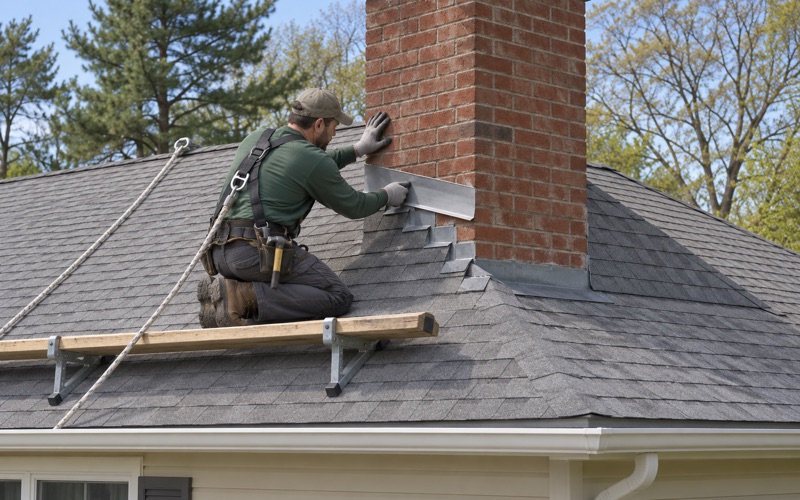
Overflow at the eave tests the edge detail. Drip edge at the eaves and rakes keeps water from wicking behind the gutter onto the fascia, and kick-out flashing where a roof edge meets a sidewall turns water into the trough instead of down the siding.
On a replacement, we lay an ASTM D1970 self-adhering ice and water barrier along the eaves and in the valleys, where water concentrates in a hard rain. Step and counter flashing are replaced with the roof rather than reused under new shingles.
Older trim and lead-safe work
Gutter work often means removing or replacing fascia boards. On a home built before 1978, painted trim falls under the EPA lead-safe renovation rule, so we plan containment and cleanup into that part of the job.
At the end of every work day we clean the driveway, yard and gutters, including a magnet sweep for roofing nails. On a close-set street near the lake, that matters to the neighbors as much as to you.
Where Your Roof Water Goes Near Deal Lake
Once water leaves a leader, it has to go somewhere. Where an outlet is piped toward the curb, it joins street runoff headed for the storm drains, and on September 29, 2023, the Commission’s chair counted runoff entering the lake from more than 200 storm drains and six large pipes.
Roof drains and rain gardens
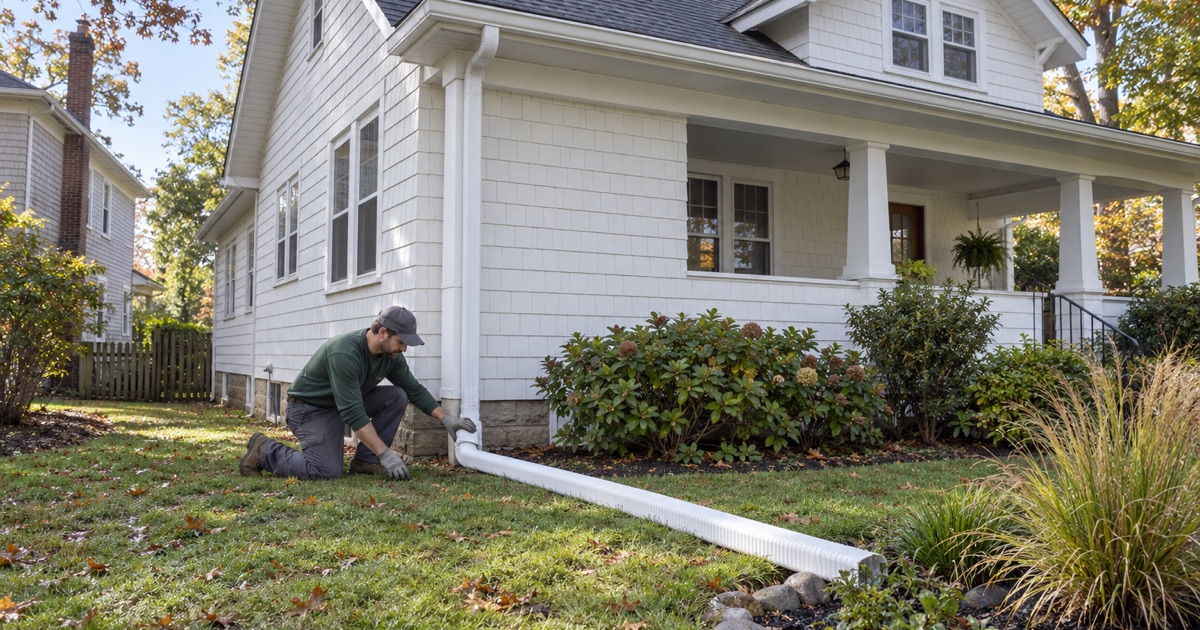
The Township of Ocean Police Department, relaying the Deal Lake Commission, has told residents that directing roof drains to a rain garden can significantly reduce stormwater runoff from a property. That is advice rather than an ordinance, and we have not seen a township rule on where downspouts must discharge.
If you want to follow it, we can set a leader so its outlet heads toward a planted area away from the foundation instead of toward the driveway or curb. Building the rain garden itself is landscaping work, but we will place the outlet where your plan needs it.
Keeping debris out of the lake
The same message asked residents not to blow or rake leaves, clippings or yard debris into Deal Lake or its feeder streams. Old shingles, loose nails and gutter sludge belong in the same category, which is why we bag gutter debris and tear-off rather than washing anything toward the street.
Re-roofing an existing house is not shoreline construction. The Commission notes that strict state environmental rules apply within 50 feet of the shoreline or of streams draining to the lake, so if a project reaches past the house toward the water, that is a question to take up with NJDEP before work begins.
After a wind storm
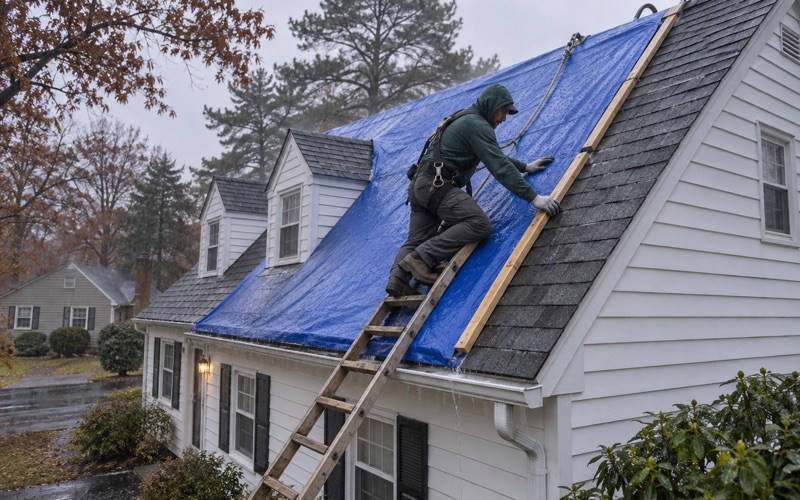
If a wind storm does damage a roof, we put tarps and temporary repairs on the same day, with photos taken before anything is moved. We photograph and write up the damage for your own claim, and we will meet the insurance adjuster on site if you ask.
For a house going on the market, we can also provide a written roof condition report the seller can hand to the buyer’s inspector. Either way, you get a clear record of what the roof and its drainage look like today.
- 20+ Years on Monmouth County Roofs
- Line-Item Written Estimates
- Same-Day Storm Tarping