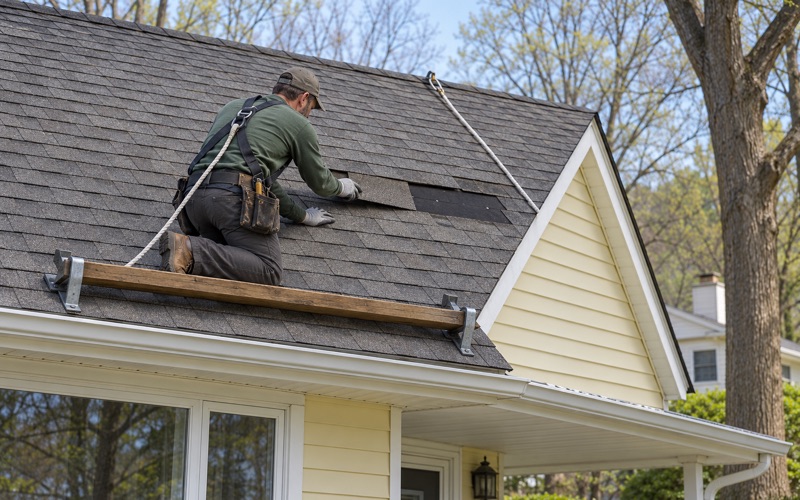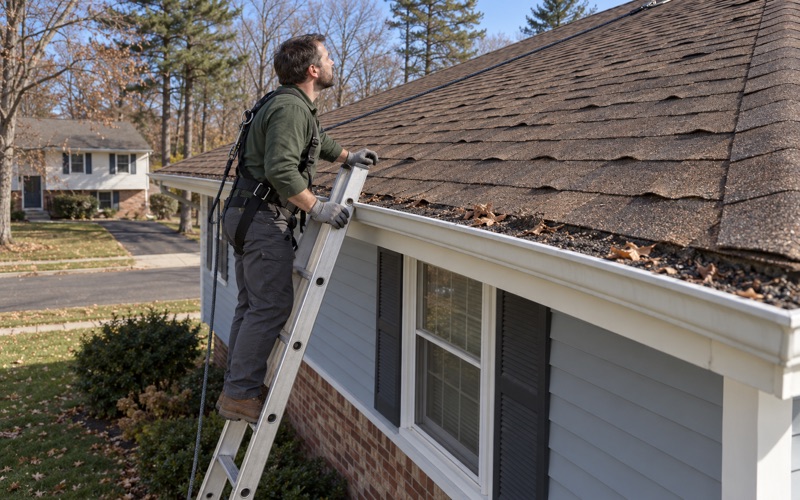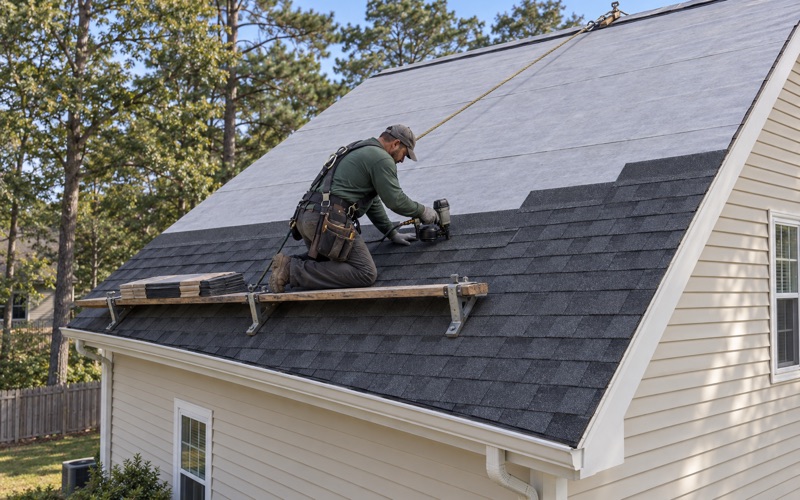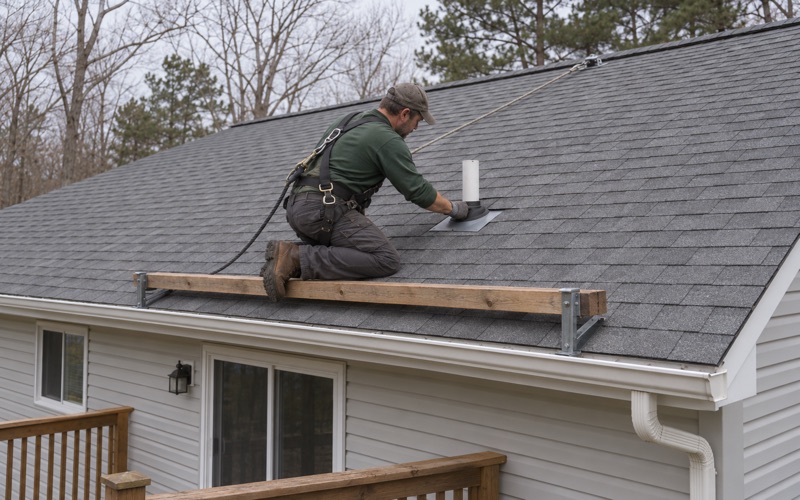
Howell Quality Roofing has handled roofing in Wall for homeowners and building owners through more than 20 years of tear-offs, leak calls and storm repairs. Most of what we do here is ordinary residential work: a worn shingle roof, a stained ceiling, a chimney that started leaking after a hard rain. A smaller share is commercial, and that is where this township asks for one extra piece of planning that few places in the county do.
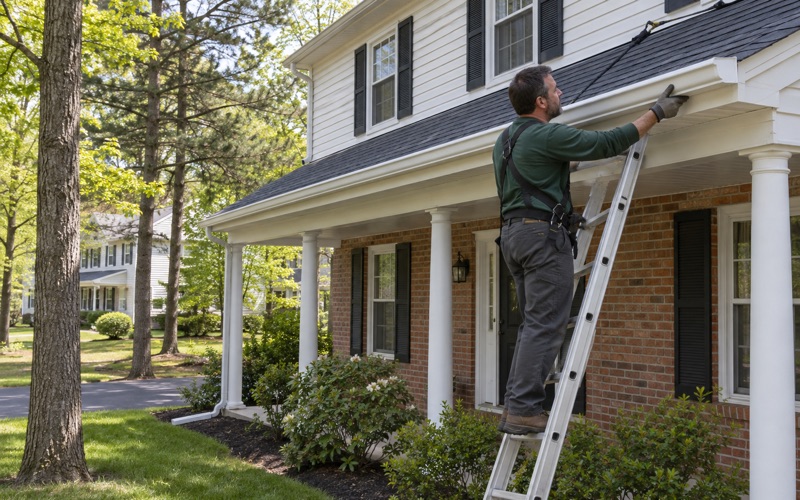
We start every leak call in the attic, not just on the shingles, because water often enters a few feet from where the stain shows up. Once we know where it gets in, you get a plain answer on whether a repair will hold before anyone mentions a new roof. If replacement is the right call, the written scope breaks out tear-off, decking, underlayment, flashing, ventilation and gutters as separate lines.
That itemized format matters when you are collecting more than one estimate. You can set two proposals side by side and see exactly where they differ, instead of comparing two lump sums that hide what each crew plans to do.
Roofing in the Township That Holds an Airport
Wall Township is a busy place to work. Several highways cross it in the heart of the Jersey Shore region, and it serves as a transportation hub for Central New Jersey. It is also home to Monmouth Executive Airport on Route 34, which sets it apart from nearly every other town we serve.
A privately owned field that is open to the public
Monmouth Executive Airport, identifier BLM, is a privately owned, public-use airport. FAA data effective October 1, 2026 lists it as open to the public, with a field elevation of 153.4 feet. That public-use status is the detail that matters for roofing, because it is what brings federal airspace notice rules into play.
The field has two runways. The longer one, 14/32, runs 7,345 feet, and the shorter, 3/21, runs 3,508 feet. The runway ends sit at different heights: 109.9 feet at the Runway 14 end and 152.6 feet at the Runway 32 end.
Why a runway length shows up on a roofing page
Federal rules treat a public-use airport differently once its longest runway passes 3,200 feet. At 7,345 feet, Monmouth Executive clears that mark by a wide margin. That puts the land around it inside a notice area defined in 14 CFR 77.9, and anything tall enough on a job site near the field has to be measured against it.
For most homeowners in Wall this never comes up. For anyone planning a commercial re-roof along the Route 34 corridor, it can shape the schedule from the first week.
Looking for roofing closer to West Freehold? See Roofing in West Freehold.
The 100-to-1 Surface and FAA Form 7460-1
The rule itself is short. Under 14 CFR 77.9(b)(1), notice to the FAA is required for any construction or alteration that rises above an imaginary surface sloping outward and upward at 100 to 1 for 20,000 feet from the nearest point of the nearest runway. On a roofing job, the thing most likely to reach that surface is the equipment, not the building.
How fast the surface climbs
A slope of 100 to 1 means the surface rises one foot for every 100 feet of horizontal distance. At 2,000 feet from a runway, it stands only 20 feet above that runway’s elevation. At 10,000 feet, it is 100 feet up.
That is why distance alone does not settle the question. The ground elevation of the job site, its distance to the nearest runway and the height of the equipment all go into the comparison. A site that sits on higher ground close to the field has much less room to work with than the arithmetic first suggests.
Form 7460-1 and the 45-day lead time
When a project does cross that surface, the notice is filed on FAA Form 7460-1. Under 14 CFR 77.7, it has to be submitted at least 45 days before the start date of the construction or alteration. Forty-five days is a long time to discover late, so the question belongs in the planning stage, not the week the crane is booked.
The rule also has an exemption. Under 77.9(e)(1), an object shielded by existing structures or terrain of equal or greater height does not need notice. Whether shielding applies on a given site is a judgment about that specific location and the equipment planned for it.
What we do and do not claim
We have not computed the surface for any Wall address, and we do not treat every roof near the field as an FAA matter. What we do is flag the question early on commercial and tall-building work near the airport, so the owner and the equipment supplier can check it before dates are fixed. The rule is stated here as the rule; it is not a promise that any particular job needs a filing.
Cranes, Boom Lifts and Why Most House Re-Roofs Stay Clear
The equipment is what decides the question. A crane setting rooftop units, a boom lift reaching a parapet or a material hoist on a taller building can rise well above the roofline. On a commercial roof near Route 34, that is the kind of setup worth measuring against the surface.
Commercial and flat roofs near Route 34
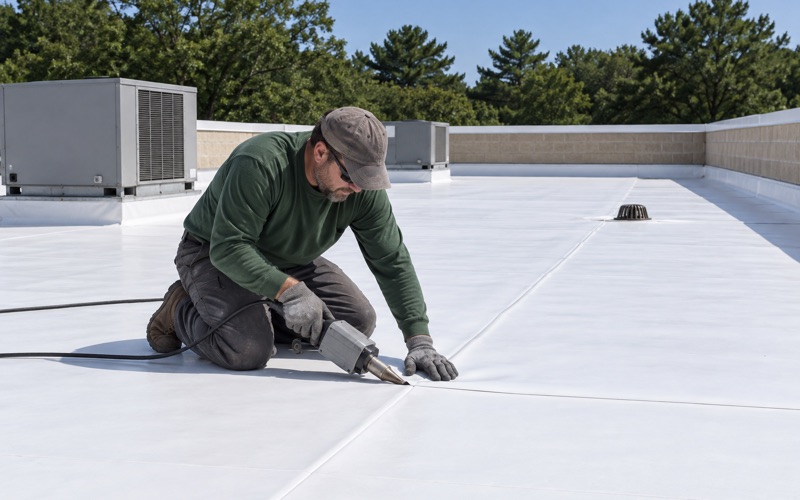
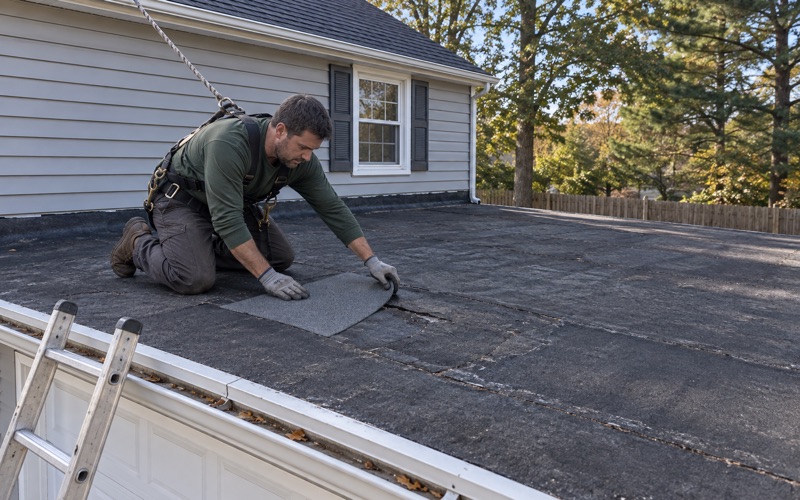
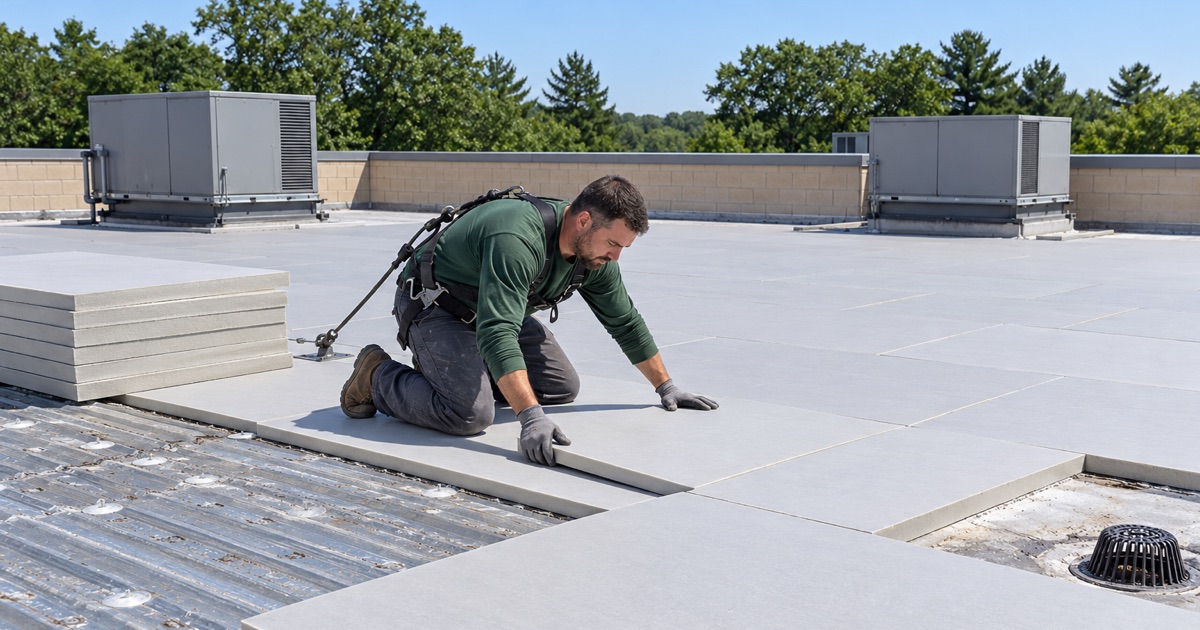
Commercial buildings along Route 34 often carry low-slope roofs: EPDM rubber membrane, TPO or PVC single-ply, or torch-down modified bitumen. Replacing one can mean lifting rolls, insulation board and mechanical curbs to the deck, and that often means a crane or a boom lift. When a job like that sits near the airport, we raise the airspace question in the first conversation, alongside staging and access.
These buildings fall outside the New Jersey rule that treats re-roofing a detached one- or two-family house as ordinary maintenance. That alone changes how the job is planned, before airspace ever comes into it.
Settling the question before dates are fixed
On a commercial project near the field, we ask for three things early: the building’s address, the roof height, and the tallest piece of equipment the job will need. Those are the inputs the surface comparison depends on, and the equipment supplier can usually confirm a maximum boom or crane height before any rental is booked.
If the numbers suggest the surface could be crossed, that is the point to look at a smaller machine, a different staging spot, or a start date that leaves the full 45 days. Changing a crane setup on paper costs nothing; changing it after the date is fixed can cost the whole schedule.
A ladder-and-conveyor house re-roof
A typical house re-roof in Wall is a different job. Shingles reach the roof by ladder hoist or conveyor, and nothing on site stands much taller than the ridge. Our reading is that this kind of work stays well below the surface, though that is an inference from the rule, not a measurement of any address.
So if you own a house in Wall and want a new roof, the airport is very unlikely to affect your timeline. The same is true for most repairs, gutter work and flashing jobs.
A note on wind along the airport corridor
The corridor has seen hard wind. In the 2019 straight-line wind storm, the National Weather Service confirmed thunderstorm outflow, not a tornado, after two commercial buildings at the airport collapsed. That event involved commercial structures; it is a reminder that roof edges and attachment on large low-slope buildings deserve close attention, not a forecast for any house.
Wall’s Detached Houses and Their Roofs
Most of what we see in Wall is residential. Of 10,397 housing units in the township, 8,406 are one-unit detached houses, and 8,447 of 10,124 occupied homes are owner-occupied. The stock covers every decade, from 1,183 homes built in 1939 or earlier to 2,228 from the 1990s.
Older homes and the tear-off question
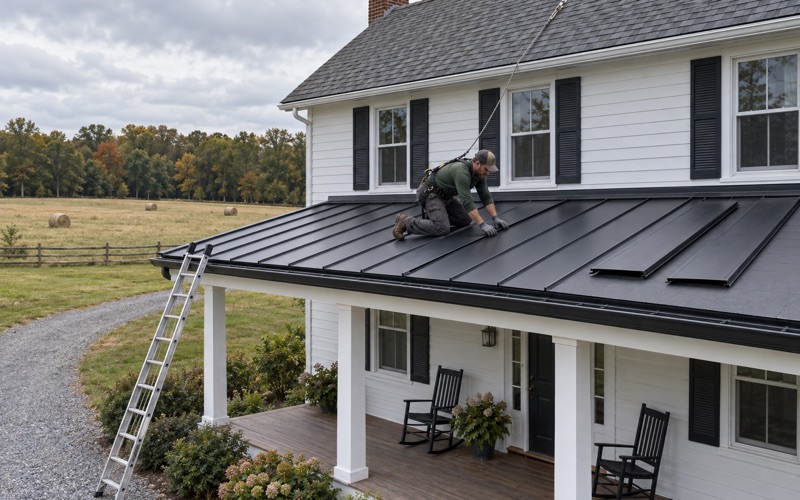
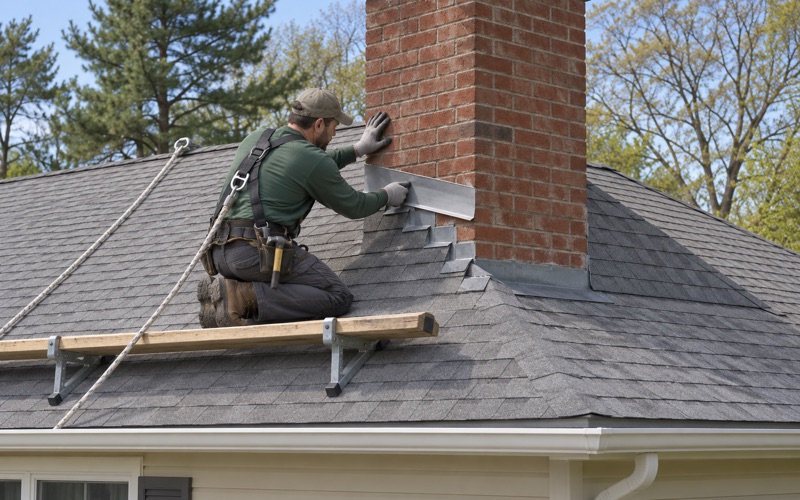
A house built before 1940 has often been re-roofed several times, sometimes over an earlier layer. When the old roof comes off, we photograph any damaged decking and show it to you before replacing it, at a per-sheet price already set in the contract. Older chimneys usually need new step, counter and chimney flashing, and we replace that flashing with the roof rather than tucking new shingles against old metal.
1990s roofs reaching the end of their run
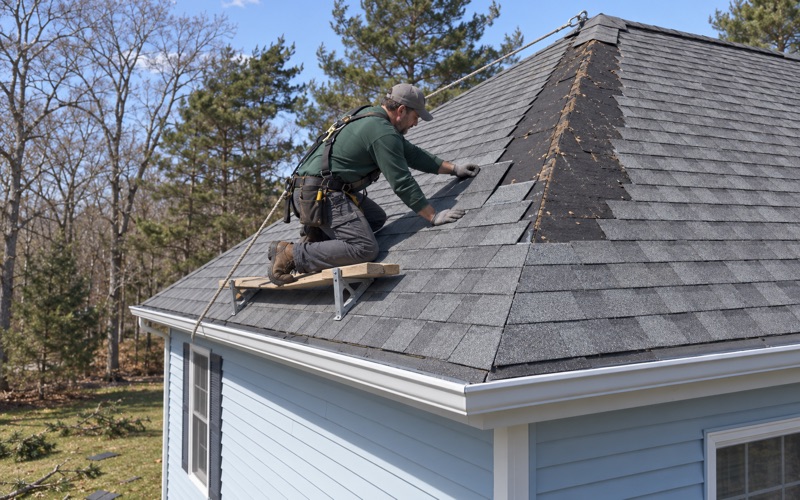
The large group of homes from the 1990s is now well into a second or third roof. On these replacements we check attic ventilation every time, because a roof that cannot breathe ages from underneath. Ridge vent with soffit intake, drip edge at eaves and rakes, and ASTM D1970 ice and water barrier at the eaves and valleys are the details that decide how long the next roof lasts.
Solar arrays and homes going on the market
When a house has solar panels, the removal and reinstall go into the schedule from the start, so nobody discovers on the first morning that the array has to come off. The roof under the panels gets the same tear-off, underlayment and flashing as the rest of the slope.
If you are selling, we can write up a roof condition report that you hand to the buyer’s inspector. It describes what we found on the roof and in the attic in plain terms, which tends to answer questions before they turn into a negotiation.
Contracts, cleanup and storm calls
Every contract we write follows New Jersey’s home improvement rules, including the three-day cancellation notice. At the end of each work day the driveway, yard and gutters are cleaned, with a magnet sweep for loose nails.
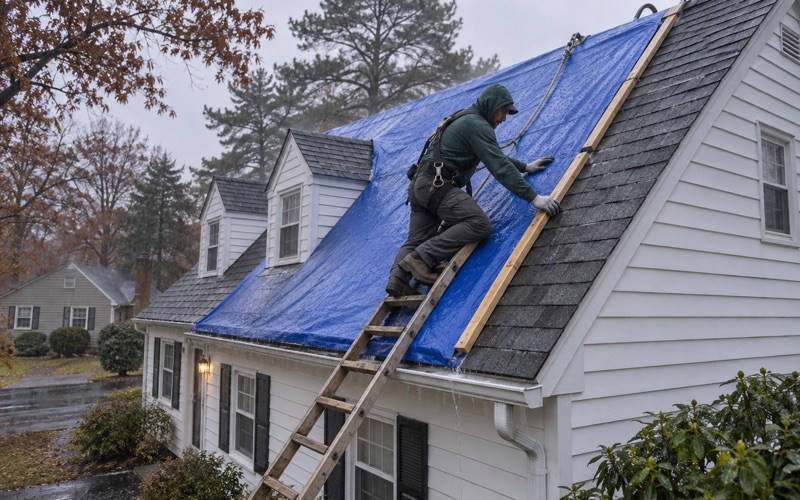
After a wind storm, tarps and temporary repairs go on the same day, and we photograph the damage before anything is moved. That write-up is yours for your own claim, and we will meet your insurance adjuster on site if you ask us to.
If you are planning a roof in Wall, house or commercial, call Howell Quality Roofing for an inspection and a written scope you can compare line by line.
- 20+ Years on Monmouth County Roofs
- Line-Item Written Estimates
- Same-Day Storm Tarping