Howell Quality Roofing has spent more than 20 years on roofing in Tinton Falls and the rest of Monmouth County, and a good share of the calls we get from the borough come from owners who are about to sell. Their question is rarely about shingle colors. They want to know whether the outside of the house will hold up when the borough sends someone to look at it, and what they should fix before that day.
That is a fair question, and it has a fairly specific answer here. The borough ties every residential sale to an exterior check against its property maintenance code, and that code says plainly what it expects of a roof, its flashing and the gutters that carry water away. We know that standard, we know which parts of it a roofer can actually repair, and we know where our job ends and the inspector’s begins.
This page walks through the resale inspection, the roof and drainage wording behind it, what a failed visit costs to clear, and how we help a seller get ready without spending money on work the house does not need. If you are planning to list in the next few months, it is worth reading before you call anyone.
Tinton Falls Looks at the Outside When a House Changes Hands
Tinton Falls requires a certificate of continued occupancy, often shortened to CCO, for residential and commercial sales, rentals, transfers of title and changes in occupancy. The borough also labels it a resale and rental certificate of occupancy on some of its pages. Without it, a closing does not move forward, so it sits on every seller’s checklist whether they planned for it or not.
What changed on July 22, 2019
The borough narrowed the resale inspection on July 22, 2019. From that date, its pages say, inspections of residential resale properties are limited to two things: compliance with the zoning regulations and compliance of the exterior property with the property maintenance code. The interior of a house being sold is no longer part of the walk-through.
That rule is written for residential resale, and we keep it there. Rentals and commercial properties follow whatever the borough applies to them, and we do not stretch the exterior-only wording to cover either one.
Where the maintenance standard comes from
The borough’s code reportedly adopts the 2018 International Property Maintenance Code, published by the International Code Council, with local changes that include fines of $500 to $1,250. Where that adoption sits in the borough’s code book today is not settled, because the current table of contents shows the property maintenance chapter as reserved. What is not in doubt is the model code’s own language about roofs, which is the part a roofer can do something about.
We mention the uncertainty because a seller deserves to know which statements are solid. The exterior-only limit and the CCO requirement come from the borough’s own pages; the exact adopting ordinance does not appear in anything we have been able to read.
What we do not know about the inspector’s list
The borough’s resale checklist itself is not something we have read, so we cannot tell you whether the inspector looks closely at the roof covering, the gutters, both or neither. We will not claim otherwise. Anyone who tells you the inspector will fail a house because of its shingles is guessing.
What we can say is narrower and more useful. The model code names roof flashing, gutters and downspouts as exterior items, and those are repairs we make every week. Getting them right before the visit removes questions instead of inviting them.
Looking for roofing closer to Shark River Hills? See Shark River Hills Roofing.
What the Code Asks of a Roof and Its Drainage
The roof section of the 2018 model code, Section 304.7, is short. It asks that the roof and flashing be sound, tight and free of defects that admit rain, that roof drainage be adequate to keep dampness and deterioration out of walls and interiors, and that roof drains, gutters and downspouts be kept in good repair and free from obstructions. It also says roof water must not be discharged in a way that creates a public nuisance.
Sound, tight and not letting in rain
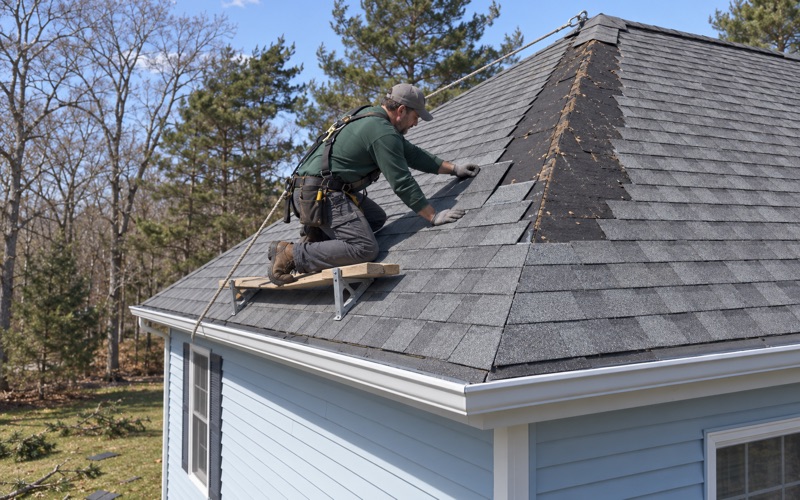
That phrase is a performance standard, not a materials list. It does not ask for new shingles or a particular brand; it asks that the roof keep water out. An older architectural shingle roof with years left in it can meet that standard, and a newer roof with a lifted ridge cap or a failed pipe boot may not.
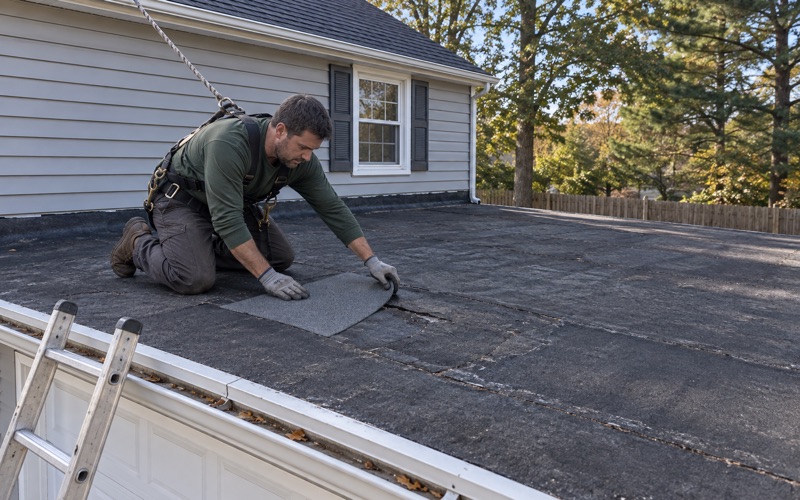
On every leak call we go into the attic as well as onto the roof. Stains on sheathing, damp insulation and rusted nail tips tell us where water is getting in, and that trace comes before any price is put on paper.
Flashing at walls, chimneys and roof-to-wall joints
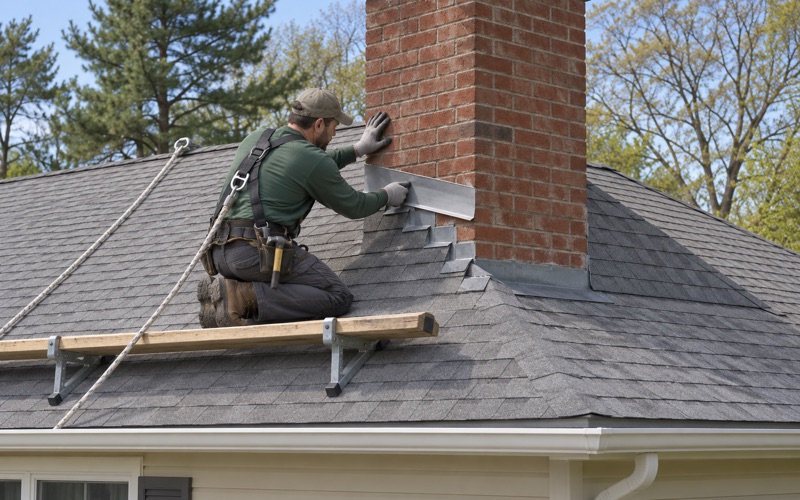
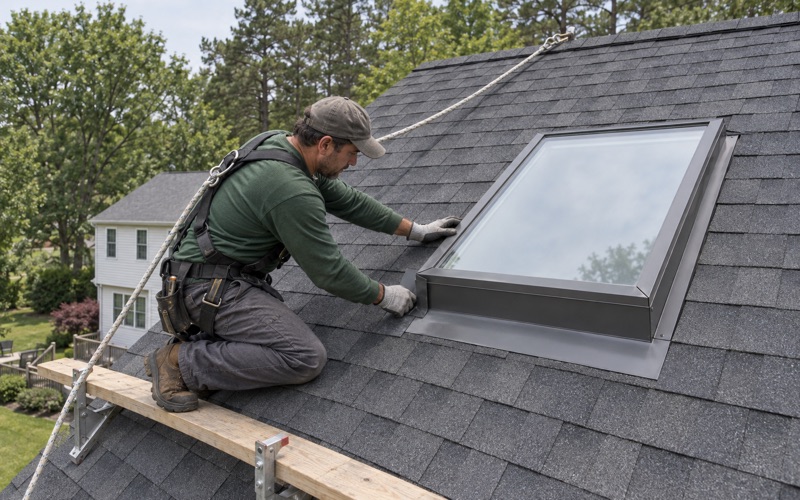
Flashing is where most of the leaks we find on resale houses start. Step flashing along a sidewall, counter flashing set into a reglet on a chimney, apron flashing below a dormer and kick-out flashing where a roof edge meets siding all age differently from the shingles around them. A dried-out sealant bead can be the only thing keeping water out at an old chimney.
When we replace a roof, step, counter and chimney flashing are replaced with it rather than bent back and reused. When a seller only needs a repair, we fix the flashing that is failing and leave sound metal alone.
Gutters and downspouts in good repair
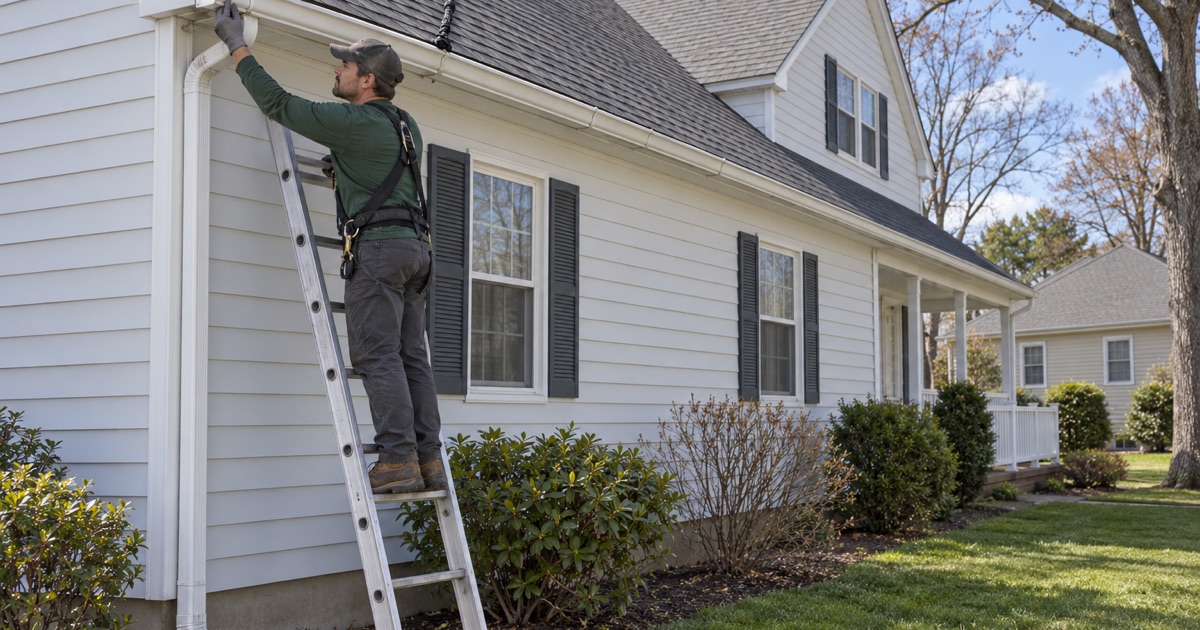
The model code’s wording on gutters and downspouts is direct: in good repair and free from obstructions. That rules out sagging runs pulling away from the fascia, leaking end caps, downspouts packed with leaves and leaders that dump water against the foundation. These are among the easiest exterior problems to see from the driveway.
We clear, reseal and rehang existing gutters where they are worth keeping, and install seamless aluminum gutters and leaders where they are not. Fascia boards behind a failing gutter are often soft, so we check the wood before new metal goes up.
Where the roof water ends up
The last line of the roof section concerns discharge. Water from a downspout that sheets across a sidewalk or onto a neighbor’s lot is a different problem from water that simply soaks the lawn. Extensions, splash blocks and redirected leaders are small jobs that answer the question before anyone asks it.
We look at the whole path, from drip edge to gutter to the ground, because a roof that sheds water well and a drainage line that sends it the wrong way still leaves the exterior in poor shape.
Failing, Re-Inspection and What It Costs
A failed CCO inspection is not the end of a sale, but it is a delay, and delays near a closing date are expensive in their own way. Knowing the borough’s listed fees and timing helps a seller decide what to fix ahead of time and what to leave.
The fees the borough lists
The borough’s CCO pages list a fee of $150 for a detached single-family house. They say there is no charge for the first re-inspection of a unit that fails, and that each re-inspection after that is $50. Applications not filed through the online portal carry a $15 fee, effective January 1, 2021.
Those figures come from the borough’s pages as they have been published, and we always suggest checking them with the borough before relying on them. Fee schedules change, and the borough is the only source that can confirm what applies to your application.
Timing against a closing date
The borough says applications are processed within 15 business days once they are complete. That window, plus the time to schedule a repair and a re-inspection, is why we encourage sellers to call us well before the inspection rather than after it. A gutter rehang takes a day; finding an open spot on a roofer’s calendar in a busy month can take longer.
If an inspection does flag an exterior roof or drainage item, we can usually get out quickly to look at it. We write down exactly what we found and what we did, so the seller has a record to show at the re-inspection.
Getting a Tinton Falls House Ready to List
Tinton Falls is overwhelmingly a borough of owners. The Census Bureau’s 2024 American Community Survey counts 84.1 percent of occupied homes as owner-occupied, and most of them will change hands sooner or later. A little preparation on the outside of the house before listing usually costs less than a scramble after an inspection.
A written roof condition report first
For homes being sold, we put together a written roof condition report that the seller can hand to the buyer’s inspector. It covers the covering, flashing, ventilation, gutters and leaders, with photos, and it separates what needs attention now from what is simply wear. Buyers tend to negotiate less when the roof questions have already been answered on paper.
The report also keeps us honest. If the roof is in good shape, it says so, and the seller can spend their money elsewhere.
A repair answer before any replacement talk
We tell an owner whether a roof can be repaired before replacement ever comes up. For a seller, that answer matters more than usual, because a full replacement weeks before closing is rarely the best use of money when a flashing repair and a gutter rehang will satisfy the maintenance standard. Nothing in the CCO process calls for a new roof.
When replacement does make sense, our written scope lists tear-off, decking, underlayment, flashing, ventilation and gutters as separate lines. That lets a seller compare our number with another contractor’s item by item instead of guessing at a lump sum.
Townhouses and association-held roofs
A large share of the borough’s homes are attached. Before we write an estimate on a townhouse, we check the association’s documents to see who is responsible for the roof and gutters, because it is not always the owner. A seller should know that answer before paying for work the association may handle.
In those communities the exterior work also has to match the neighboring units. We confirm shingle color and gutter profile with the association before ordering material.
Paperwork, permits and the contract
For a detached one- or two-family house, New Jersey treats the repair or replacement of roof covering as ordinary maintenance under N.J.A.C. 5:23-2.7, with no permit, inspection or notice required. Attached rows and multi-unit buildings fall outside that rule, and for those homes the borough’s Construction Department at 556 Tinton Avenue is the office to ask.
Every contract we write follows New Jersey’s home improvement rules, including the three-day cancellation notice. At the end of each work day the driveway, yard and gutters are cleaned and the ground is swept with a magnet for nails, which matters when buyers may be walking the property that same week.
- 20+ Years on Monmouth County Roofs
- Line-Item Written Estimates
- Same-Day Storm Tarping