Howell Quality Roofing has spent more than 20 years on roofing in South Amboy and the rest of Middlesex County, and on the bay side of town one question comes up before any other: how much wind should this roof be built to take? Our answer starts with what sits upwind of the house, not with a single number for the whole city. Only after that do we talk about materials and price.
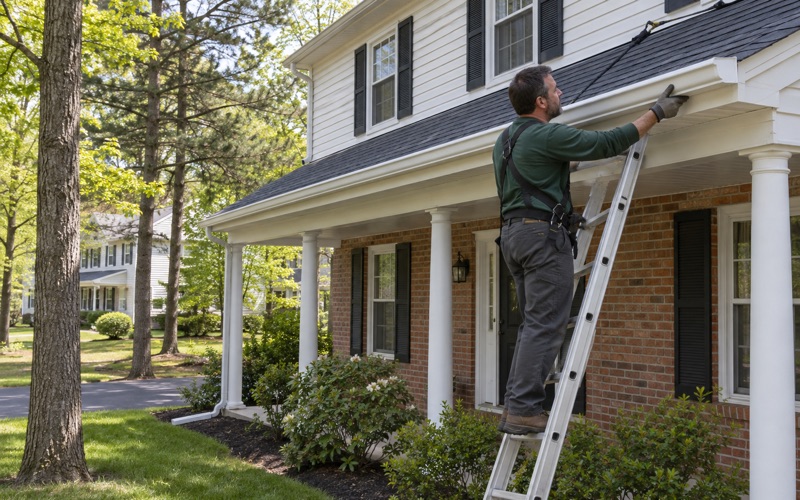
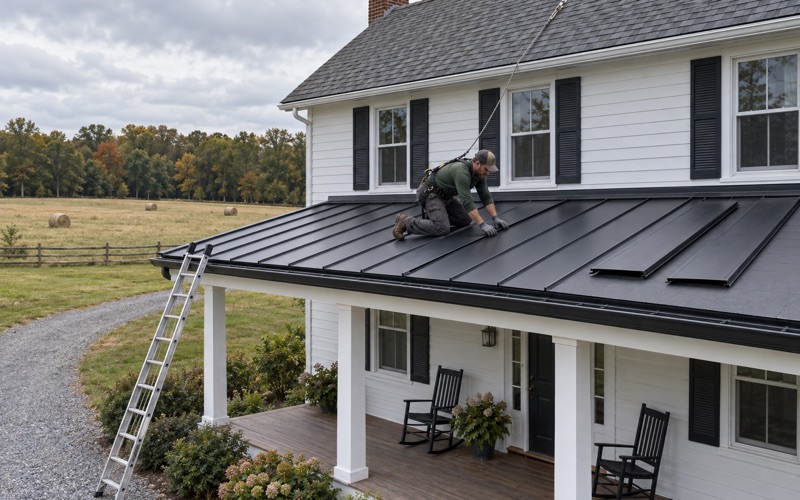
Every leak call we take includes a trip into the attic as well as onto the roof, so a ceiling stain is traced back to the point where water actually gets in. If a repair will hold, we say so plainly before replacement ever comes up. When a new roof does make sense, the written scope lists tear-off, decking, underlayment, flashing, ventilation and gutters as separate lines you can set beside any other estimate.
This page covers the part of the job that changes near the water: how New Jersey’s residential code sorts a building site by the ground and water upwind of it, what that means for shingle choice and fastening, and why we never quote a wind figure for an address we have not looked at. The rest of the work follows the same standard we hold on every roof.
Raritan Bay and How the Code Reads the Ground Upwind
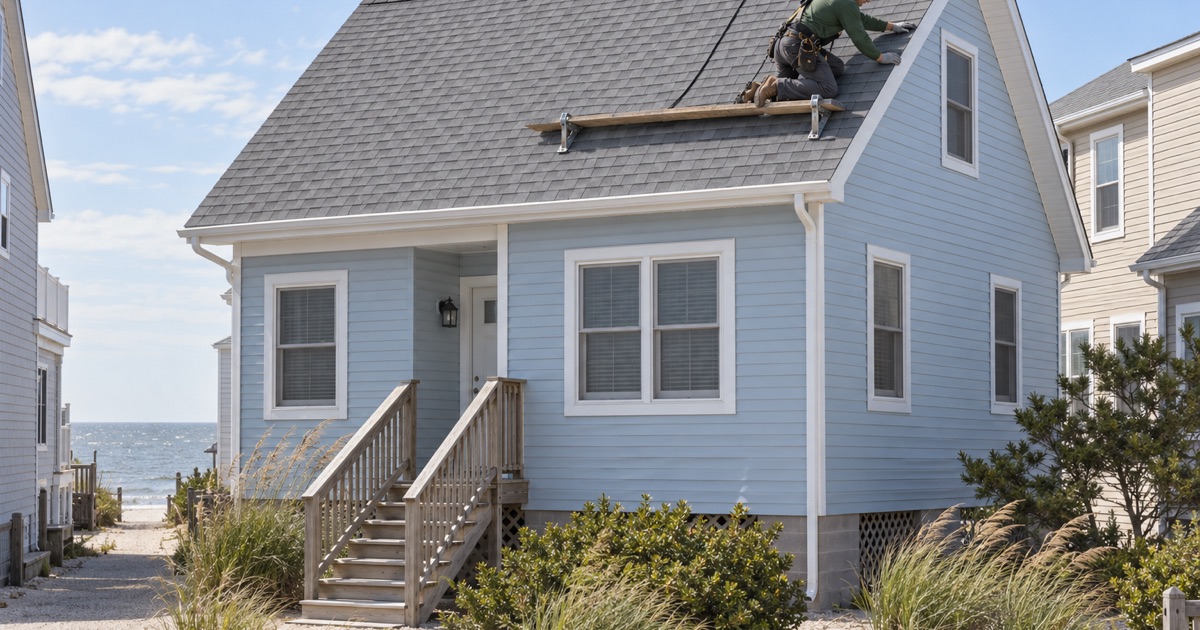
South Amboy fronts Raritan Bay, with the Raritan River along its northern line, and water makes up 1.16 of the city’s 2.70 square miles. The bay itself runs up to 9 miles long and 12 miles wide. Wind crossing that much open surface has little to slow it before it meets the first houses along the shore.
The residential code does not leave that to a general sense of being near the coast. New Jersey’s 2021 edition of the International Residential Code, in section R301.2.1.4, says an exposure category is determined for the site “for each wind direction considered,” based on how rough the ground surface is in that direction. A house can face open water on one side and blocks of homes on the others, and the code asks about each.
Exposure B Is the Default
The code’s starting point is direct: “Exposure B shall be assumed unless the site meets the definition of another type exposure.” Exposure B describes urban and suburban areas, wooded areas and other terrain with numerous closely spaced obstructions the size of a single-family house or larger. That is how most residential streets read, and many inland blocks in South Amboy would read that way too.
Starting from Exposure B is not a shortcut; it is the rule. A site moves to a more severe category only when the ground upwind meets a stricter definition, and that is decided one site at a time rather than for a neighborhood or a city.
Exposure C at the Edge of Open Ground
Exposure C covers open terrain with scattered obstructions generally under 30 feet tall, extending more than 1,500 feet from the site in any quadrant. The code also applies it to Exposure B terrain lying directly beside Exposure C terrain for more than 600 feet. Where two categories meet in a transition zone, the code takes the one that produces the larger wind forces.
In practice, a large open lot, a park or a stretch of flat shoreline beside a residential block can change the reading for houses near its edge. We look at what actually surrounds a house before deciding how conservative its roof details should be.
Looking for roofing closer to Highland Park? See Highland Park Roofing.
5,000 Feet of Open Water and the 600-Foot Band
Exposure D is the most severe of the three. The code describes it as “flat, unobstructed areas exposed to wind flowing over open water, smooth mud flats, salt flats and unbroken ice for a distance of not less than 5,000 feet.” A bay of Raritan Bay’s size is the kind of water that definition has in mind, which is why it matters along South Amboy’s shoreline in a way it would not on an inland street.
Only the Wind Coming From the Water
The definition is directional. Exposure D “shall apply only to those buildings and other structures exposed to the wind coming from over the unobstructed area.” A shoreline house may face that open stretch on its water side, while wind arriving from the land side has crossed streets, yards and other homes first.
That is why we avoid blanket statements about the waterfront. One house may have a clear run of water off its back wall, while a neighbor a few lots away has other buildings or a stand of trees between it and the bay. The code’s test turns on those details, and so does our recommendation.
How Far Inland the Band Reaches
Exposure D does not stop at the waterline. It “extends downwind from the edge of the unobstructed area a distance of 600 feet (183 m) or 20 times the height of the building or structure, whichever is greater.” For a building under 30 feet tall, 600 feet is the larger figure; for a taller one, 20 times its height carries the band farther inland.
We have not mapped which South Amboy lots meet the 5,000-foot test or which houses sit inside that band, and no source we have read settles it for any address. What we can say is that a house within a few hundred feet of open bay water deserves a careful look at its exposure before materials are chosen, rather than an assumption in either direction.
Shingle Wind Ratings and Nailing for a Bayfront House
Asphalt shingles carry wind ratings from standardized laboratory tests, and the two we see most are ASTM D3161 Class F and ASTM D7158 Class H. Many architectural shingles, including GAF Timberline HDZ, Owens Corning Duration and CertainTeed Landmark, are sold with those classifications. Within each standard, the class tells you the wind condition the shingle was tested against.
We have not read any New Jersey text that ties a particular shingle class to Exposure D on a re-roof, so we do not tell an owner that a given rating is mandatory. We do tell you which rating a product carries, what its installation instructions require to earn it, and why we lean toward the stronger options on a house that faces open water.
High-Wind Nailing and the Starter Course
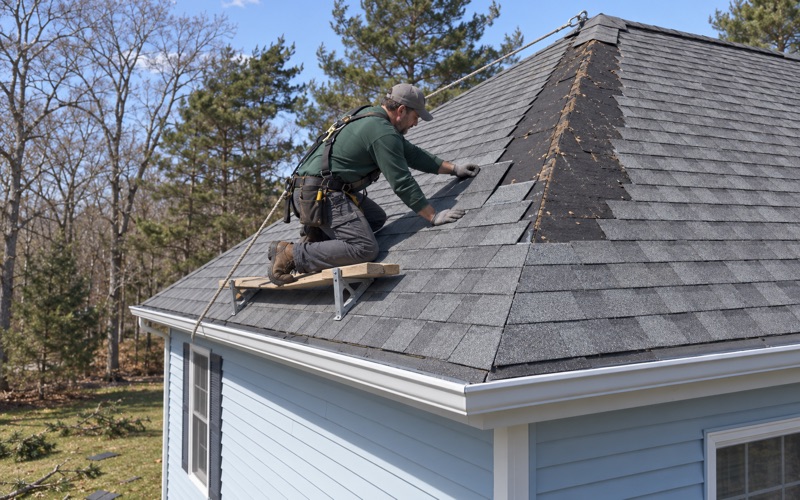
A shingle’s rating depends on how it goes on. Manufacturers generally publish a high-wind fastening pattern that adds nails to each shingle, along with starter strips sealed at the eaves and rakes, where wind gets under a roof first.
On a house that faces the bay, we recommend that pattern along with drip edge at every eave and rake. The added cost is small next to the labor of a full replacement, and it is far easier to do on the first day than to retrofit after a storm.
What Goes Under the Shingles
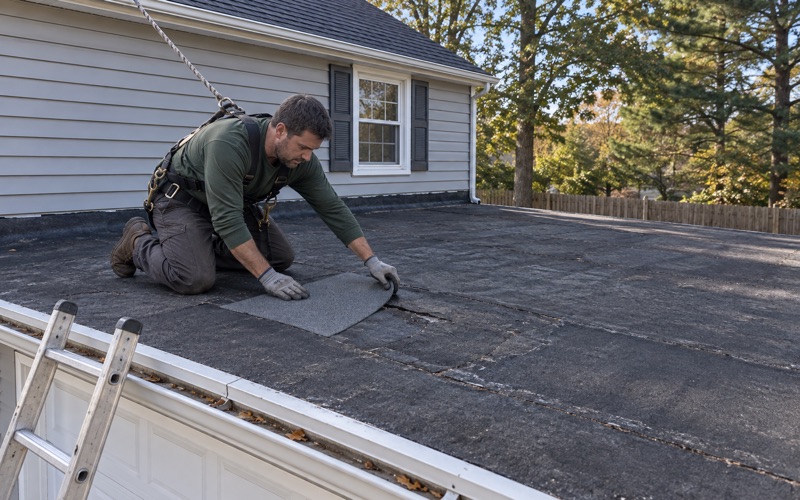
Underlayment and edge details carry part of the load a shingle rating does not. We use ASTM D1970 self-adhering ice and water barrier at the eaves and in the valleys and ASTM D8257 synthetic underlayment across the field, so wind-driven rain that slips past a lifted edge meets a second layer.
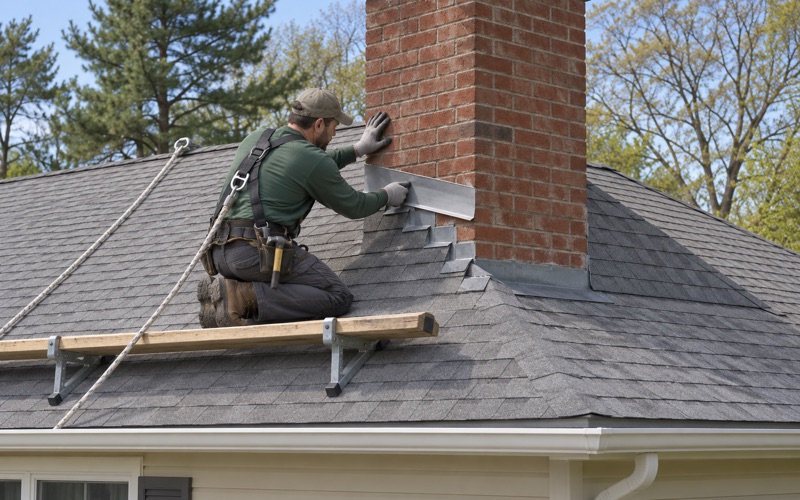
Flashing belongs to the same system. Step, counter and chimney flashing is replaced with the roof rather than reused under new material, and we check attic ventilation on every replacement, because heat and moisture trapped underneath age a roof from below no matter what the shingle is rated for.
Decking Found Once the Old Roof Is Off
Nails hold only as well as the wood they go into. When tear-off exposes soft or damaged sheathing, we photograph it and show it to you before anything is replaced, at a per-sheet price already set in the contract.
That step matters on older houses. Census estimates count 1,726 of South Amboy’s 4,493 housing units as built in 1939 or earlier, and decking under roofs of that age can hold surprises that only show up once the shingles come off.
Why No Town-Wide Wind Figure Fits South Amboy
New Jersey’s design wind speed is set by address, not by municipality, under the Department of Community Affairs guidance in Bulletin 19-1. Add an exposure category that can change with each wind direction and with distance from the water, and any single figure printed for the whole city would be wrong for many of its houses.
So you will not find a wind speed or an exposure category for a South Amboy address on this page. If a figure matters for a specific product or building, we look it up for that address and show you where it came from.
No Plan Review on a Detached Re-Roof
Under N.J.A.C. 5:23-2.7, replacing the roof covering on a detached one- or two-family house is ordinary maintenance, with no permit, inspection or notice to the enforcing agency. That keeps the job simple, but it also means no plan reviewer looks at the site and settles its exposure for you.
The decision falls to the owner and the contractor, and we treat it as part of the estimate. We walk the lot, note which directions face open water, and explain in writing why we chose the shingle and fastening schedule we did.
Attached Homes and Larger Buildings
Census estimates count 710 attached single-family units in the city, and attached homes and buildings of three or more units fall outside that ordinary-maintenance wording. That work goes to the South Amboy Building Department at City Hall, 140 North Broadway, whose own page notes that a variety of permits are required for structural changes.
In townhouse communities, we also check the association’s documents to see who holds the roof before any estimate is written. That answer decides whether you, the association or both of you sign the contract.
After a Wind Storm
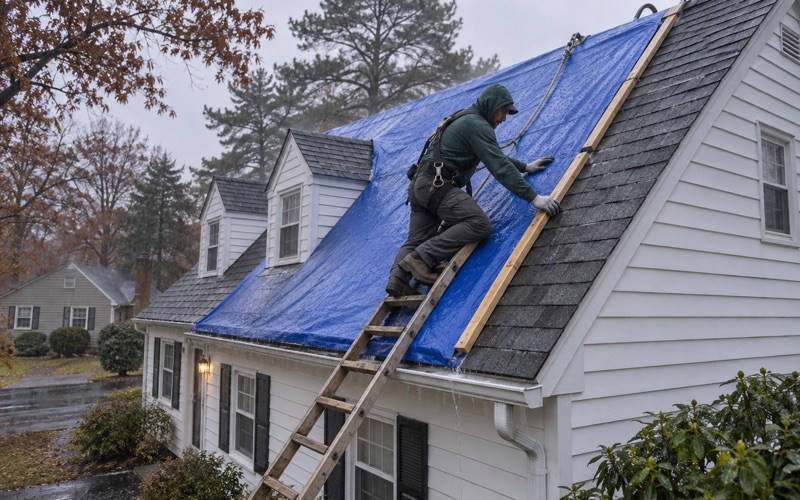
South Amboy falls in National Weather Service forecast zone NJZ012, issued from the Mount Holly office. When a storm does damage a roof, we put on tarps and temporary repairs the same day, photograph everything before it is moved, and write the damage up for your own claim, meeting your adjuster on site if you ask.
Our contracts follow New Jersey’s home improvement rules, including notice of your three-day right to cancel. At the end of each work day we clean the driveway, yard and gutters and run a magnet sweep for roofing nails, and if the house is going on the market we can provide a written roof condition report to hand to the buyer’s inspector.
- 20+ Years on Monmouth County Roofs
- Line-Item Written Estimates
- Same-Day Storm Tarping