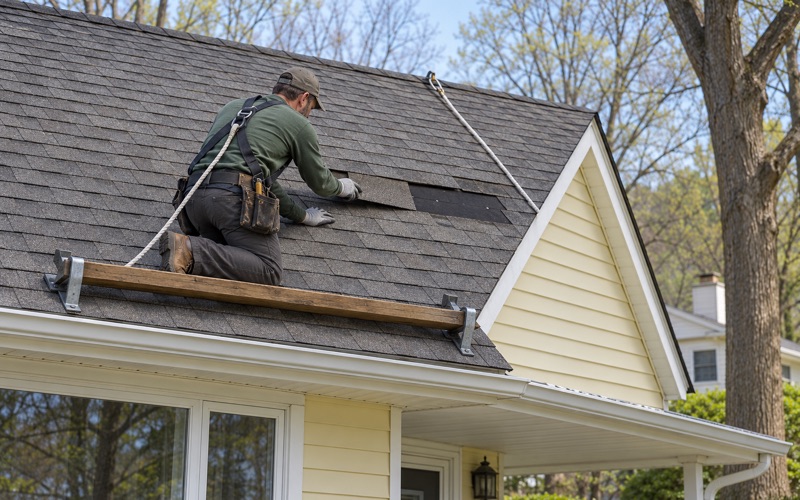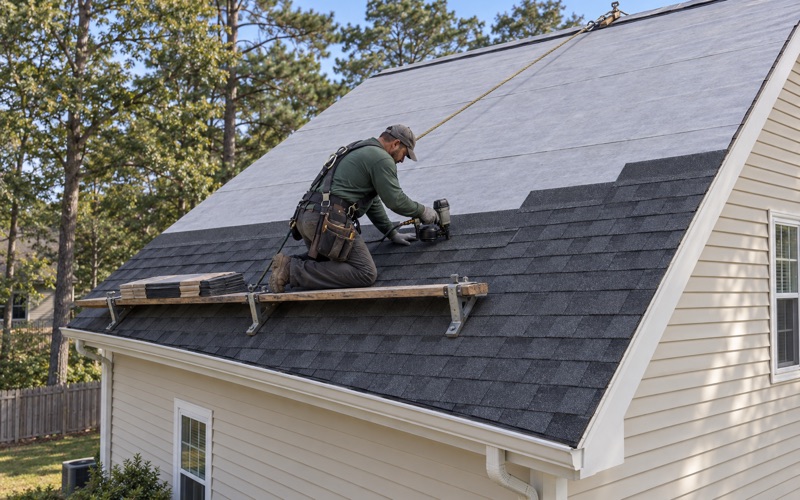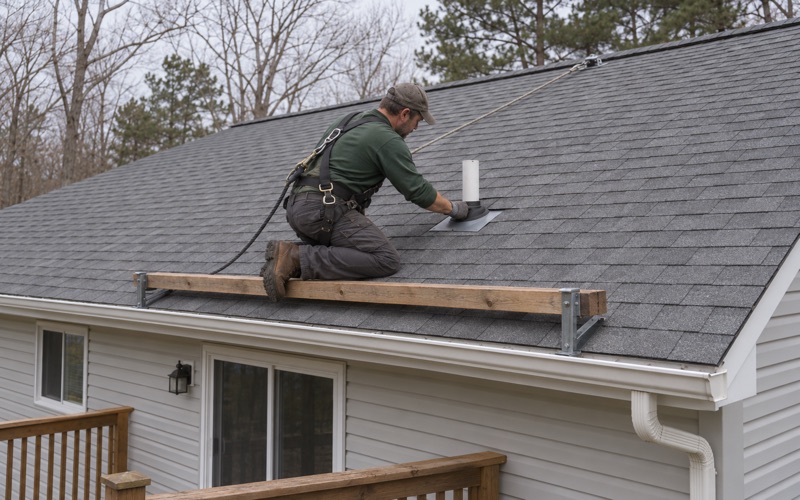
Howell Quality Roofing has handled roofing in Shark River Hills for more than 20 years, and a good share of the calls we take there start with the same sentence: we are thinking about selling. That is a sensible moment to look up, because the work a house needs before it lists is rarely the work an owner expected. Our job is to sort the roof from the edges around it and tell you which part actually matters.
We start every visit by finding out what is really going on before anything is priced. If there is a stain on a ceiling, we go into the attic as well as onto the shingles, because water rarely shows up inside directly below the spot where it got in. If a repair will carry the roof another stretch of years, we say that plainly and stop there, and replacement only comes up when repair honestly will not do.
When an owner is getting ready to sell, we can also put what we found in writing. A written roof condition report gives the seller something concrete to hand the buyer’s home inspector, instead of a shrug and a guess about the age of the shingles. The sections below explain how the township’s resale process works here and where a roofer fits into it.
Selling in Shark River Hills Runs Through a Neptune Certificate of Inspection
Shark River Hills is a census-designated place, not a town of its own. It sits within Neptune Township in Monmouth County, so the rules that apply to a house here are Neptune Township rules, written and enforced by the township’s code enforcement office. Anyone searching for a separate local ordinance will not find one.
Why the sale is the moment that matters
The housing here is unusually uniform. Census estimates for 2024 count 1,244 occupied homes in Shark River Hills, and every one of them is an owner-occupied detached house, with no rentals in the count at all. In a place like that, the township’s property maintenance code mostly reaches a house when it changes hands.
That is the practical point for an owner. A house that has been lived in for decades by the same family may never have had anyone from the township look at its exterior, and the first real review arrives with a contract of sale already signed.
What Ordinance 21-20 requires
Neptune adopted Ordinance 21-20 on May 24, 2021, amending the township’s property maintenance chapter. It says a Certificate of Inspection must be obtained by the owner before the sale, transfer, lease, rental or occupancy of a dwelling. The certificate states that the house complies with the BOCA Basic Property Maintenance Code and the township’s other applicable ordinances.
The obligation sits with the seller, not the buyer, and the township’s own checklist spells out the consequence. Buying, selling or renting a property without a certificate is punishable by fines not exceeding $1,250, so this is not a step to leave until the week of closing.
Fees as the 2021 ordinance set them
As adopted in 2021, the ordinance set the inspection fee at $150 for a detached single-family house. Filing five or fewer business days before closing added $50 per inspection, and each reinspection was $50, with all reinspections to be completed within 30 days. A later amendment may have changed those numbers, so confirm the current schedule with the township before you budget.
The late fee is the part worth planning around. An owner who calls us after the listing goes live, rather than before, leaves less time for any exterior repairs to be finished before the application goes in.
Looking for roofing closer to Neptune? See Roofing in Neptune.
Gutters, Downspouts, Chimneys and Trim on the Township Checklist
Neptune publishes a Certificate of Inspection checklist, last revised July 15, 2020, that tells owners what the inspector will be looking at. It describes itself as only a guide and not all inclusive, so it is a floor rather than a promise. Several of its exterior items sit right at the edge of the roof.
Gutters and downspouts
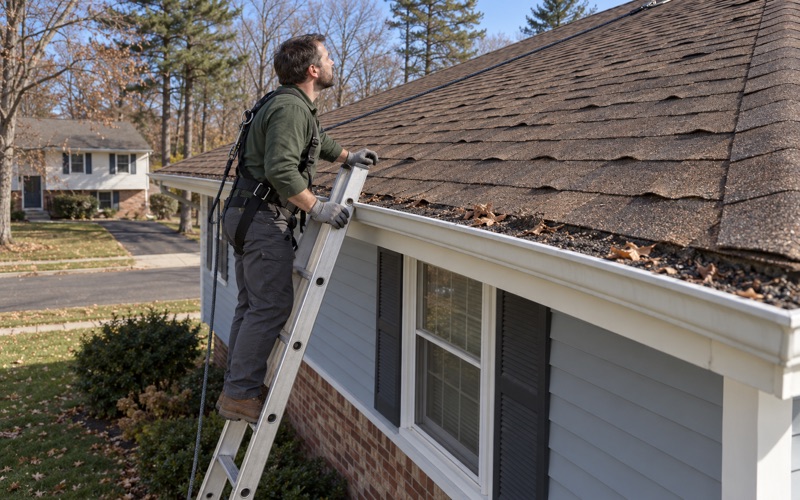
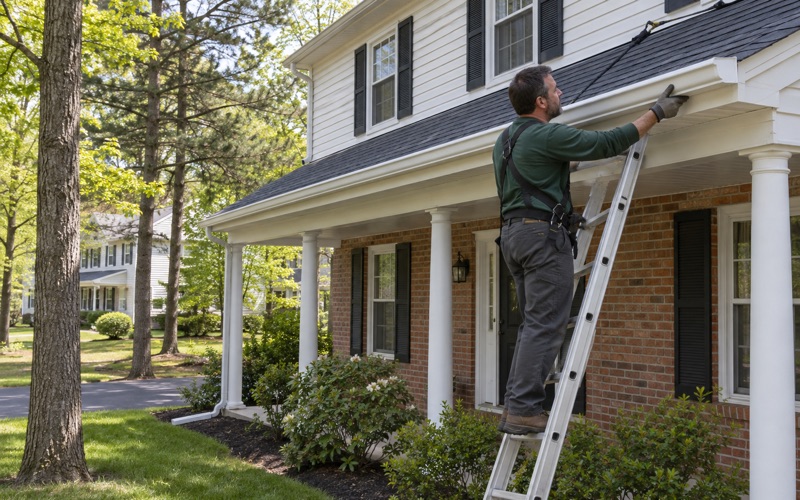
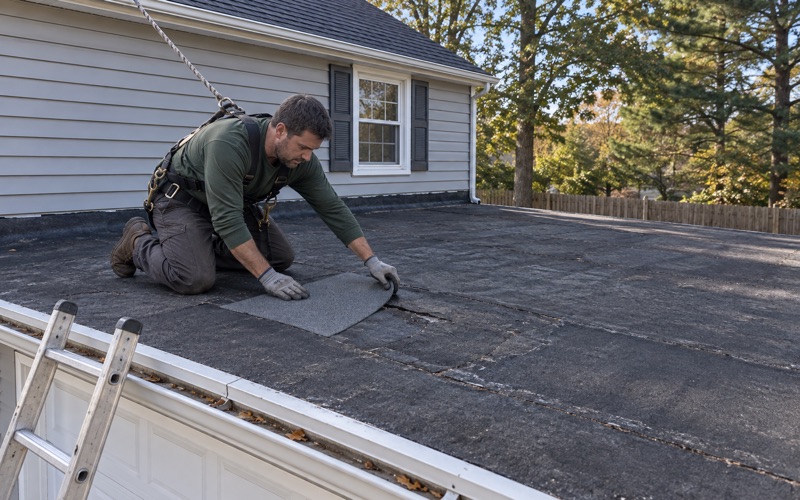
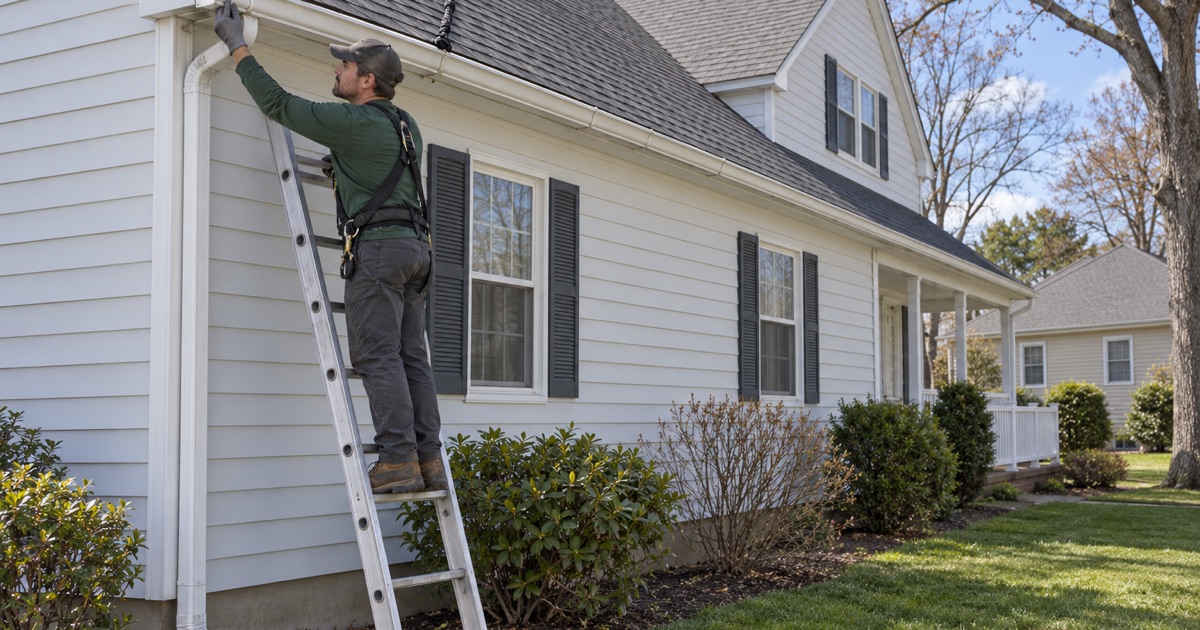
The checklist says all gutters must be in good repair and clean, and all downspouts must be in place. That covers more than it sounds like. A gutter packed with leaves, a section pulling away from the fascia, a joint that drips at every seam or a leader that ends in mid-air are all things an inspector can see from the driveway.
This is ordinary roofing work for us. We clear and reseal what can be saved, rehang sections that have sagged, and replace runs that are past saving with seamless aluminum gutters and leaders. Every downspout gets reattached and pointed away from the foundation, because the item asks that they be in place, not just present somewhere in the yard.
Chimneys and fuel-burning vents
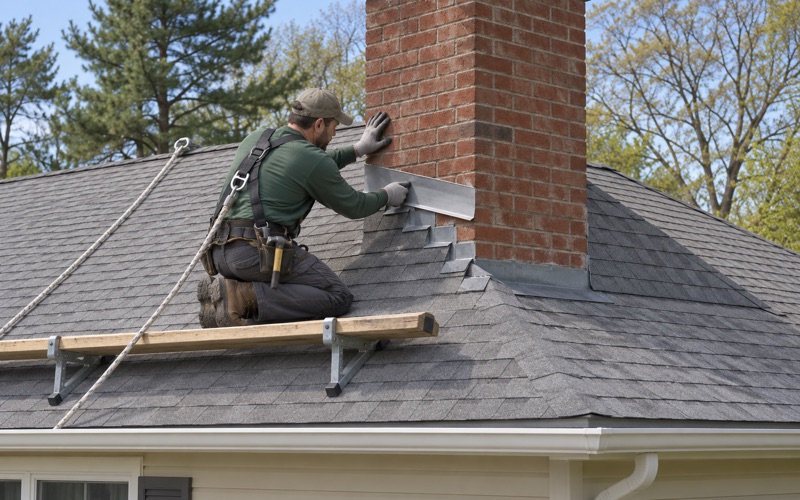
Another exterior item calls for chimneys and towers in good repair. On a roof, that usually means the crown, the cap, the mortar joints near the top and the flashing where the chimney meets the shingles. Loose step flashing and cracked counter flashing are the details we see most often on older houses, and they are also a common source of slow leaks into the attic.
The interior side of the checklist goes further. Every fuel-burning vent must be inspected by a chimney sweep certified by the Chimney Safety Institute of America, who certifies that the flue is clear of obstruction, substantially clean of residue, and appropriately lined and sized. That certificate comes from the sweep, not from us, so we suggest booking the sweep early and scheduling any flashing or crown work around what the sweep reports.
Trim, paint and the eaves
The checklist also asks that all trim be in good condition and that there be no flaking or peeling paint. On a roofing job, the trim that matters most is the fascia behind the gutters and the rake boards along the gable ends, where soft wood tends to show up once a gutter has overflowed for a few seasons.
Nearly half of the houses here were built between 1950 and 1969, according to the same census estimates, which means a lot of painted fascia that predates 1978. When we disturb that paint we follow the EPA lead-safe work rules, and we note any rotted board in the estimate so it is replaced before the painter arrives.
What the list leaves out
The checklist does not name the roof covering itself. Nothing in it asks for a new roof, a roofing certificate or a separate roof inspection before a sale, and we will not tell a seller otherwise. What a buyer’s own home inspector says about the shingles is a separate conversation, and that is where our written condition report earns its place.
Open Permits and Violations Stop the Application
One line on the checklist catches more sellers off guard than the gutters do. All construction permits and violations must be closed out before the township will accept an application, and all property taxes must be paid to date. An application that cannot be accepted cannot produce a certificate, however clean the gutters are.
Old permits are the usual surprise
An open permit is often something the owner forgot about entirely, such as a deck, a furnace swap or an addition that was finished years ago but never got its final inspection. On a long-held house it can easily predate the current owner. The fix is to find it early, because closing one out can mean scheduling an inspection that the old contractor never requested.
We suggest asking the township construction office for the permit history on the property when you first decide to sell, before anything is listed. If a past job is still open, that is the item to chase first, since nothing else on the checklist moves until it is resolved.
Where roofing does and does not add paperwork
Under the New Jersey Uniform Construction Code, replacing the roof covering on a detached one- or two-family house is treated as ordinary maintenance under N.J.A.C. 5:23-2.7. That means a straightforward re-roof on a house here does not open a construction permit of its own. Structural work is different, and so is anything beyond the covering itself.
What a roofing job does add is a contract. Ours are written to New Jersey’s home improvement rules, including the notice of the owner’s right to cancel within three business days, and the written scope lists tear-off, decking, underlayment, flashing, ventilation and gutters on separate lines. A seller comparing two bids can line them up item by item and see exactly what each one covers.
The Buyer’s 30-Day Conditional Certificate and Getting the Roof Edge Ready
The ordinance offers one route for a house that is not fully ready on closing day. Under its conditional or temporary certificate provision, a buyer can take title even though deficiencies remain, provided those deficiencies do not impair habitability.
How the conditional certificate works
The owner-occupants sign a notarized letter that lists each deficiency and agree to correct them within 30 days of closing. The ordinance limits this certificate to a purchaser who will live in the house with immediate family as the only occupants, and the conditional certificate itself expires within 30 days.
For a buyer, that turns a gutter or chimney item into a short deadline the day after closing. We can scope the work before the closing date, so the new owner already has a written plan and a start date rather than scrambling to find a crew during the first weeks of moving in.
A sensible order of work before a listing
The sequence we suggest is simple. Check the permit history first, then book the chimney sweep, then have us walk the roof edge and attic so the gutters, leaders, flashing, crown and trim are all on one written list. Painting comes last, after any boards are replaced, so nothing is coated twice.
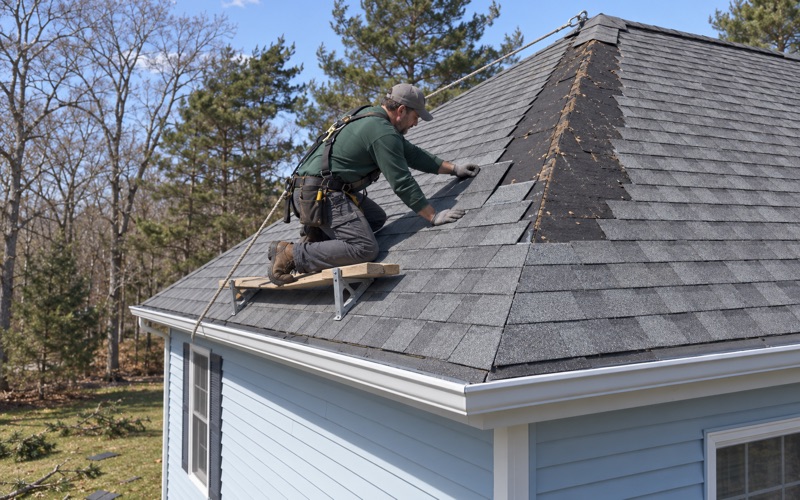
If we find damaged decking once old material is off a section of roof, we photograph it and show it to you before anything is replaced, at the per-sheet price written into the contract. Flashing is replaced along with the roof rather than reused, and the attic ventilation is checked, because a seller does not want a buyer’s inspector finding a hot, damp attic under brand-new shingles.
Living on the peninsula
Shark River Hills sits on a broad peninsula bordered on the east and south by the Shark River estuary, with Route 18 along its western side. Mature trees are common on these lots, and gutters under overhanging limbs fill faster than most owners expect. We call out overhanging branches and leaf-packed valleys in the estimate, so a seller knows the clean gutter the inspector sees will need keeping up.
At the end of each work day we clean the driveway, the yard and the gutters, and run a magnet across the lawn for loose roofing nails. On a house that may have showings scheduled during the job, that daily cleanup matters as much as the work on the roof itself.
- 20+ Years on Monmouth County Roofs
- Line-Item Written Estimates
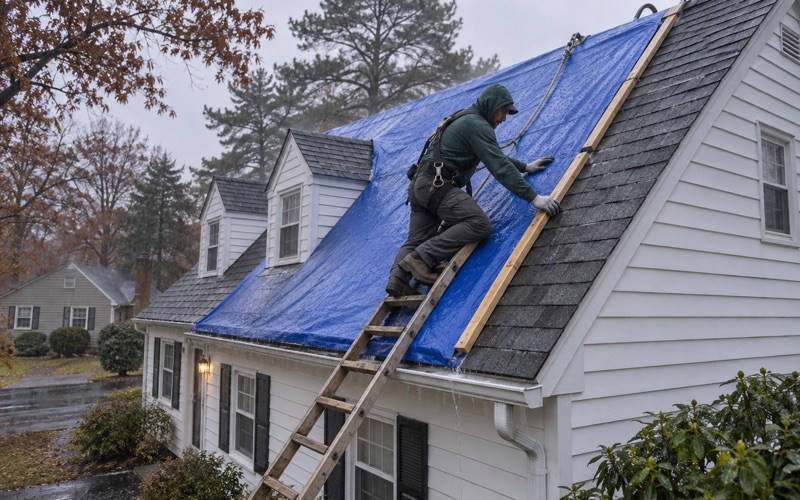
- Same-Day Storm Tarping