
Howell Quality Roofing has tracked down and repaired roof leaks in Howell, NJ for more than 20 years, serving surrounding cities including Ramtown, Freehold Township, Wall, West Freehold and Vista Center. When water is coming through a ceiling, the problem is rarely the obvious shingle above the stain, and the repair only works if it lands on the actual point of entry.
That is why every leak call starts in the attic. Water leaves a trail on the underside of the roof: darkened sheathing, rusted nails, stained rafters and wet or flattened insulation. Following that trail uphill tells us which flashing, vent, valley or shingle let the water in before anyone climbs a ladder or quotes a price.
Once the source is found, we fix that part properly rather than coating the area with sealant and hoping. If the leak turns out to be one symptom of a roof that is failing everywhere, we tell you that too, with photos, but we still price the repair so the decision is yours.
How We Find a Roof Leak
Step 1: Your Account of the Leak
We start by asking when the leak appears. A drip only in wind-driven rain from the east points somewhere different than one that shows up after every storm or only during a thaw. Where the stain sits, how fast it grew and whether it appears on sunny days all narrow the search before we look at anything.
Step 2: Tracing the Water in the Attic
In the attic we follow the water path from the stain uphill. Wet insulation is pulled back to expose the ceiling joists, and we look along the rafters and the underside of the deck for the highest wet or stained point. That spot, not the stain on your ceiling, is usually where the water came through the roof.
We also rule out the things that imitate roof leaks. Bathroom fans venting into the attic, uninsulated ducts sweating in summer, and frost on the deck melting in winter can all drip onto a ceiling. If one of those is the cause, we tell you, because a roof repair will not fix it.
Step 3: Matching It to the Roof Above
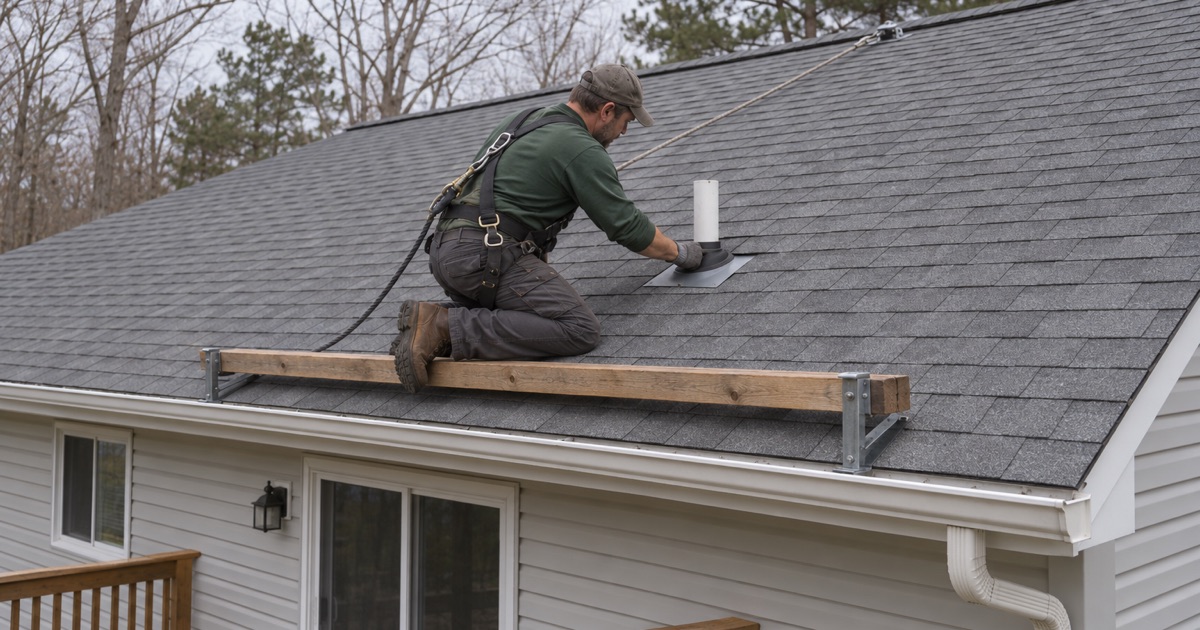
With the entry point located from inside, we go up and inspect what sits above it: a pipe boot, a section of step flashing, a valley, a skylight curb, a nail pop or a damaged shingle. Seeing both sides of the deck means we are matching evidence, not guessing at the most likely suspect.
Step 4: Water Testing When Needed
Some leaks hide. When the attic trail and the roof surface do not agree, we run water over one small section at a time, starting low and working uphill, while someone watches from the attic. The moment water shows inside, we know which section is at fault, without waiting weeks for the right storm.
Step 5: The Repair and a Written Record
We repair the failed component, show you photos of what we found and what we replaced, and note any other weak spots we saw along the way. That record is useful if the leak returns, if you file an insurance claim, or when you eventually plan a replacement.
The Leaks We Fix Most Often
Cracked Pipe Boots
The rubber collar around a plumbing vent dries and cracks in the sun, often years before the shingles around it wear out. Water then runs down the outside of the pipe and into the attic. We replace the boot with a new one or a lead flashing boot, tucked under the shingles above it and lapped over the shingles below it.
While we are at the vent, we check the pipe itself and the shingles around it. A pipe cut short, a boot nailed through its exposed face, or shingles laid over the boot’s lower edge all let water in even with a new collar, so each of those gets corrected in the same visit.
Chimney Flashing Failures
Chimneys are the single most common source of stubborn leaks. Step flashing along the sides, counter flashing set into the mortar or a reglet, and the cricket behind wider chimneys all have to work together. We rebuild the flashing system rather than adding tar, and we check the crown and mortar joints, because water entering the masonry can mimic a flashing leak.
Valleys and Roof-to-Wall Joints
Valleys carry water from two slopes at once, so a cracked shingle or worn valley metal leaks fast. Where a roof meets a wall or dormer, missing step flashing or a missing kick-out sends water behind the siding. We open the joint, install the correct flashing piece by piece, and close it so water is carried past the joint instead of into it.
On wooded lots, valleys also fill with needles and leaves that dam water and hold moisture against the shingles. We clean them as part of the repair and point out overhanging limbs, since the same debris will build up again if the source is left in place.
Skylights and Roof Vents
Skylight leaks usually come from the curb flashing rather than the glass, though old seals can fail too. Box vents, exhaust caps and ridge vents can leak where their flashing or fasteners have loosened. We reflash the opening, replace failed units, and make sure the shingles above each one overlap correctly.
A skylight that has leaked for a while often leaves stained drywall in the light well and swollen trim around the frame. Once the leak is stopped, we let you know whether the unit itself is worth keeping, since replacing an aging skylight during the repair costs less than reopening the roof for it later.
Ice Dam Leaks at the Eaves
Winter leaks along the outside walls are often ice dams: melted snow refreezes at the cold eave and backs water under the shingles. We repair the damage and, where the roof is being worked on, add ASTM D1970 self-adhering ice and water barrier at the eaves. We also look at the attic insulation and ventilation that let heat reach the roof in the first place.
Gutter and Fascia Leaks
Water that runs behind the gutter instead of into it rots the fascia and soaks the top of the wall, which can show up as a stain near an exterior wall. Missing drip edge and gutters pitched the wrong way are the usual causes. We install drip edge, replace rotted fascia, and reset the gutters so the roof edge drains properly.
Active Leaks and Storm Damage
Same-Day Tarping
When water is coming in during or after a storm, we put a secured tarp over the damaged area the same day, weather and safety permitting. We photograph the damage before anything is moved, so the record of what the storm did is preserved for your claim and for the permanent repair.
When Leaks Mean the Roof Is Done
One leak on a sound roof is a repair. Several leaks at once, soft decking in more than one area, and shingles that crack when lifted usually mean the roof has reached the end of its life. We show you what we found and explain your options, including the cost of a repair to get you through a season while you plan a replacement.
- 20+ Years on Monmouth County Roofs
- Line-Item Written Estimates
- Same-Day Storm Tarping