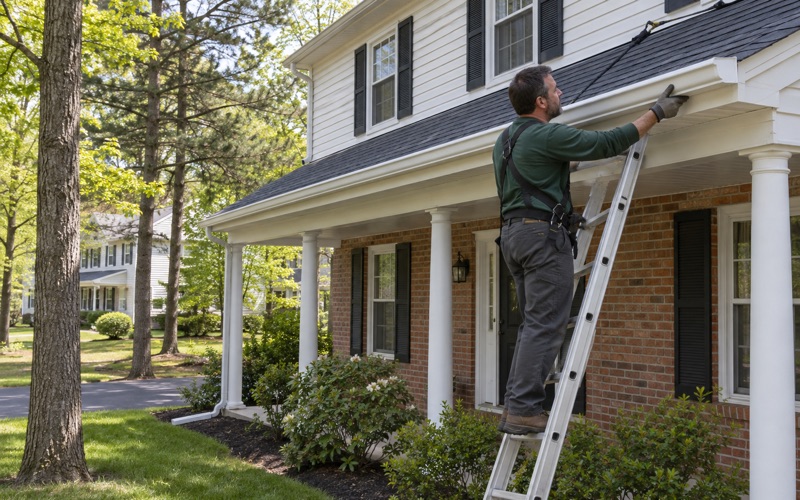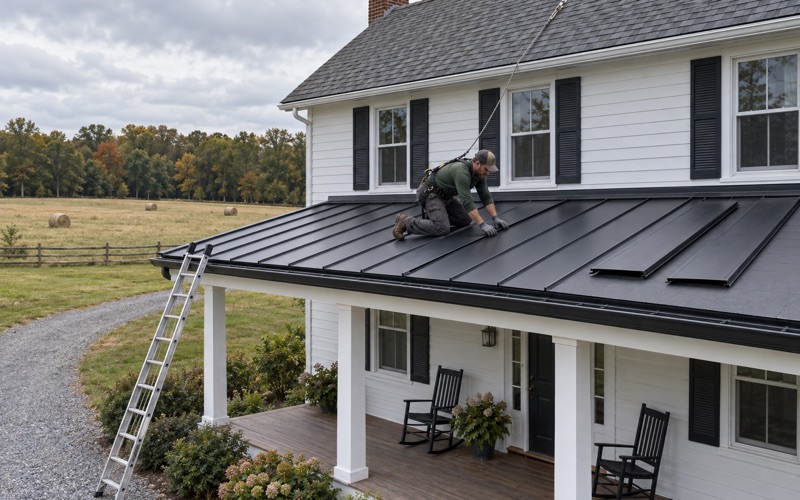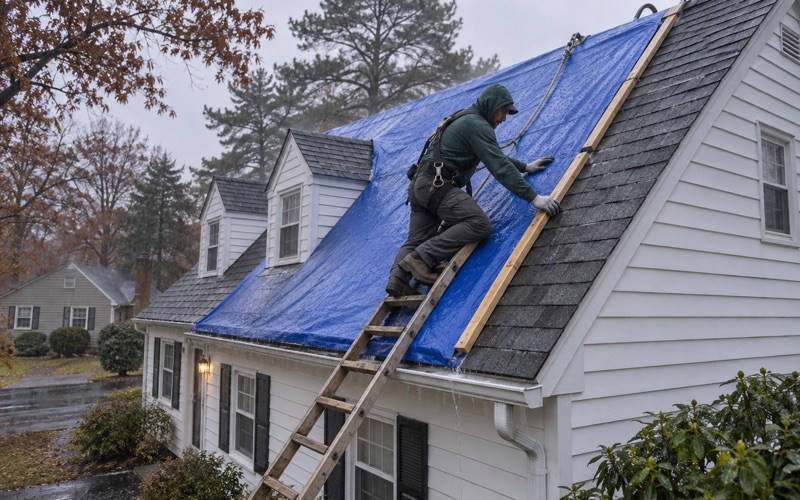
Howell Quality Roofing has handled roofing in Red Bank and across Monmouth County for more than 20 years, and on older houses the part of the job we plan hardest is the edge. The shingles are rarely the complication. The painted wood they sit against, the fascia, rake boards and cornice trim, often is.
When a roof comes off an older home, that painted trim can come off with it. On housing built before 1978, a federal rule decides how much of that paint can be disturbed before the job has to be run as lead-safe work, so we settle the trim question on paper before anyone climbs a ladder.
What follows is how we approach it: where the rule draws its line, why roof edges reach that line faster than owners expect, what a lead-safe job looks like on site, and how rental owners can fit roof work around their own paperwork.
Old Houses and EPA’s Lead-Safe Rule
Red Bank is a borough on the Navesink River, incorporated in 1908, and much of its housing predates that river town’s modern growth. Census figures for 2024 date 2,017 of the borough’s 6,216 housing units to before 1940, and 4,959 units, about four in five, to before 1980.
Those numbers do not tell us anything about a single house. They do explain why, on a Red Bank estimate, we ask about the age of the home and the condition of its painted trim before we talk about shingle colors or brands.
What the Renovation, Repair and Painting Rule Covers
EPA’s Renovation, Repair and Painting Rule applies to paid renovation work on housing built before 1978. Roofing counts as renovation when it disturbs painted surfaces, and on a re-roof the painted surfaces are mostly at the edges of the roof.
The census table has no break at 1978, so there is no exact count of Red Bank homes that fall under the rule. The 1980 figure only shows how much of the borough’s housing stock sits in the era the rule was written for.
Whether Your Trim Holds Lead
Whether a particular house has lead paint on its fascia or cornice is known only by testing. Age raises the question; it does not answer it, and we never treat a build year as a finding.
What we can tell you before signing is how much painted trim the job will disturb. That number, more than the age of the house, decides how the work has to be run.
Firm Certification Since 2010
Since April 22, 2010, the rule has barred any firm from performing renovations in pre-1978 housing without certification from EPA. That requirement attaches to the firm doing the work, not to the homeowner.
If your re-roof crosses the rule’s threshold, ask whoever does the trim work for the firm’s EPA certification and keep a copy with your contract. It is a fair question to put to every roofer bidding the job.
Looking for roofing closer to Beachwood? See Roofing in Beachwood.
The 20-Square-Foot Line on the Outside of the House
The rule carves out small jobs. Exterior work counts as minor repair and maintenance, and stays outside the rule, only while it disturbs 20 square feet or less of painted surface, avoids the practices the rule prohibits, and involves no window replacement or demolition of painted surfaces.
Twenty square feet sounds generous until you measure an eave. The figure is a total for the whole exterior, and roof edges are long, narrow surfaces that add area quickly.
Removed Components Count in Full
The regulation, 40 CFR 745.83, says that when painted components are removed, the entire surface area removed is the amount of painted surface disturbed. Prying off a rotted board counts the whole board, not just the soft spot.
That is where roof work catches owners off guard. A single length of fascia six inches tall and 40 feet long is already 20 square feet of painted wood before the rake boards are touched.
All Exterior Work Adds Together
EPA’s own guidance says painted area disturbed on several sides of the house is totaled against the same 20 square feet. Front fascia, a side rake and the back porch roof trim are one tally, not three small jobs.
The rule also treats work in the same area within 30 days as the same job. Splitting a trim replacement into pieces does not keep it under the line, and we do not plan work that way.
Fascia, Rake Boards and Cornice Trim on a Tear-Off
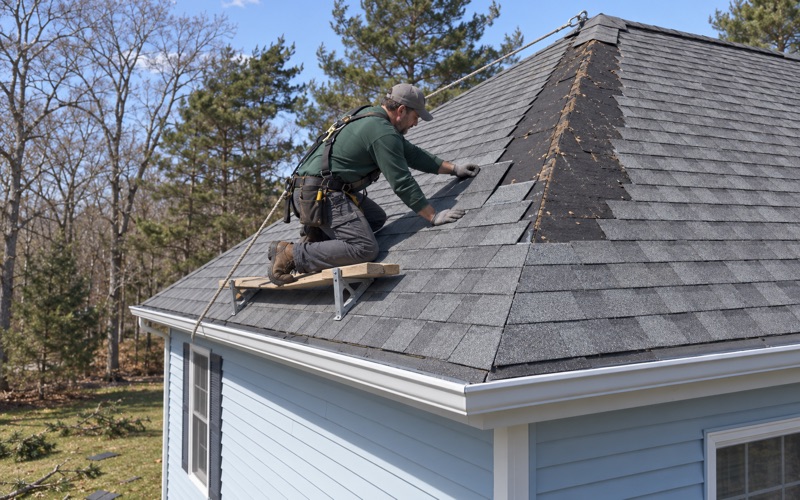
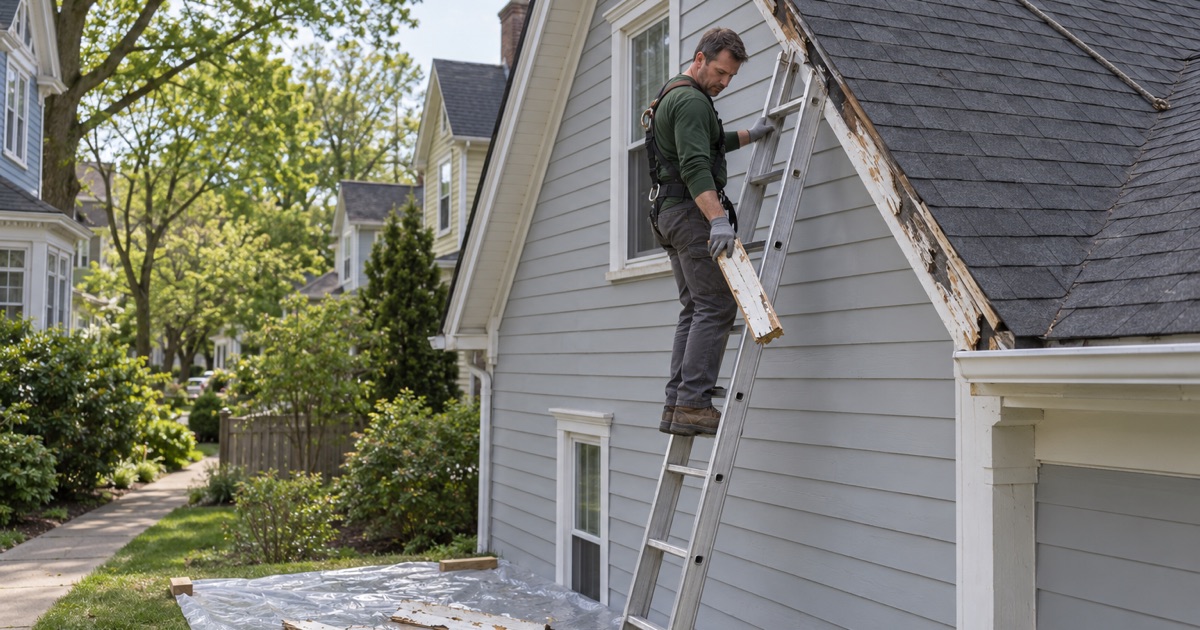
On many older houses the shingles sit directly against painted wood at every edge. Pulling the drip edge and the starter course can loosen, crack or expose that paint even when the plan was to leave the trim in place.
Where the Square Feet Add Up
Fascia runs the length of every eave, rake boards climb each gable, and a built-up cornice can wrap a front elevation in several painted pieces. Porch roofs add their own trim line, usually at eye level and near where people walk.
We measure each of those runs during the estimate and note which boards are sound and which are rotted. Rotted trim has to come off, and once it does, its full surface counts toward the line.
Repair First, Replace Second
We give a straight answer on whether a roof can be repaired before replacement is discussed, and the same holds for trim. A sound board kept in place disturbs far less paint than one torn off and rebuilt.
Where the decking under the edge is damaged, we photograph it and show you before it is replaced, at a per-sheet price set in the contract. Nothing about the edge is decided after the fact.
A Line-Item Scope for the Edge
Our written scopes list tear-off, decking, underlayment, flashing, ventilation and gutters as separate lines. On an older house we add the painted trim as its own line, with the measured footage beside it.
That lets you compare two estimates honestly. A bid that leaves the trim out has not priced the part of the job most likely to trigger the rule.
Gutters Hung on Painted Fascia
Gutters are fastened through the fascia, so replacing them often means pulling hangers, patching holes or swapping a rotted board behind them. EPA’s answer on seamless gutters says that work is combined with any other painted surface disturbed on the outside of the building.
If you plan new seamless aluminum gutters and leaders along with the roof, we count both jobs together from the start. Two crews each staying under the line separately can still put the house over it as one job.
Running a Lead-Safe Roof Job in Red Bank
When the trim work crosses 20 square feet, the job changes shape on the ground as much as on the roof. Most of that change is about keeping paint chips and dust where they can be collected.
It also changes the timeline. Setup and daily cleanup take longer than on a newer house, and we write that time into the schedule rather than letting it surprise you midweek.
Containment Below the Eaves
Lead-safe exterior work generally means plastic sheeting on the ground below the work area, closed windows and doors nearby, and a marked zone that keeps children and pets back. On a tight lot, that zone shapes where the dumpster and ladders go.
Red Bank is the fourth most densely populated municipality in Monmouth County, so a neighbor’s yard or driveway is often a few feet from the eave. We walk the lot with you and plan the setup before the work day starts.
Cleanup at the End of Each Day
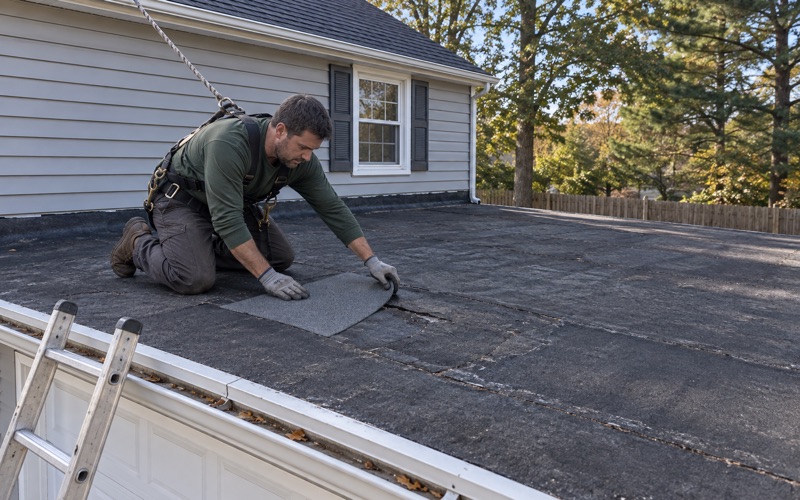
We already clean the driveway, yard and gutters at the end of each work day, including a magnet sweep for roofing nails. On a lead-safe job, the sheeting and the debris it caught are bagged and removed rather than swept into the lawn.
Gutters deserve a careful look here. Paint chips and grit from the edge collect in them, so we clear them as part of the cleanup rather than leaving that for the next storm to flush out.
Flashing and Ventilation While the Edge Is Open
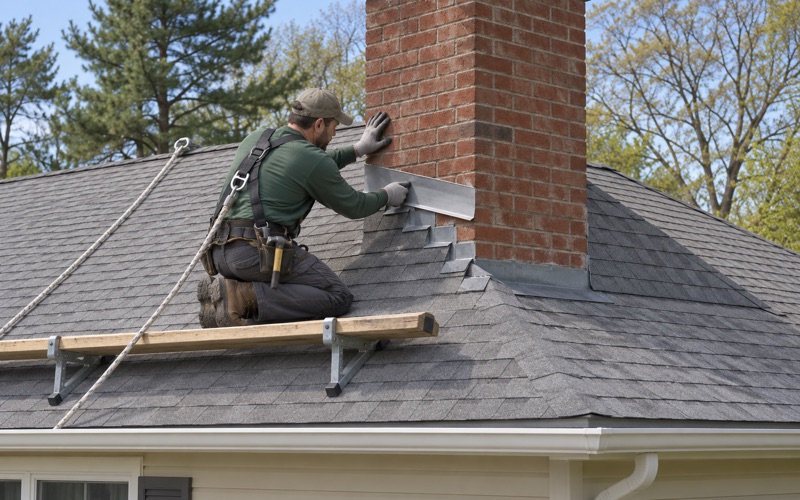
With the edge opened up, we replace step, counter and chimney flashing rather than reusing it under the new roof. Reusing old flashing beside new shingles is a shortcut we leave out of every scope.
We also check attic ventilation on every replacement, because a roof that cannot breathe ages from underneath. Soffit intake often sits right in the painted cornice, so the two decisions get made together.
Rentals and Lead-Safe Certificates
About half the borough rents: ACS 2024 counts 2,988 of 5,983 occupied units as renter occupied. Under New Jersey’s lead-safe rental rules, N.J.A.C. 5:28A, certain rentals built before 1978 need a lead hazard inspection and a lead-safe certificate.
The borough’s 2025 notice set July 22, 2025 for those visual inspections and says new certificates of occupancy will not be issued without a valid lead-safe certificate or an exemption. DCA’s page gives an earlier July 22, 2024 date and a shorter validity period, so confirm your own dates with the borough.
Planning Roof Work Around the Rental Calendar
Inspections are scheduled through the inspection firm the borough contracts with, and a roofer issues nothing toward a lead-safe certificate. What we can do is time the trim work so it does not land on top of an inspection date.
If you own a rental that needs a new roof, tell us where it stands with its certificate. We will build the edge work into the schedule so the roof, the trim and your paperwork move in the right order.
Selling an Older House
Buyers of older homes tend to look hard at the roof and the trim around it. When a home is going on the market, we write a roof condition report the seller can hand to the buyer’s inspector.
That report notes the roof covering, the flashing and the condition of the painted edges we could see. It does not say whether the paint contains lead, because only testing can answer that.
- 20+ Years on Monmouth County Roofs
- Line-Item Written Estimates
- Same-Day Storm Tarping