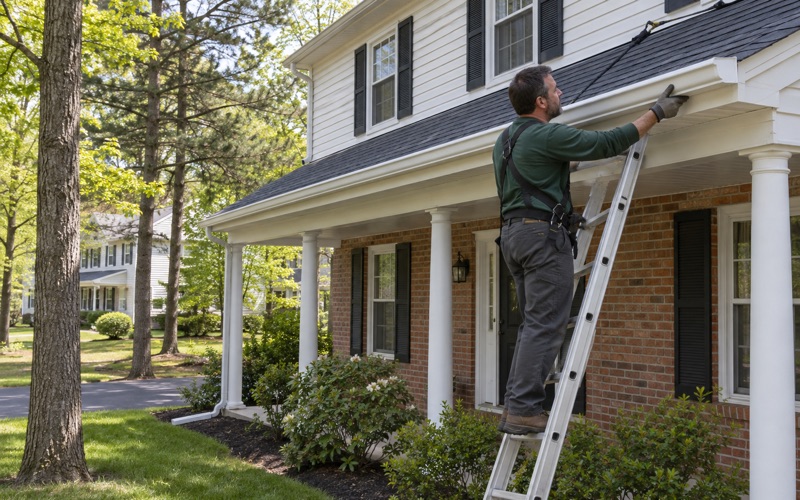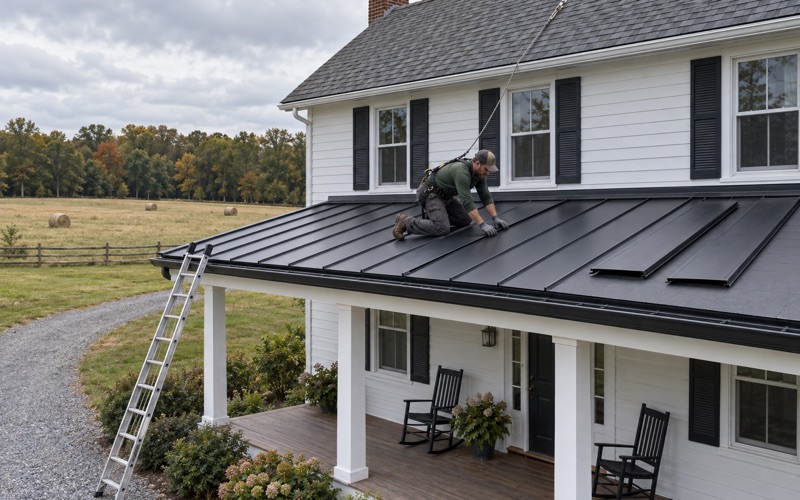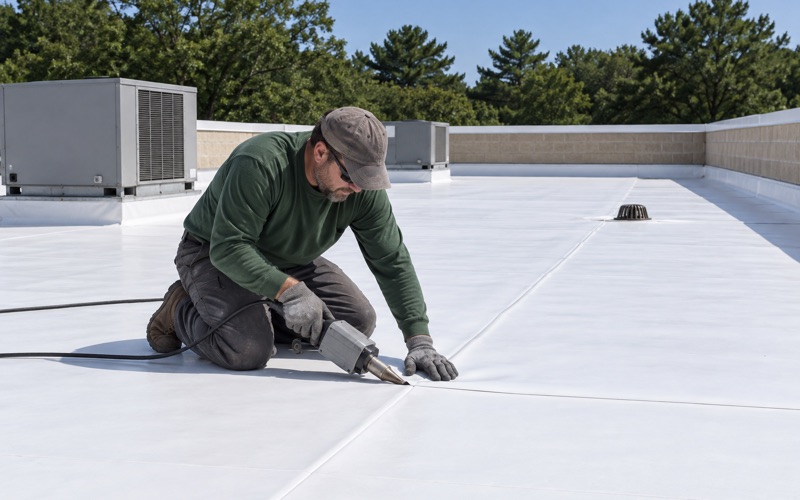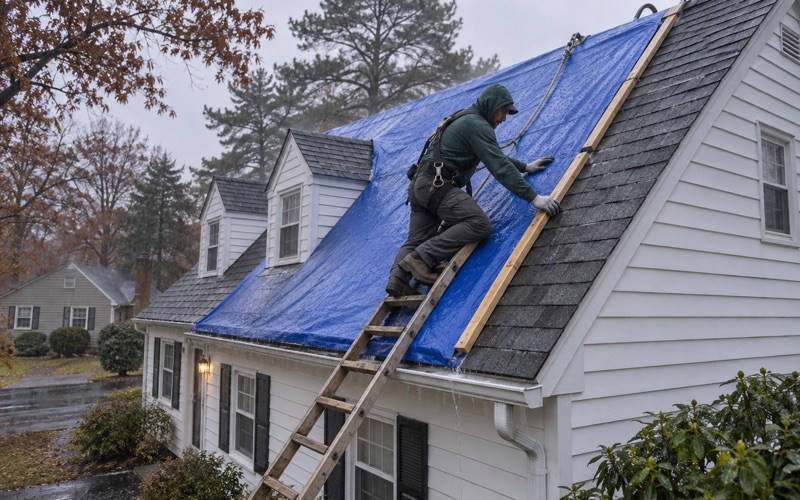
Howell Quality Roofing has handled roofing in Ramtown for more than 20 years, and on most of these houses the work starts with what is growing over the roof. A leak, a few lifted tabs or a gutter that spills at the corner usually traces back to a limb that has been brushing the same slope for years. We look at the roof and the canopy above it together, because one tends to explain the other.
You get a straight answer about repair before replacement is ever on the table. If a valley can be rebuilt or a few courses of shingles swapped out, we say so first. On any leak call we also go into the attic, so the water is traced to the spot where it actually gets in before a price is written.
When a new roof is the right call, the written scope separates tear-off, decking, underlayment, flashing, ventilation and gutters into their own lines, which makes two estimates easy to compare. Trees get named in the estimate too: limbs over the roof, needle-packed valleys and shaded, mossy slopes are called out up front instead of turning into a surprise on install day.
Trees Over Ramtown Roofs and Howell’s Tree Rules
Ramtown is a census-designated place in the southeast corner of Howell Township, not a town with a government of its own. On a wooded lot that distinction matters, because the rules about cutting a tree come from Howell Township, and the township has a detailed set of them.
Where the ordinance lives
The rule sits in Chapter 188, Article XXII of the Howell Township code, titled Woodlands Management, and the article calls itself the Howell Township Tree Removal and Replacement Ordinance. It was added by Ord. O-04-22 on December 21, 2004, after township findings cited increasing incidents of indiscriminate cutting and removal of trees.
It is not a forgotten 2004 rule. The copy we read carries amendments through Ord. 23-23, adopted August 15, 2023, which revised the section on waivers. That copy came from a third-party code service rather than the township’s official code page, so anything adopted after it would not show up in what we read.
The baseline rule
Section 188-191F(1) is blunt: no person may cut, remove or destroy any tree growing in the township without a permit under section 188-193, unless an exemption in section 188-190 applies. A tree, for this purpose, is a species that reaches a mature height of 25 feet with a trunk diameter of four inches or greater, measured 4 1/2 feet above the ground. That trunk measurement is called DBH, for diameter at breast height.
That definition takes in most shade trees in an established yard. An oak or maple reaching over a ridge line is almost certainly a tree under the ordinance, so the question of whether it can come down is worth settling before anyone starts the saw.
Looking for roofing closer to Freehold Township? See Roofing Services in Freehold Township.
When a Ramtown Homeowner Can Take a Tree Down
Two exemptions in section 188-190 reach most house lots, and both are worth reading before you call the township. Neither one is ours to grant. We are roofers, we do not do tree removal, and the answer on any particular tree belongs to Howell Township.
Dead, dying or diseased trees, and hazards
Section 188-190D exempts removal by a homeowner of trees that are dead, dying or diseased. The same section covers trees that have suffered severe damage, and any tree whose angle or growth makes it a hazard to structures or human life.
For a roof, that hazard clause is the one owners ask about most. A trunk leaning toward the house or a split leader is a different situation from a healthy tree that simply casts shade. When we see one during an inspection we photograph it and note it in writing, and the owner can take that to an arborist or the township.
Lots of one acre or less
Section 188-190G exempts residential home site lots of one acre or less, subject to any easements or buffer restrictions already affecting the lot. A conservation easement or a buffer along a rear property line can still bind trees on a small lot, so the deed and survey matter as much as the acreage does.
We have not measured Ramtown lot sizes, and they are not uniform. If you are unsure which side of one acre your property falls on, the survey from your closing file is the first place to check.
Larger lots and healthy trees
On a lot over one acre, a healthy living tree that meets the size definition needs a permit under section 188-193 before it is cut. Section 188-194 sets replacement planting on a sliding scale by trunk size, and section 188-195C allows a contribution of $400 per tree to the Township Tree Fund in place of planting.
Section 188-202A keeps that money in a dedicated account. Permit fees sit in a separate chapter of the code that we did not read, so we do not quote them here.
What Overhanging Limbs Do to Shingles, Gutters and Valleys
Whatever the township decides about a tree, its limbs act on the roof below in the meantime, and that part is our job. We plan for it in the estimate rather than discovering it halfway through a tear-off.
Scrubbed granules and broken seals
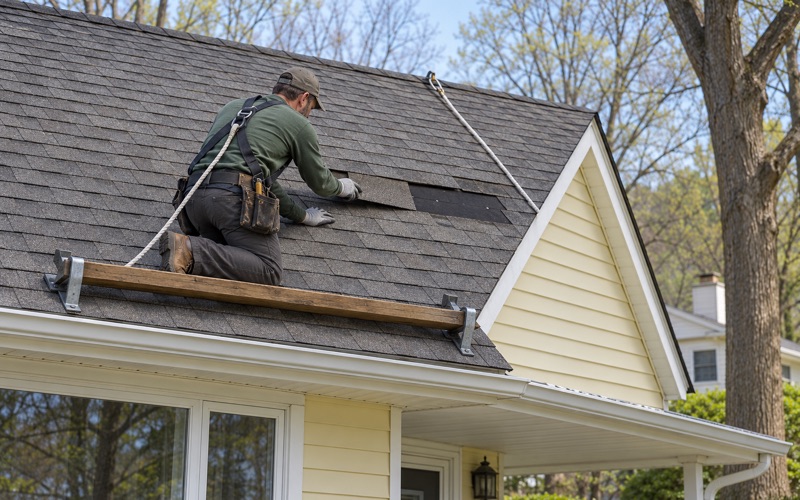
A limb that rests on or sweeps across a slope wears the granules off architectural shingles in a strip, and the asphalt underneath ages faster once it is exposed to sun. In wind, the same limb can catch a shingle edge and break its seal strip, which is often how a tab lifts and lets water reach the underlayment.
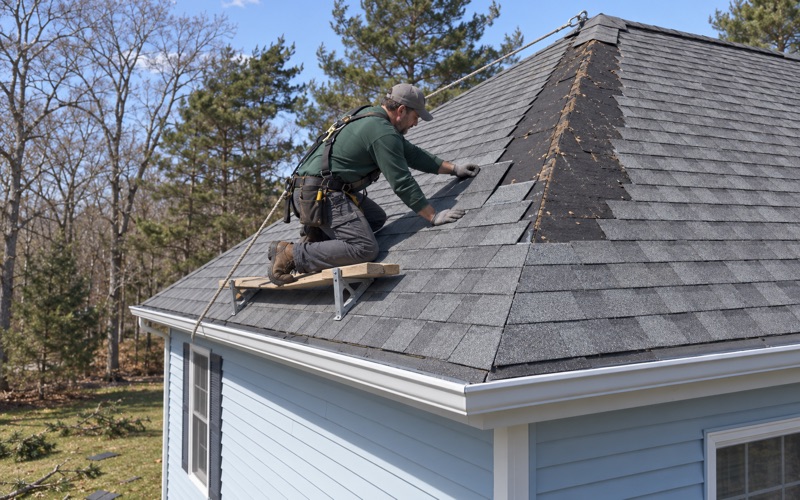
We look for that worn band and follow it up to the branch responsible. A repair can be as small as replacing a few courses, as long as the limb itself is dealt with first, or the new shingles wear the same way.
Gutters and valleys under mature trees
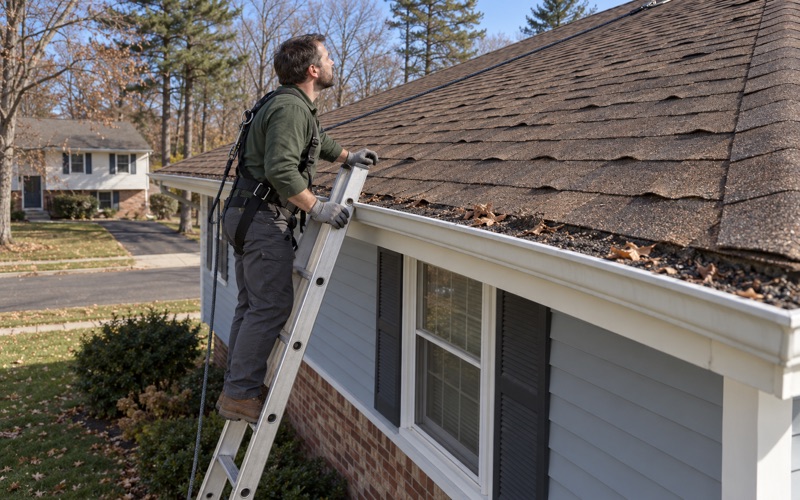
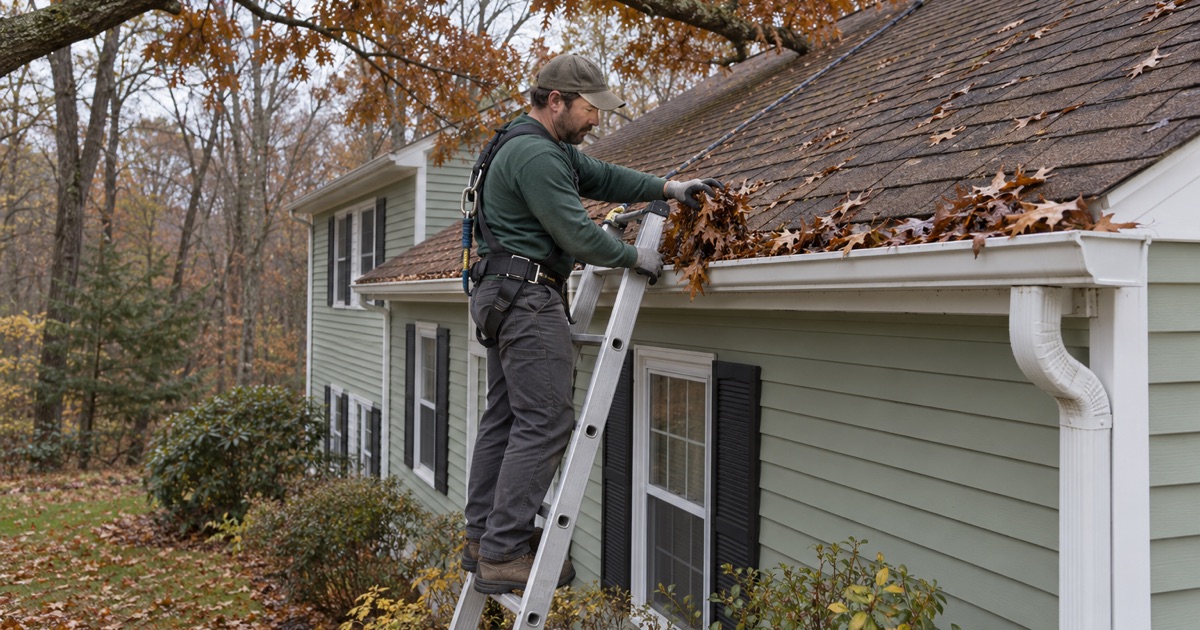
Leaves, seeds and needles collect exactly where water already concentrates. A packed valley holds moisture against the shingles and metal, and runoff that should flow straight to the gutter backs up under the shingle edges. Gutters full of the same debris overflow at the fascia instead of draining through the leaders.
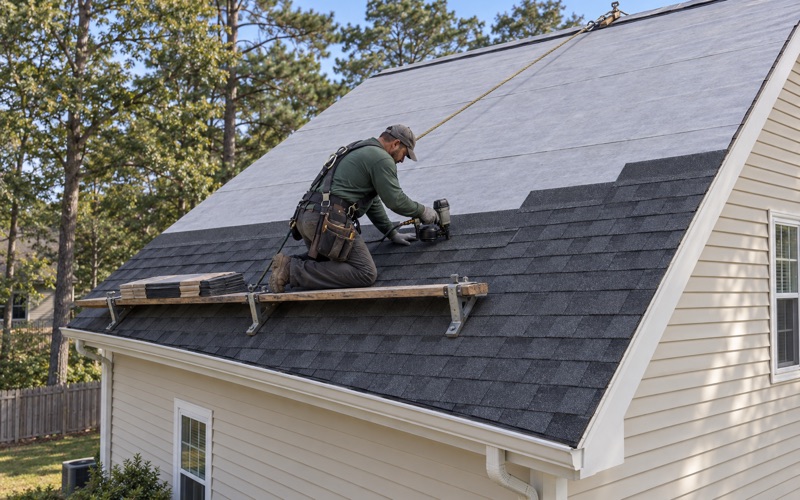
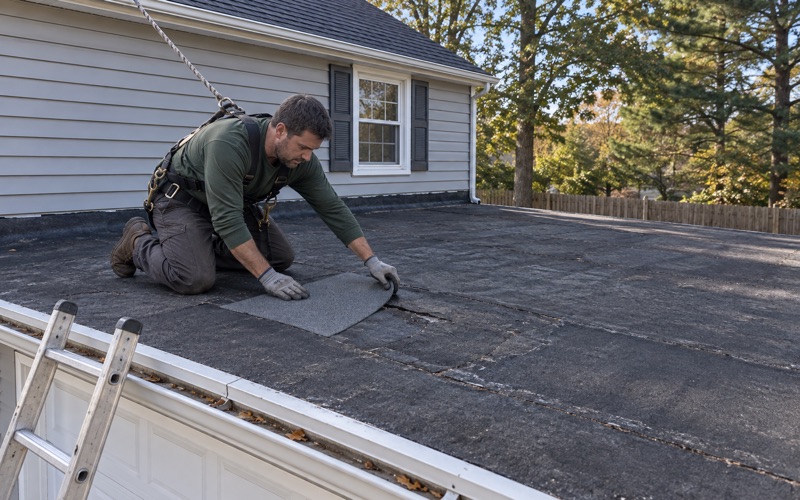
On a replacement we run a self-adhering ice and water barrier meeting ASTM D1970 through the valleys and along the eaves. Gutters are written as their own line, so a seamless aluminum system can be priced and decided on separately from the roof.
Shade, moss and slow drying
A slope that never sees direct sun stays damp long after rain. Moss and algae settle on shaded faces, lift shingle edges and hold water against the mat, and the decking beneath can soften over time.
That is why attic ventilation is checked on every replacement we do. A shaded roof with poor airflow below ages from both sides at once, and a ridge vent balanced with soffit intake keeps the underside of the deck drier.
Inspecting a 1980s Ramtown Roof Under Mature Trees
Ramtown is overwhelmingly a neighborhood of owner-occupied detached houses. The Census Bureau’s 2024 five-year estimates count 2,034 owner-occupied detached homes among 2,211 occupied units, and 1,006 of the 2,303 housing units date from the 1980s, with another 468 from the 1990s. A yard landscaped when those houses were new has had decades to grow toward the roofline.
What we check first
An inspection on a wooded lot starts from the ground, mapping which limbs reach the roof and which slopes sit in shade most of the day. Up top we look at the valleys, the gutter line and the shingles directly under the canopy. Then we go into the attic to look for staining on the decking or rafters that lines up with what we saw outside.
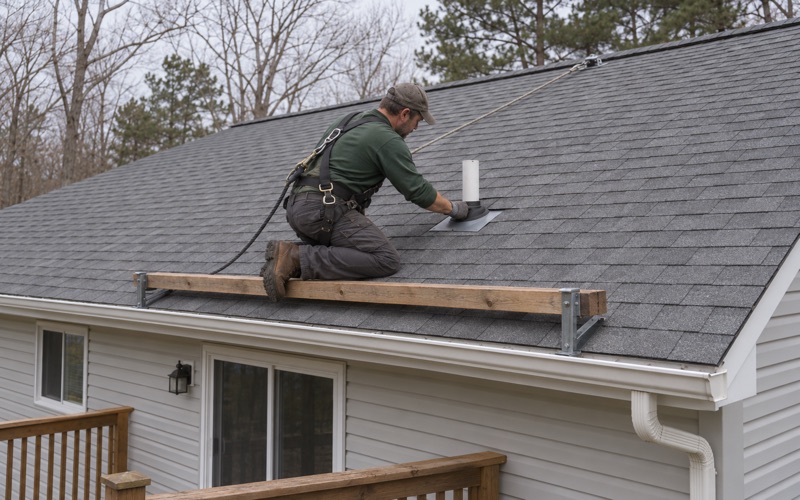
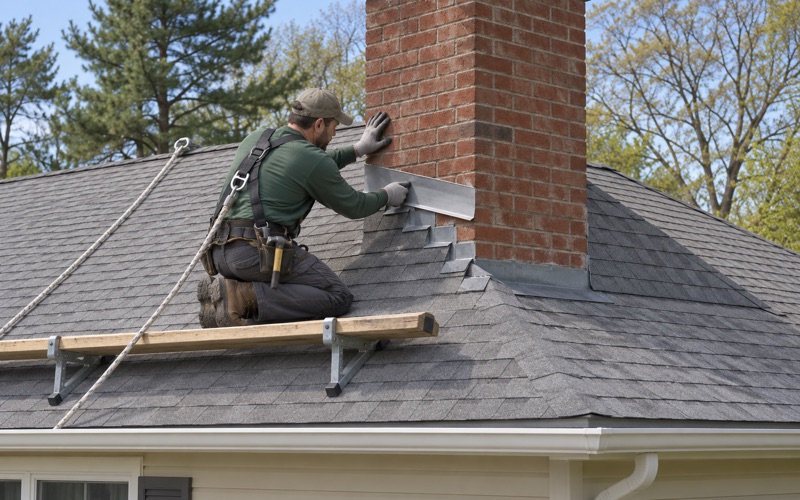
Flashing gets a close look as well. Debris that piles up behind a chimney is a common leak source, and on a replacement we install new step, counter and chimney flashing rather than reusing the old metal. A chimney wider than 30 inches gets a cricket behind it, as IRC R1003.20 calls for.
Decking on an older roof
A 1980s or 1990s roof that spent years under wet leaves can hide soft decking that only shows once the shingles come off. When we find damaged sheets, we photograph them and show the owner before anything is replaced, at a per-sheet price already written into the contract.
Scheduling around the trees
If a limb needs to come off before work begins, that is the owner’s arrangement with an arborist and, where the ordinance applies, with Howell Township. We schedule the roof around it so new shingles do not go on under a branch that is about to be cut.
At the end of every workday the driveway, yard and gutters are cleaned, including a magnet sweep for nails. On a lot covered in leaf litter, that sweep is what keeps a dropped fastener from ending up in a tire.
Contracts, storms and claims
Our contracts are written to New Jersey’s home improvement rules, including the three-day cancellation notice. If wind brings a limb down onto a roof, we tarp it the same day and take photos before anything is moved.
We then write up the damage for the owner’s own insurance claim, and we will meet the adjuster on site when asked. The claim itself stays between you and your insurer.
- 20+ Years on Monmouth County Roofs
- Line-Item Written Estimates
- Same-Day Storm Tarping