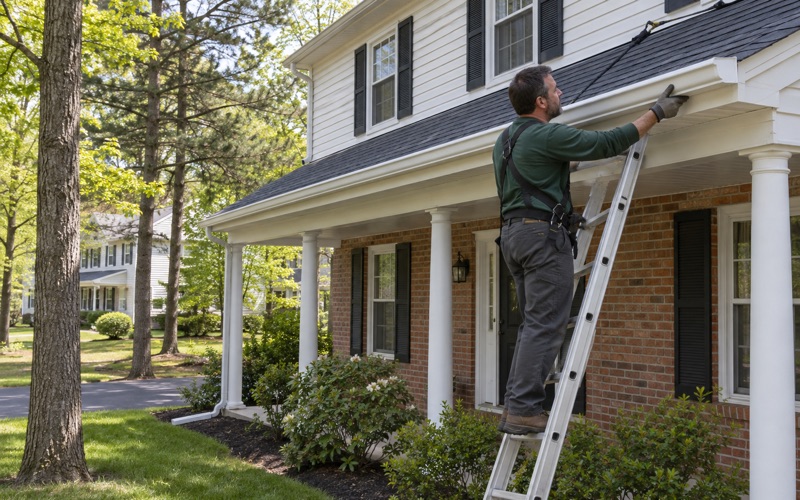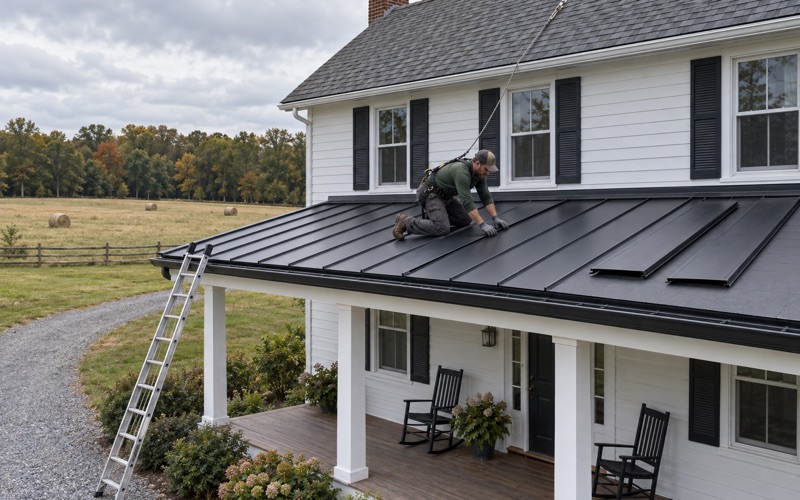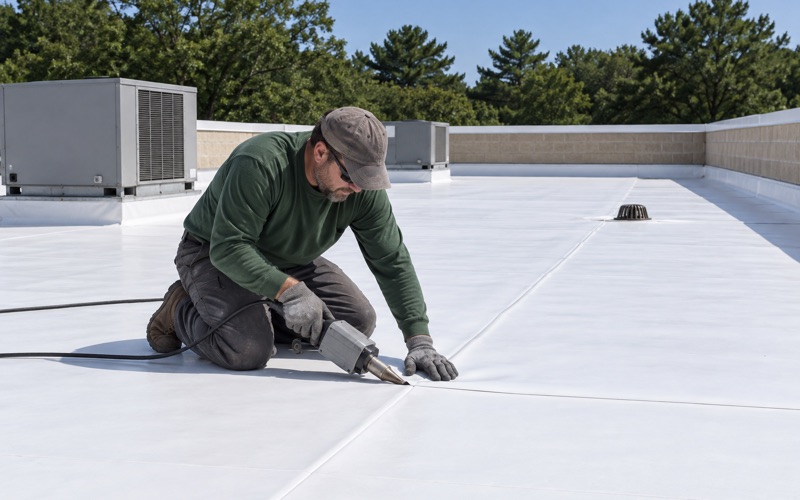
Howell Quality Roofing has spent more than 20 years on roofing in Point Pleasant and across this part of the shore, and a good share of the calls here begin with a question that has nothing to do with shingles: whose roof is it? On a detached house the answer is simple. On a condominium or townhouse building it depends on documents recorded long before the current owner bought in, and we read them before we price anything.
That habit matters because the person who calls us is not always the person who can sign for the work. A unit owner may spot a stain on a bedroom ceiling, a property manager may need a scope for the next board meeting, and a townhouse owner may be holding a roof that is entirely theirs. We sort out which of those it is first, then we go up the ladder.
Whoever ends up holding the roof, the work itself is handled the same careful way. Leaks are traced from the attic as well as from above, repair is weighed honestly before replacement ever comes up, and each written scope breaks tear-off, decking, underlayment, flashing, ventilation and gutters into separate lines so an owner or a board can compare bids item by item.
Point Pleasant’s Garden Condominiums and Waterfront Townhomes
Most of the borough is detached housing, but Point Pleasant also holds a real condominium sector, and its roofs work differently on the paperwork side. Knowing which kind of building you live in is the first step toward knowing who decides about the roof over it.
Two-story garden and courtyard buildings
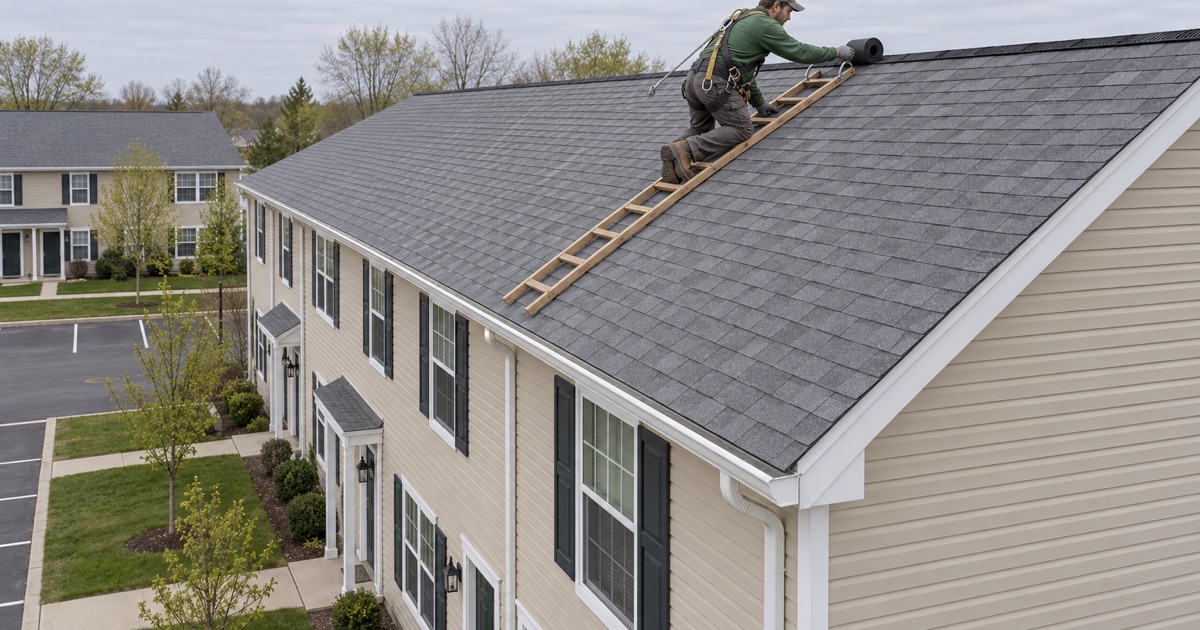
A July 2026 brokerage guide to the borough’s condominiums dates the inland associations to the late 1960s through the late 1980s and describes them as mostly two-story garden and courtyard buildings. They cluster along Bridge Avenue, Route 88, Beaver Dam Road and the street grid west of the canal.
A long garden building usually carries one continuous roof over several units, with shared valleys, shared ridge lines and gutters that drain more than one front door. A leak on a roof like that rarely respects the line between two units, which is part of why ownership has to be settled before a repair is scoped.
The waterfront tier of townhomes and flats
The same guide describes a second group of associations on lagoon, canal and river frontage, made up of townhomes and flats. Townhouse rows often divide the roof at the party walls, so the section over one owner can read as its own piece of the building even though it shares framing and edges with its neighbors.
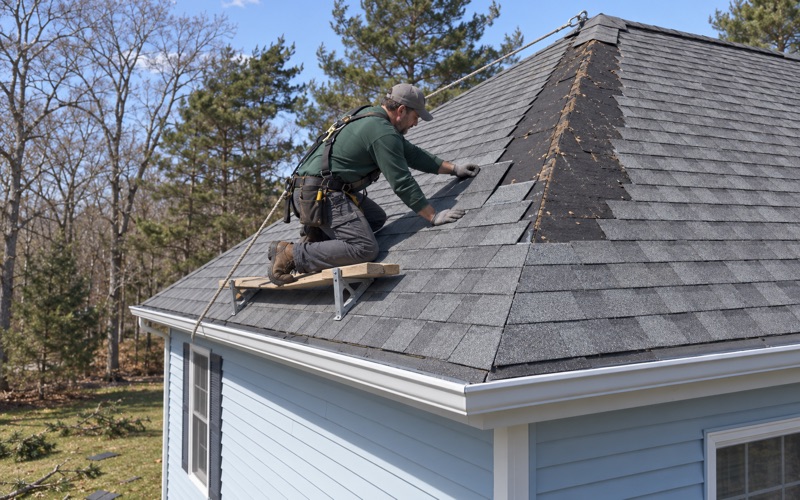
Buildings that face open water get a close look at the details that tend to open up first: drip edge at the eaves and rakes, the fastening of ridge caps, and flashing where a roof meets a wall or a dormer. We note each of those separately so the person who holds the roof can see exactly what needs attention.
What the census counts show
Census estimates for the borough count 545 units in buildings of 10 to 19 units and 169 in buildings of 20 to 49, for 714 in all. Add 395 attached homes and 202 units in three- and four-unit buildings, and a meaningful share of Point Pleasant lives under a roof shared with someone else.
Those same estimates show owners occupying 196 of the units in buildings of 10 to 49 units, with the rest rented. When a renter reports a leak, the call usually passes through a unit owner and then an association before anyone climbs a ladder, and we are used to working within that chain.
Looking for roofing closer to Asbury Park? See Roofing Services in Asbury Park.
What the Condominium Act Says About Roofs, and Where the Master Deed Comes In
New Jersey’s Condominium Act took effect on January 7, 1970, and it is the starting point for any question about a condominium roof in the state. The Act sets defaults, and the master deed recorded for each association shapes how those defaults apply to a particular building.
Roofs are listed among the common elements
The Act’s definition of common elements, at N.J.S.A. 46:8B-3(d), includes, as to any improvement, ‘the foundations, structural and bearing parts, supports, main walls, roofs’ along with halls, stairways and other means of access. That part of the definition carries an exception for any part reserved for a particular unit or group of units.
The same definition also takes in any other elements the master deed designates as common elements. So the statute names roofs by default, but it leaves room for the recorded documents to draw the lines for a given association.
The association’s maintenance duty
Under N.J.S.A. 46:8B-14(a), the association, acting through its officers or governing board, is responsible for the maintenance, repair, replacement, cleaning and sanitation of the common elements. The cost of that work is a common expense shared across the association rather than billed to one unit.
Where a roof is a common element, decisions about repairing or replacing it sit with the board, and the contractor works for the association rather than for any single owner. That changes who receives our scope, who signs the contract and who gets our findings.
When the master deed reserves the roof to a unit
Because the Act excludes parts reserved to a particular unit, a master deed can set things up differently. In a garden building the roof over a unit is normally association property, while a townhouse community may have reserved each unit’s roof to its owner. Not every attached community is a condominium at all, either; a co-op or a fee-simple homeowners association falls outside the Act.
We have not read the master deed of any particular Point Pleasant association, and we never guess at one. Before writing an estimate for a condominium or townhouse roof, we ask for the master deed and by-laws, or a letter from the management company, and confirm who holds the roof. A New Jersey court has described a unit owner’s rights as ‘protected and limited by the master deed and the by-laws’, which is a fair summary of why that step comes first.
Leaks, the Association and the Unit Owner
A leak in a condominium building usually shows up inside one unit first, and the owner who sees it is rarely the person who controls the roof. Getting the right people involved early can save days of water running into a ceiling.
Who to call first
If your association holds the roof, the first call is normally to the property manager or the board, who can authorize an inspection of a common element. We are glad to take the call from a unit owner and help work out who needs to approve access, but we do not open up a shared roof without the association’s go-ahead.
If the roof turns out to be reserved to your unit, the decision is yours and we work with you directly. Either way, the inspection report we write is plain enough to pass along to whoever has to decide.
Tracing the water to where it gets in
Water inside a garden building can travel along a rafter or a party wall before it shows on a ceiling, so the stain is not always under the opening. We look in the attic space as well as on the roof surface and follow the water to its real entry point before we price a repair.
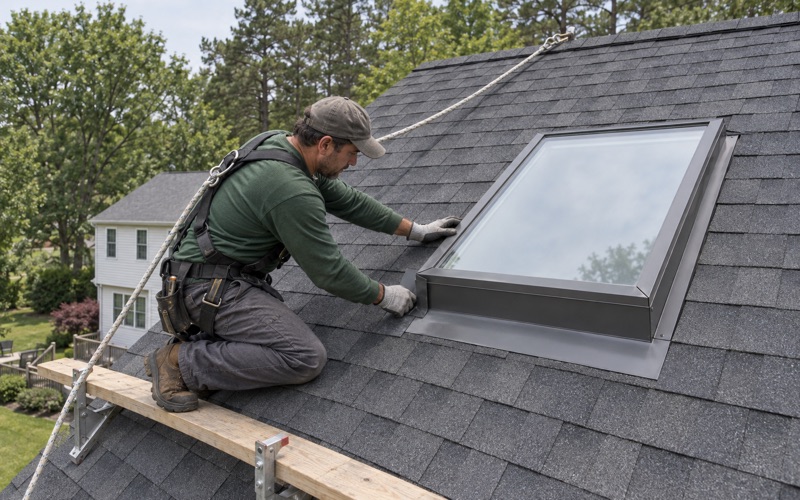
That trace often points at flashing rather than shingles: step flashing along a wall, a cracked pipe boot, or kick-out flashing missing where a roof edge meets siding. We tell the owner or the board plainly whether the problem can be repaired, and only then does replacement come into the conversation.
After a wind storm
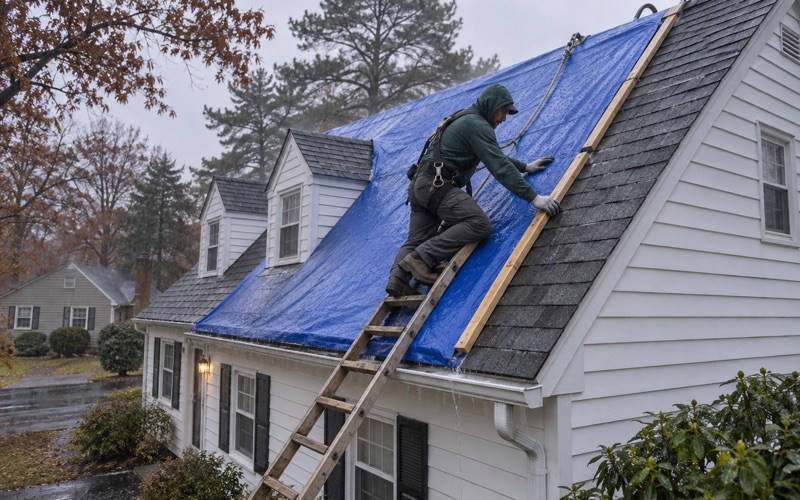
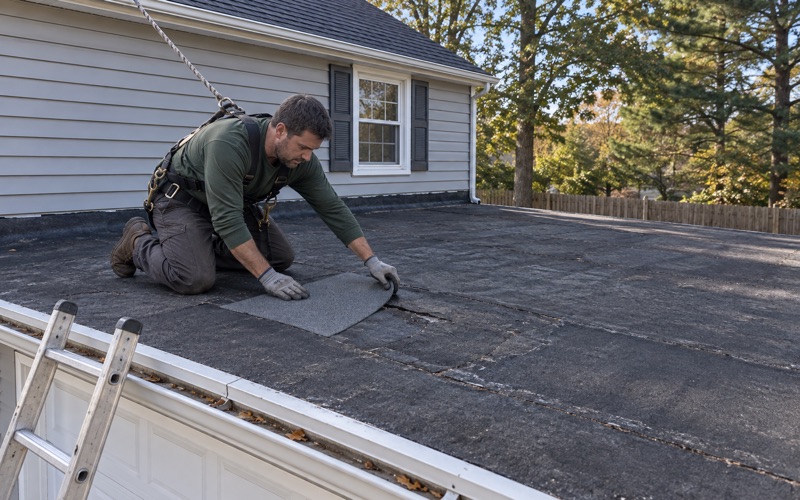
When wind opens a roof, we put tarps and temporary repairs on the same day, and we photograph the damage before anything is moved. On a condominium building those photos and the written description go to whoever holds the roof, so that party has a record for its own claim.
Temporary repairs on a shared roof protect the units beside the one that called, too. When asked, we will meet the insurance adjuster on site to point out what we found, while the claim itself stays with the policyholder.
Permits for Re-Roofing Attached Buildings
The permit question splits along the line between detached and attached buildings. New Jersey treats replacing the roof covering on a detached one- or two-family dwelling as ordinary maintenance under N.J.A.C. 5:23-2.7, but that exemption does not reach attached or multi-unit buildings.
Condominium and townhouse re-roofs go through the construction office
A re-roof on a garden condominium building, a townhouse row or any other multi-unit structure falls outside the ordinary-maintenance rule. That makes it permit work through the Borough of Point Pleasant construction office, and we build the permit time into the schedule we give the board or the owner.
On an attached building the permit is one more reason ownership has to be settled first, since the application, the contract and the inspections all need a clear party responsible for the roof. We line that up before a start date is promised.
Detached houses in the borough
Detached houses make up most of the borough’s housing, 6,933 of 8,742 units in the census estimates, and for those a like-for-like re-roof stays ordinary maintenance. Work that affects the structure or fire safety falls outside that exemption.
For a homeowner the difference is mostly paperwork and timing, not quality. The same tear-off, underlayment and flashing standards apply on a detached house as on a garden building with a dozen front doors.
Flashing and ventilation on every replacement
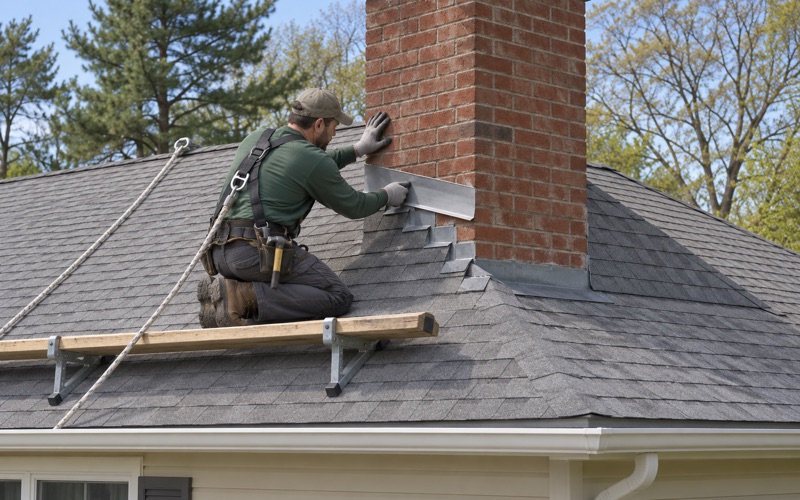
On each replacement we install new step, counter and chimney flashing with the roof rather than bending old metal back into place. We also check attic ventilation, ridge vent against soffit intake, because a roof that cannot breathe ages from underneath.
On a garden building with a long shared attic, ventilation is easy to get wrong, since one blocked run of soffit can starve a large stretch of attic. Whatever we find goes into the scope on its own line, so the board sees it plainly.
Decking, contracts and the work site
If the old roof comes off and the decking underneath is damaged, we photograph it and show the owner or the board before replacing it, at a per-sheet price set in the contract. Our contracts are written to New Jersey’s home improvement rules, including the three-day cancellation notice where it applies.
At the end of each work day we clean the driveways, walks, yards and gutters and run a magnet sweep for roofing nails. On a condominium property, where neighbors park and walk right beside the work, that daily cleanup matters as much as the roof itself.
- 20+ Years on Monmouth County Roofs
- Line-Item Written Estimates
- Same-Day Storm Tarping