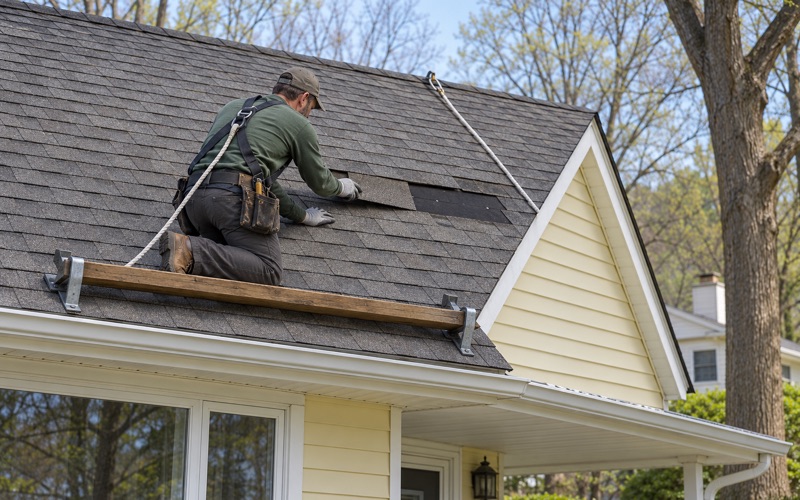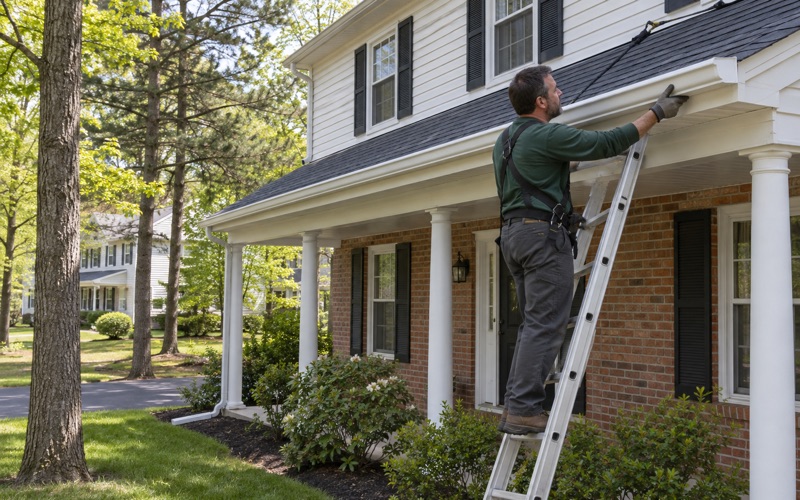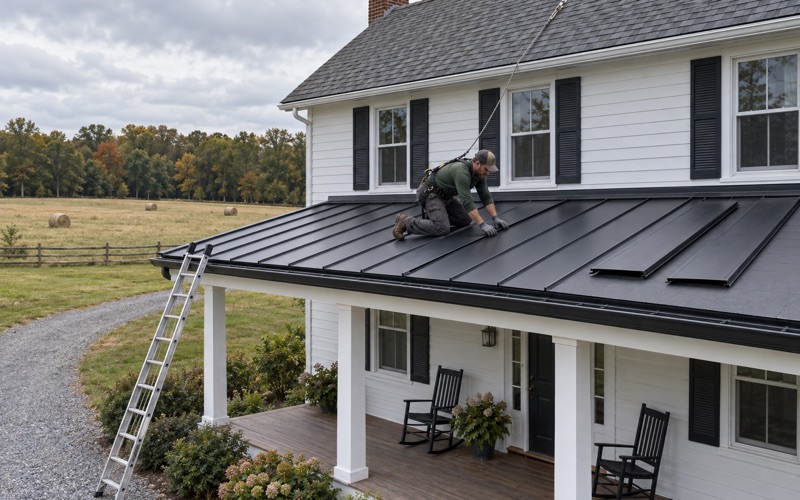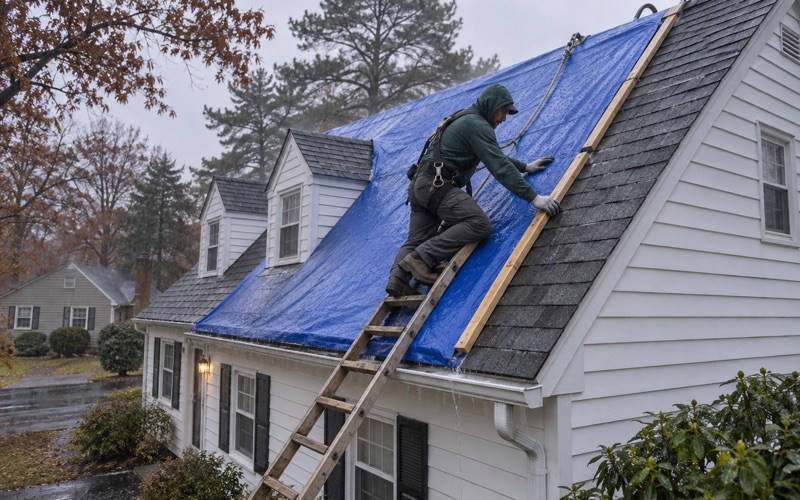
Howell Quality Roofing brings more than 20 years of work to roofing in Point Pleasant Beach, and the jobs here keep coming back to the same part of the roof. The open field of shingles on a simple gable rarely gives out first. The weak spots are where something interrupts the slope: a chimney, a dormer wall, a low eave or a valley where two planes meet.
When a homeowner calls about a leak, we go into the attic as well as up the ladder, because the stain on a ceiling is seldom directly under the opening that let the water in. Tracing the path first means the price is written for the actual problem. It also means we can tell you plainly whether a repair will hold before anyone mentions a new roof.
This page covers what heavy, wind-driven snow does to a roof on this part of the shore, using one storm the borough actually logged. It then walks through the older houses that feel that kind of load most, and closes with what the code does and does not require for ice barrier in Ocean County.
The December 2010 Blizzard on the Point Pleasant Beach Shore
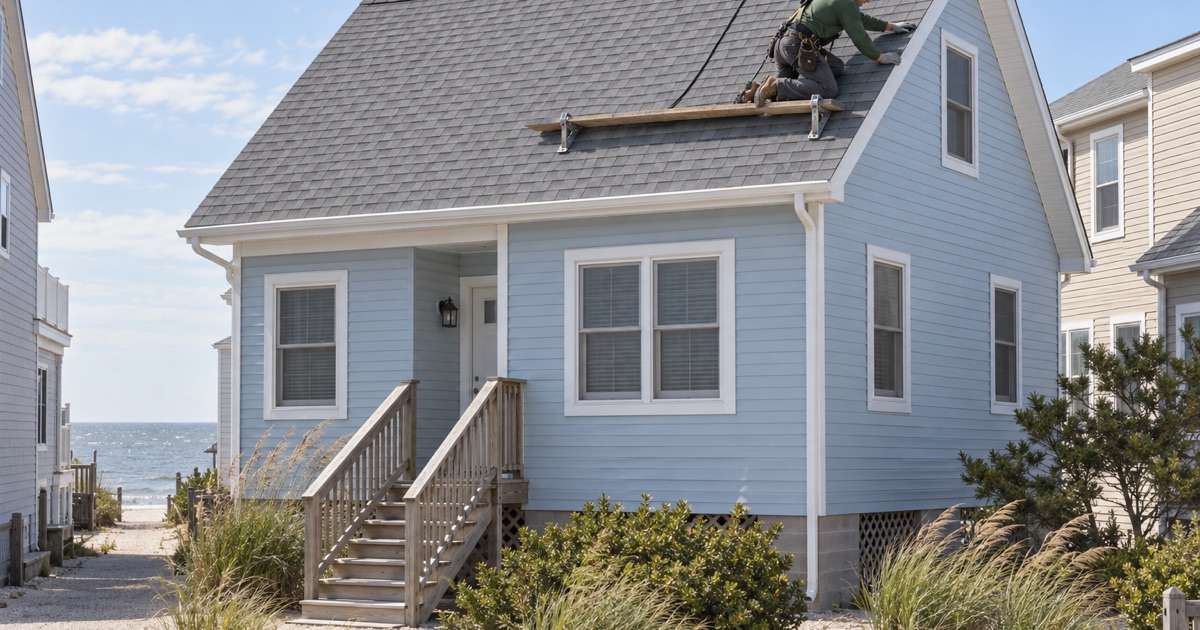
The December 26-27, 2010 nor’easter arrived as more than a snowstorm. At 3:52 a.m. on December 26, the National Weather Service in Mount Holly replaced its Winter Storm Warning with a Blizzard Warning for Ocean and Monmouth counties, along with Morris, Somerset and Middlesex. That warning stayed up until 6:51 a.m. on December 27, and the office’s own summary of the event is labeled preliminary.
A weather spotter in Point Pleasant Beach measured 24.8 inches by early afternoon on December 27, an unofficial observation in the storm’s spotter table. The summary put Ocean and Monmouth at 18 to 24 inches overall, with localized pockets of 24 inches or more along the immediate coast. We know of no report of roof damage in the borough from that storm, so the useful lesson is what it tested rather than what it broke.
Two to Three Inches an Hour
Through the evening and overnight, heavy bands dropped 2 to 3 inches an hour on the coastal counties. At that pace, snow builds faster than it can slide off a pitched roof or melt from attic heat. Gutters fill, valleys pack solid and the snow line climbs up the base of every wall that rises through the roof.
Rate matters as much as the final total. A slow foot of snow settles evenly and often sheds in stages, while a fast two feet lands as one heavy layer before anything has a chance to move. That layer then sits on the roof for days in a cold spell, which is when weak flashing and thin underlayment get found out.
Wind Over 50 mph Across the Region
The summary reports gusts in excess of 50 mph across much of the forecast area, with the highest readings at Long Beach and Sandy Hook. No gust was measured in Point Pleasant Beach itself, so we do not put a borough number on it. What matters for a roof is what that much wind does to two feet of fresh snow.
Wind strips snow from the windward slope and drops it on the sheltered side, against anything that sticks up. A roof can end that storm with a nearly bare plane on one side and a deep, packed drift on the other. That uneven load, concentrated at the edges and openings, is the part of a blizzard a roof is least built to carry.
Looking for roofing closer to Leisure Village East? See Roofing Services in Leisure Village East.
Drifts Against Chimneys, Dormers and Low Eaves
The Mount Holly summary notes that drifts reached 8 to 9 feet in some locations during the storm, and it does not say where. A drift on a roof is smaller than one against a fence, but it behaves the same way. It forms in the lee of a vertical surface, it packs dense and it melts slowly from the bottom while the top stays frozen.
Chimneys
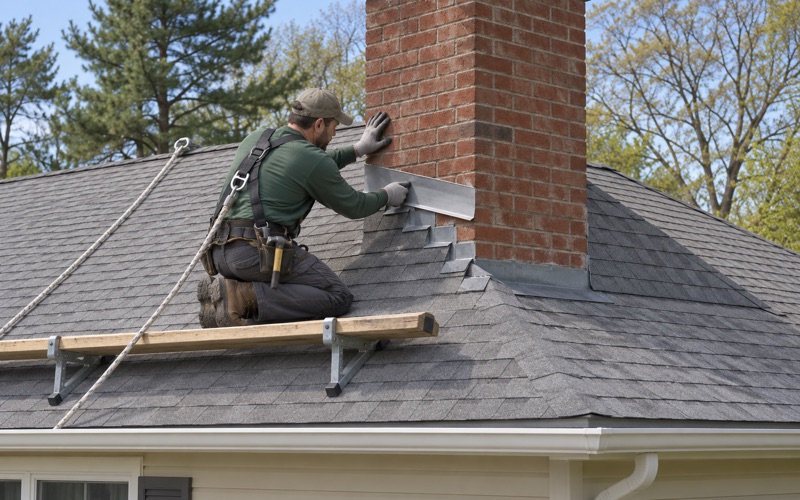
The uphill side of a chimney is a natural trap for wind-packed snow. Meltwater pools behind the masonry and looks for any gap in the counter flashing or a worn reglet joint. On wider chimneys, the residential code calls for a cricket, or saddle, behind any chimney wider than 30 inches, so water and snow are split around it instead of parked against it.
When we replace a roof, the step, counter and chimney flashing are replaced with it rather than bent back and reused under new shingles. Old metal that has sat through decades of freeze and thaw rarely seals well against a new surface. We also look at the chimney crown and cap, because a cracked crown lets water into the stack where no roof flashing can stop it.
Dormers and Their Valleys
A dormer puts two short walls and two valleys into the middle of a slope, and each one is a place for snow to stall. The cheek walls depend on step flashing woven course by course with the shingles. If those pieces are short, rusted or face-nailed, a drift sitting against the wall for a week will find the seam.
The valleys where a dormer roof meets the main roof collect snow from both directions. On older houses these are often narrow, and the original metal may be long gone under several repairs. We open them up, check the decking underneath and rebuild them with fresh underlayment and flashing rather than layering more sealant over the problem.
Low Eaves and Gutters
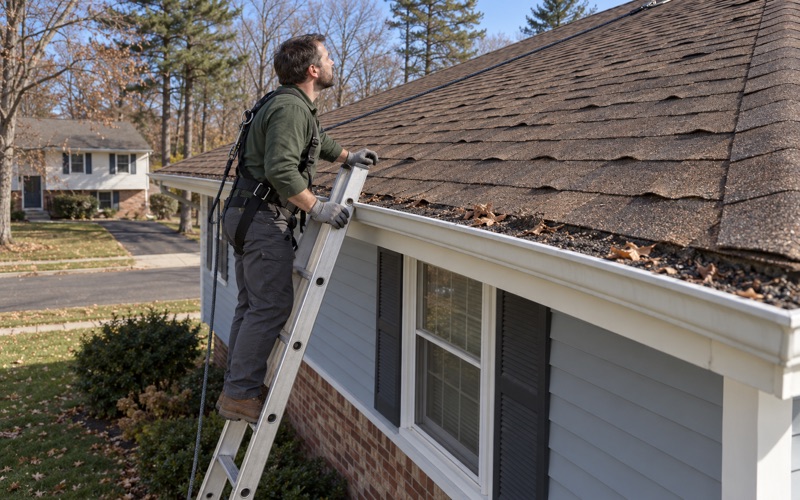
Small houses with low eaves put the coldest part of the roof right where meltwater runs out of room. Water that thaws higher up refreezes at the overhang, and a ridge of ice can back the next melt up under the shingles. Gutters packed with snow add weight at the edge and can pull away from the fascia.
We check that a drip edge is in place at the eaves and rakes, and that the gutters and leaders are sized and pitched to drain rather than hold water. Seamless aluminum gutters with sound hangers carry a winter load far better than sectional runs with tired joints. Where the eave is very short, we pay extra attention to what sits under the first few courses.
Older Beach Houses Under Heavy Snow
Point Pleasant Beach has a large share of older housing. Census estimates count 662 of the borough’s 2,822 homes as built in the 1950s and another 434 built in 1939 or earlier, together about 38.8 percent of the total. Not every one of those is small, but many are modest cottages and capes with steep roofs, dormers and a chimney.
Decking and Framing on Older Roofs
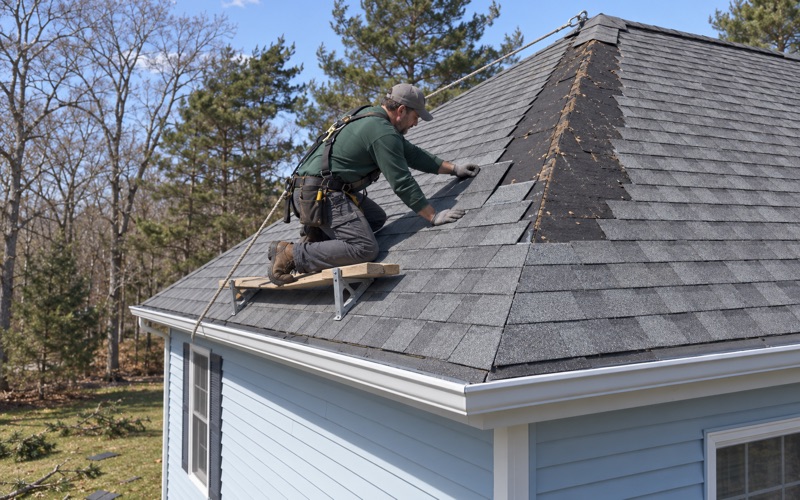
Many houses from those decades were sheathed with boards rather than plywood, and some have been re-roofed more than once. Gaps between boards, old nail holes and soft spots from past leaks all show up once the shingles come off. A roof that looks fine from the street can be carrying several repairs underneath.
If we find damaged decking during a tear-off, we photograph it and show it to you before anything is replaced. The per-sheet price is set in the contract ahead of time, so there is no surprise number at the end. Where a roof has two or more layers, the rehabilitation subcode calls for a full tear-off, and we plan the job that way from the start.
What We Check in the Attic
After a big snow, the attic tells us more than the shingles do. Frost on the nails, stained sheathing near the eaves and wet insulation behind a chimney all point to where water or warm air is moving. We note each one so the fix matches what we actually saw.
Ventilation is part of every replacement we do, because a roof that cannot breathe ages from underneath and melts snow unevenly. A ridge vent only works with enough soffit intake below it, measured as net free area. On older houses with closed-in eaves, adding intake is often the change that makes the rest of the roof last.
Repair or Replace, Item by Item
Not every older roof needs to come off. A worn chimney flashing or a failed dormer valley can often be repaired cleanly, and we say so before we ever discuss replacement. When a full roof does make sense, our written scope breaks out tear-off, decking, underlayment, flashing, ventilation and gutters as separate lines.
That layout lets you hold our estimate next to another one and compare it line by line. It also shows exactly which parts of the work address snow and ice at the edges. If the house sits under trees, overhanging limbs and needle-packed valleys are called out in the estimate as well.
Ice Barrier: What Code Says in Ocean County
Self-adhering ice barrier is not required by code in Ocean County. The state’s ice-barrier map, from DCA Bulletin 07-3, covers Sussex County only. On this coast, installing it is a manufacturer recommendation and a matter of good practice rather than a code requirement.
Where We Still Install It
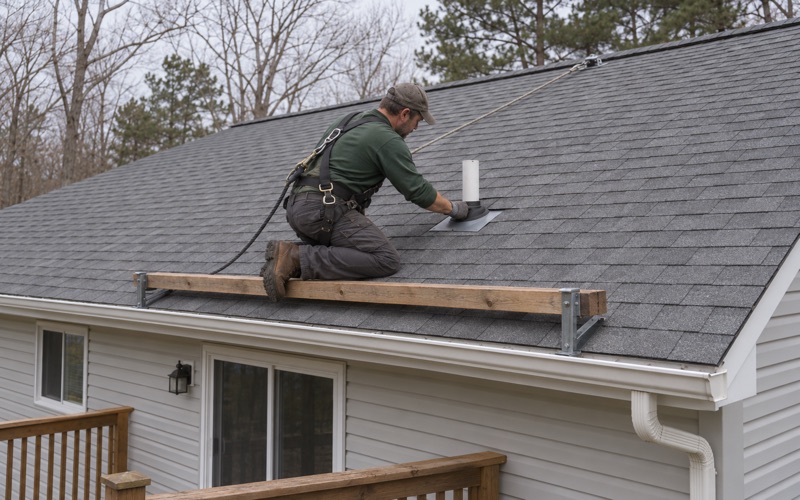
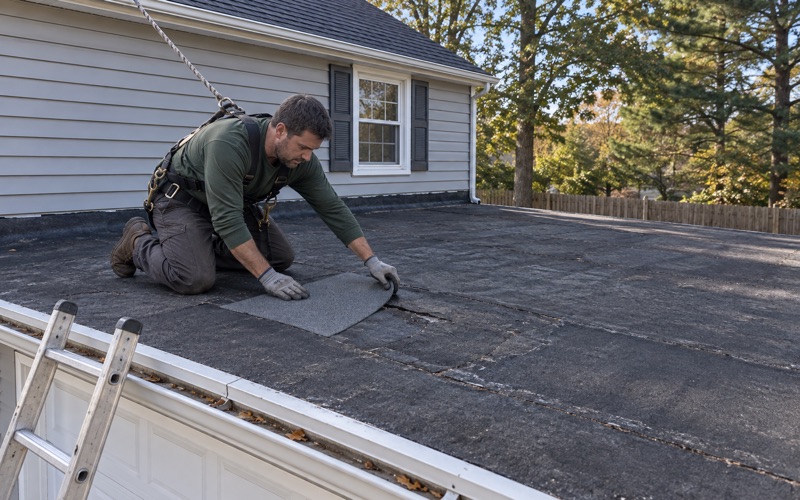
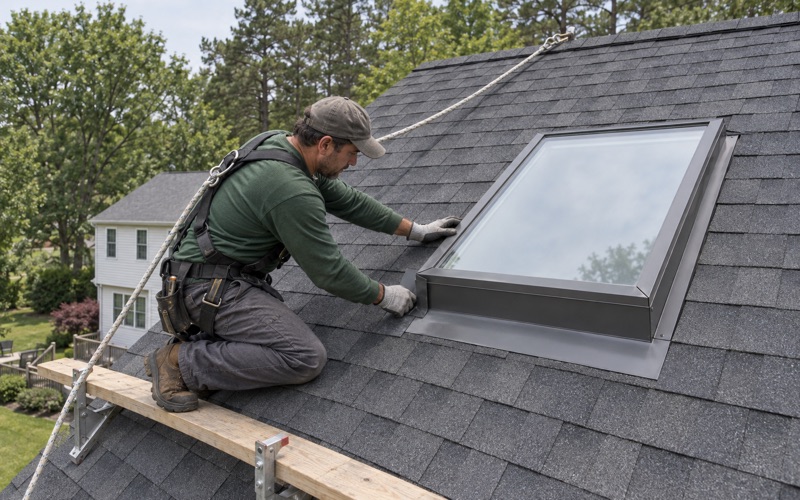
We use an ASTM D1970 self-adhering membrane at the eaves, in valleys and around chimneys, dormers, skylights and pipe boots. Those are the places a drift sits and melts slowly, and where a short freeze-back can push water uphill. Most shingle makers call for it in those locations in their installation instructions.
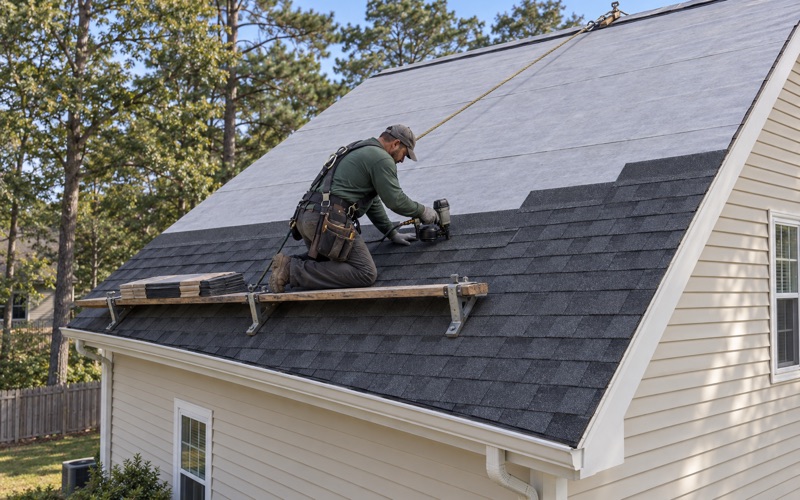
Over the rest of the deck we lay a synthetic underlayment, and we finish the edges with drip edge, step flashing and kick-out flashing where a roof meets a wall. Architectural shingles rated for high wind under ASTM D7158 hold better when snow is being blown across them. The goal is a roof whose edges are as sound as its field.
Permits, Contracts and Storm Paperwork
Re-covering a detached one- or two-family house is ordinary maintenance under N.J.A.C. 5:23-2.7. Our contracts follow New Jersey’s home improvement rules, including the three-business-day cancellation notice, and every line of the scope is written out before work starts.
When a storm does damage a roof, we photograph it and write it up for your own claim, and we will meet the insurance adjuster on site if you ask. Under New Jersey law only a licensed public adjuster may negotiate a claim for pay, so the claim stays yours. Our job is to document the roof accurately and then repair it properly.
- 20+ Years on Monmouth County Roofs
- Line-Item Written Estimates
- Same-Day Storm Tarping