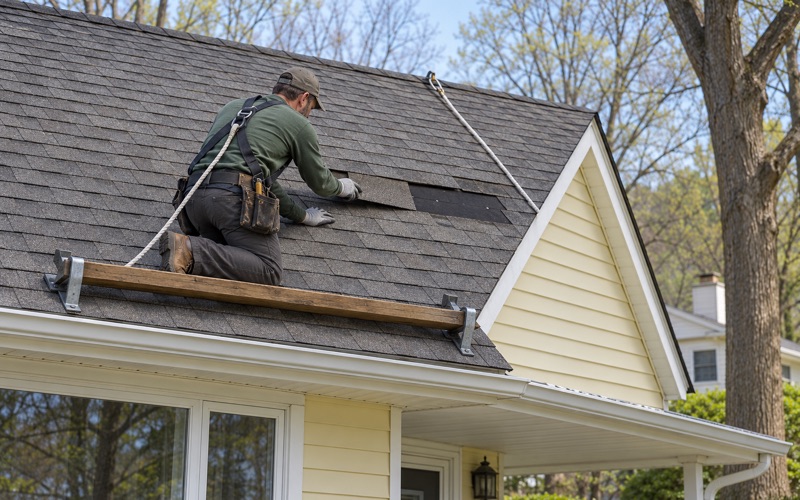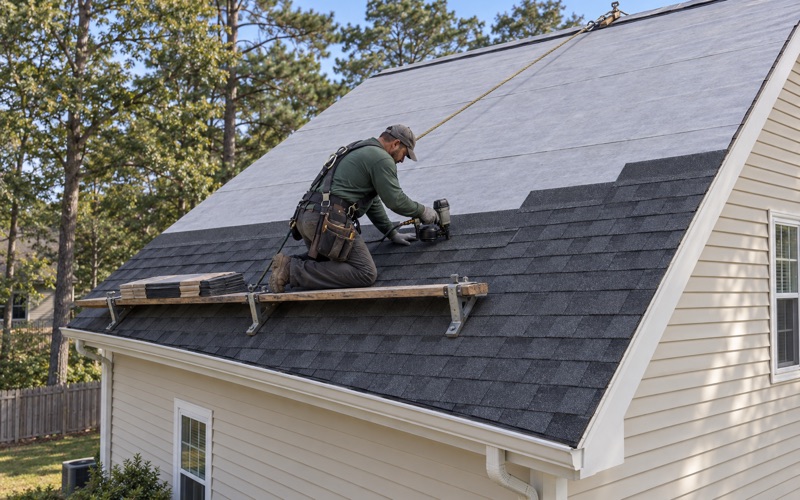
Howell Quality Roofing brings more than 20 years of roof work to roofing in Leisure Village, and in an association community the first question is often who holds the roof rather than which shingle goes on it. Before we write any estimate, we check roof responsibility against the association’s own documents, because that answer decides who signs, who pays and who has to approve the work.
That check matters more here than on a street of detached houses. When an association maintains its buildings, a roof is not only a repair decision; it is a line in a long-range budget that New Jersey law now requires associations to plan and fund. Owners who understand how that budget works can ask sharper questions and read a roofing proposal with clearer eyes.
This page walks through the state’s capital reserve study rules, how a 30-year funding plan treats a roof’s useful life, and what can happen when a roof gives out sooner than the plan expected. It closes with questions an owner can take to the board, and with what our written reports and scopes can add to that conversation.
Leisure Village’s 1960s Roofs and the Association Fee
Built within a single decade
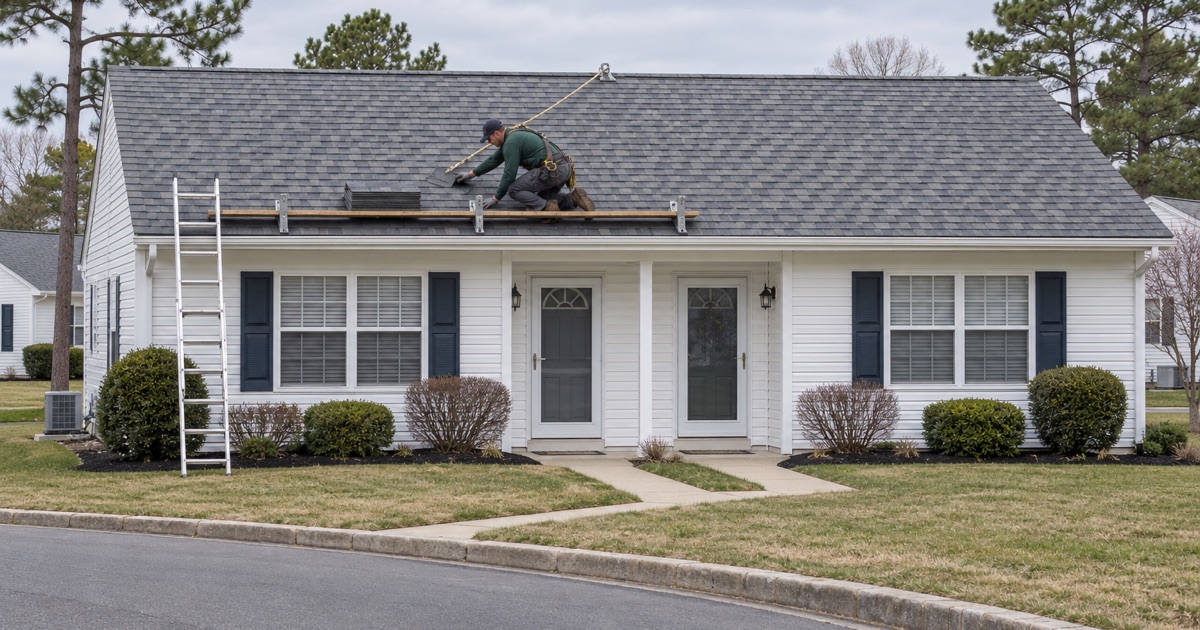
Leisure Village is an unincorporated community and census-designated place within Lakewood Township in Ocean County. It is locally called the Original Leisure Village because it was the first of three neighboring active adult communities with similar names, and its builder, Leisure Technology, constructed it from 1960 to 1970. Listings describe ranch-style attached duplexes with shingle roofs.
The census figures point the same way. The 2024 American Community Survey five-year estimates date 1,678 of the community’s 3,210 housing units to 1960 through 1969 and count 1,754 one-unit attached homes. A community built largely within one decade started out with roofs of roughly the same age, and that kind of clustering is exactly what a long-range reserve plan is meant to spread across many budget years.
What the monthly fee is said to cover
Listings for homes in the village say the association fee includes exterior maintenance, along with lawn care, snow removal and management fees, and one listing says the association is also responsible for the roof, siding and gutters. A resident review from 2018 described the fee as covering major repairs such as replacing roofs, roads and sidewalks.
Those are listing and review statements, not the governing documents, and we treat them that way. Where the line falls between an association’s roof and an owner’s ceilings, insulation and belongings is settled by the community’s recorded documents, which is why we read them with the owner before anyone treats a roof as one party’s job.
Confirming roof responsibility first
In townhouse and adult communities, our first step is confirming who holds the roof under the association’s documents. If the association does, replacement is the association’s decision to schedule and fund, and an owner’s part is to report what they see and ask good questions.
When an owner is selling, we can also prepare a written roof condition report the seller can hand to a buyer’s inspector. In an association building, that report describes what we saw on the roof and in the attic; it does not decide who pays for the next replacement, which remains a question for the governing documents.
Looking for roofing closer to Point Pleasant? See Roofing in Point Pleasant.
What New Jersey’s Capital Reserve Study Has to Cover
One requirement for planned communities
Under N.J.S.A. 45:22A-44.2, any association of a planned real estate development must undertake and fund a capital reserve study. The study assesses whether the association’s reserve funds are adequate to meet the anticipated costs of replacing or repairing the capital assets it is obligated to maintain.
The law is specific about who does that work. The study must be performed or overseen by a reserve specialist holding a Community Associations Institute credential, or by a New Jersey-licensed engineer or architect. It is a planning document rather than a roof inspection, though a sound one depends on accurate readings of each component’s condition.
Roofs among the common area components
Among other items, the study must include an analysis of the physical status of the common area components of the buildings and other common areas the association maintains. The Department of Community Affairs’ FAQ on the law lists roofs among condominium common areas.
So where an association maintains the roofs, as Leisure Village listings and a resident review describe, each building’s roof becomes a line in that analysis. It carries an estimated remaining useful life and a projected replacement cost, and those two numbers shape how much money the plan sets aside each year.
The catch-up deadline and the small-association floor
The law also set a catch-up date for associations that had fallen behind. An association that had not done a reserve study in the five years before January 8, 2024 had one year from that date to complete one.
There is a floor as well: the requirement does not apply where an association’s common area capital assets total less than $25,000. Whether any particular association has finished its study, and what it found, is something owners confirm with their own board; it is not something a roofing contractor can tell them.
The 30-Year Funding Plan and a Roof’s Useful Life
What the funding plan is built to do
The study must include a proposed 30-year funding plan. For a roof, that means estimating when replacement will come due and spreading the cost across the years before it, so the money is already in reserve when the shingles reach the end of their expected service.
Section 45:22A-44.3a states the purpose plainly: reserves exist so the association can repair or replace the capital assets it maintains without needing a special assessment or a loan. A roof that lasts as long as the study predicted is, by that design, already paid for by the time it comes off.
How a predicted life meets a real roof
A predicted useful life is an estimate built from the roofing material, its installation date and its observed condition. Real roofs drift from those estimates for reasons a schedule cannot see, such as weak attic ventilation, flashing that was reused instead of replaced, or decking softened by an old, slow leak.
That is why our inspections cover the attic as well as the roof surface, tracing water to where it actually enters before anything is priced. Heat and moisture trapped under a roof age it from underneath, and staining on the underside of the decking can mean a roof is closer to the end of its life than its age alone suggests.
When a roof fails earlier than the study predicted
The same section carries an exception owners should know about. Where a capital asset reaches the end of its established useful life earlier than the reserve study predicted, nothing in the law is intended to prevent a special assessment or a loan.
In plain terms, a reserve plan lowers the odds of a surprise bill but does not rule one out. A roof that fails well ahead of its scheduled replacement may not have money set aside for it yet, and the association can then turn to an assessment or borrowing. Whether that applies to any building in the village is a question only the study and the board can answer.
Questions a Leisure Village Owner Can Bring to the Board
Where the state does and does not step in
The Department of Community Affairs’ FAQ says the department does not oversee owner-controlled associations with respect to the board’s compliance. An owner who disagrees with a board decision is pointed first to the association’s governing documents, then to a joint petition to the board, and finally to civil litigation.
That leaves owners to do much of the checking themselves. The practical path is to read the governing documents, put questions to the board in writing, and keep copies of the answers alongside the community’s budget materials.
Questions worth asking about the roof
Owners can reasonably ask when the association’s most recent capital reserve study was completed, who prepared it, and what remaining useful life it assigns to the roof over their building. They can also ask how the 30-year funding plan sequences roof replacements across the community’s buildings.
Other useful questions concern the years between replacements. An owner might ask whether the study is revisited when a roof shows early wear, and how the board weighs moving a replacement forward against waiting for its scheduled year.
What a written scope adds to the discussion
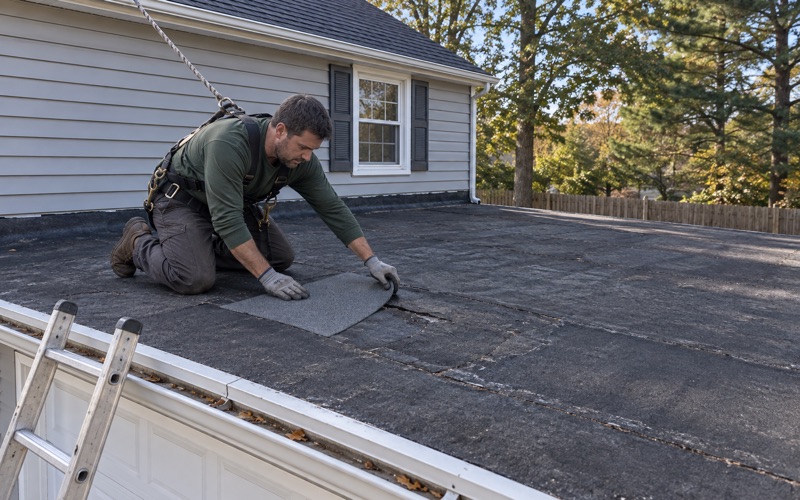
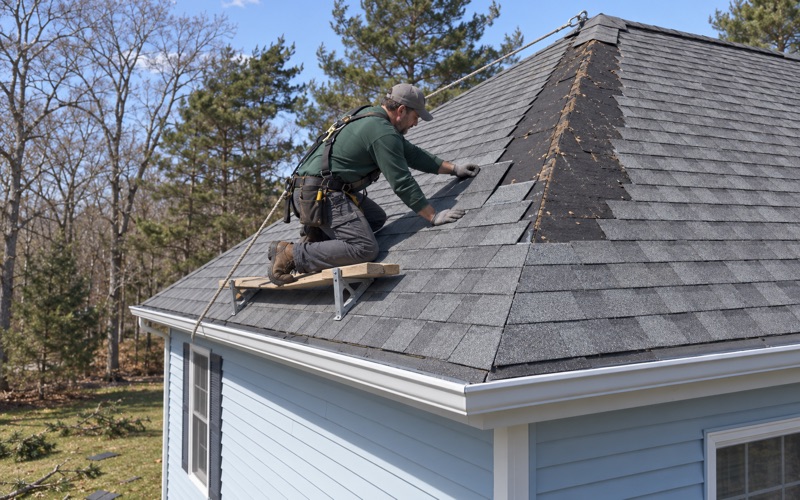
When an association or an owner asks us to look at a roof, we give a straight answer on whether a repair will hold before replacement comes up at all. Our written scope breaks out tear-off, decking, underlayment, flashing, ventilation and gutters as separate lines, so a board can set it beside another proposal item by item.
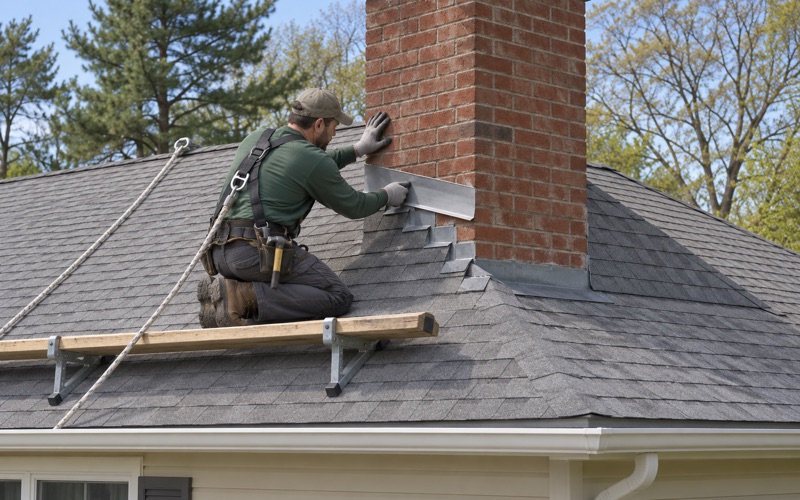
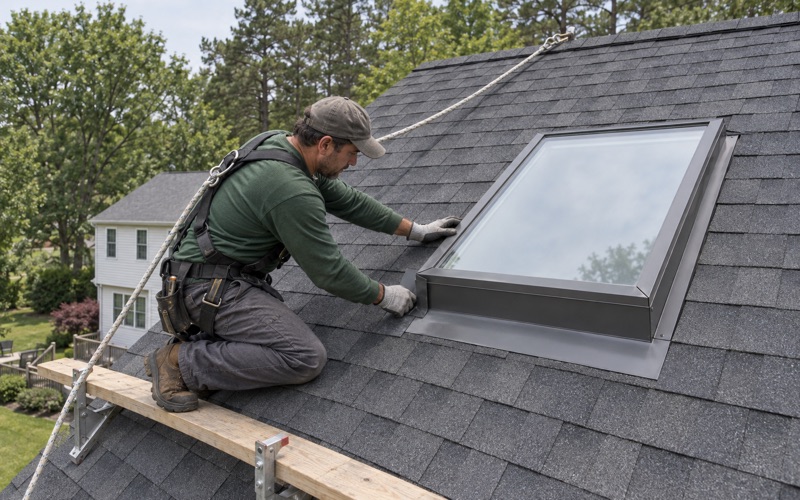
If replacement is the right call, step, counter and chimney flashing is renewed with the new roof rather than reused, and damaged decking is photographed and shown before it is swapped at a per-sheet price fixed in the contract. Our contracts follow New Jersey’s home improvement rules, with the three-day cancellation notice included.
- 20+ Years on Monmouth County Roofs
- Line-Item Written Estimates
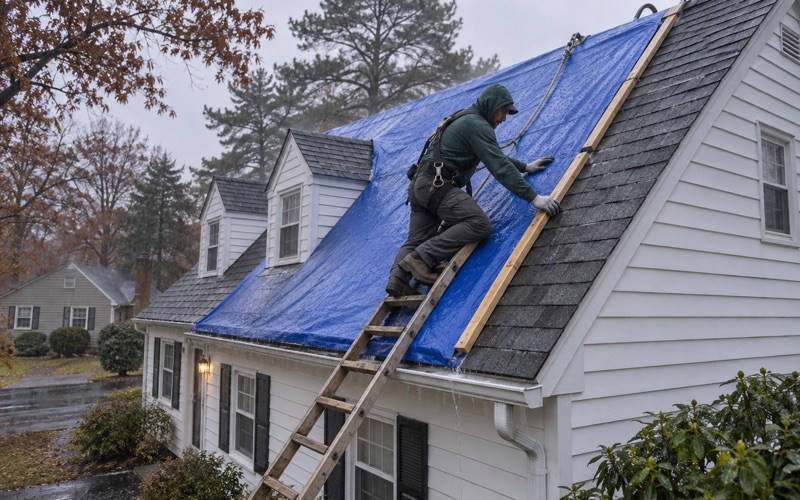
- Same-Day Storm Tarping