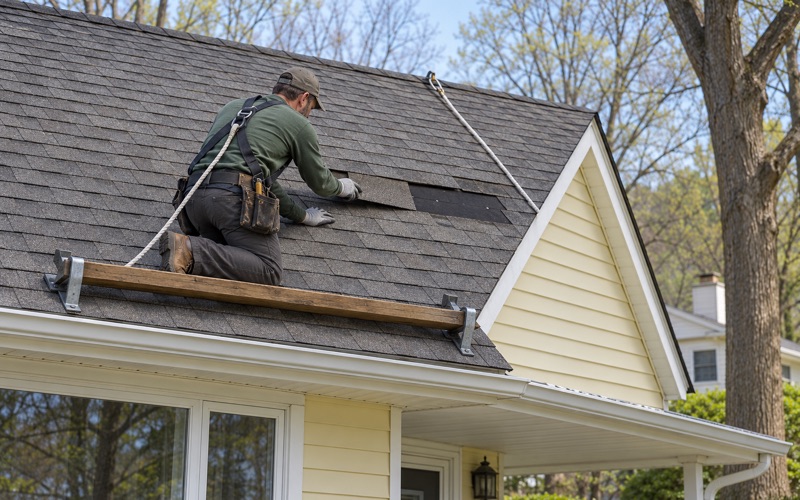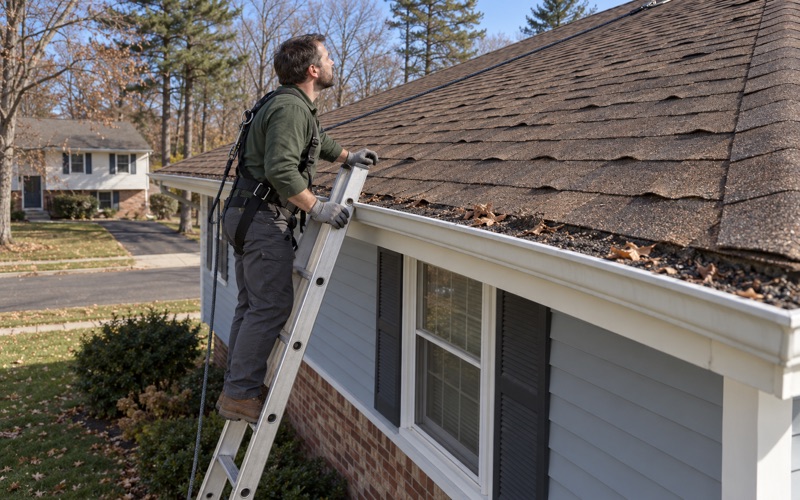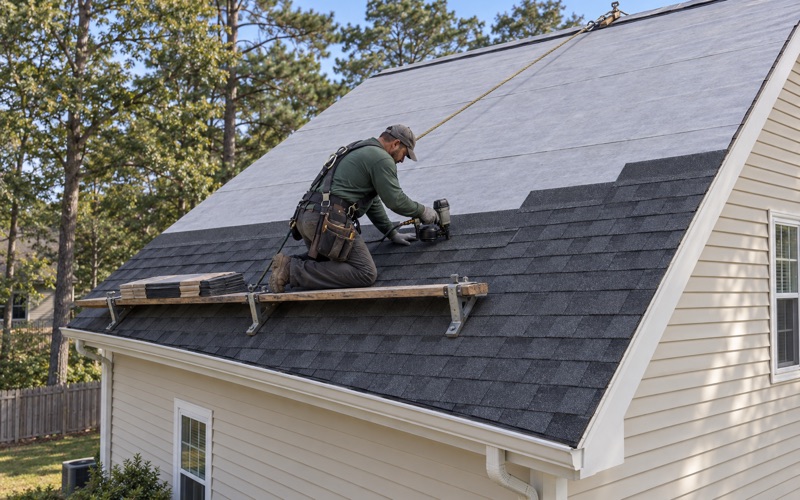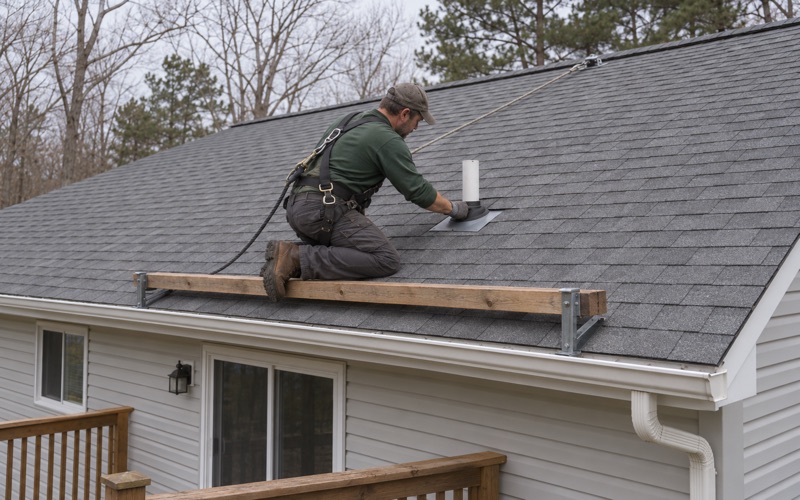
Howell Quality Roofing brings more than 20 years of roofing in Leisure Village East and across Ocean County to a question that comes up more in adult communities than almost anywhere else: whose roof is this, and what is allowed on it? Before we write an estimate for a home in a townhouse or adult community, we check who holds the roof against the association’s documents, so the price reaches the person who actually decides the work.
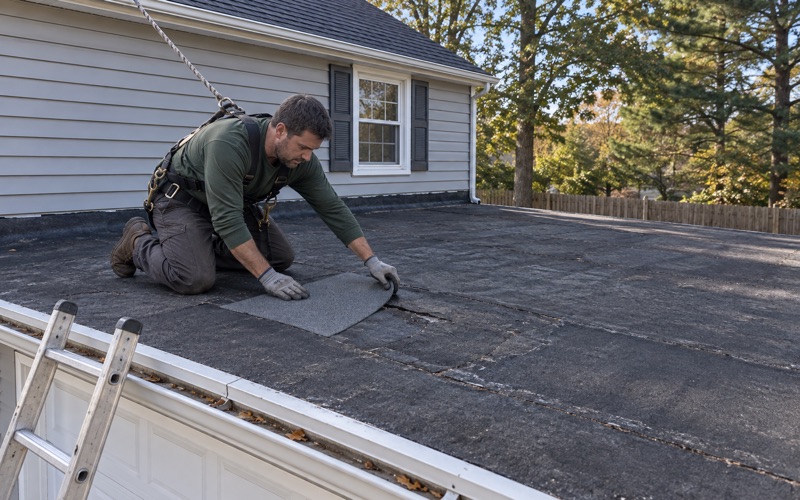
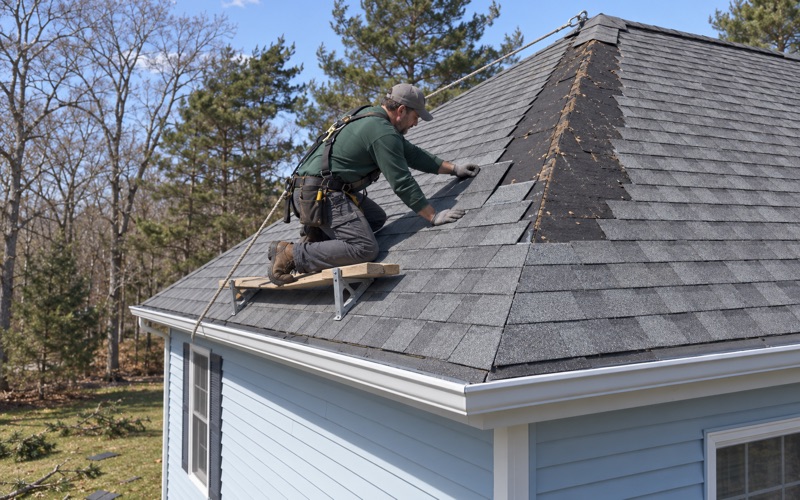
We start by telling you whether the roof can be repaired, and only if it cannot do we talk about replacement. A replacement scope lists tear-off, decking, underlayment, flashing, ventilation and gutters on separate lines, which makes it simple to hold our figure against a second bid item by item.
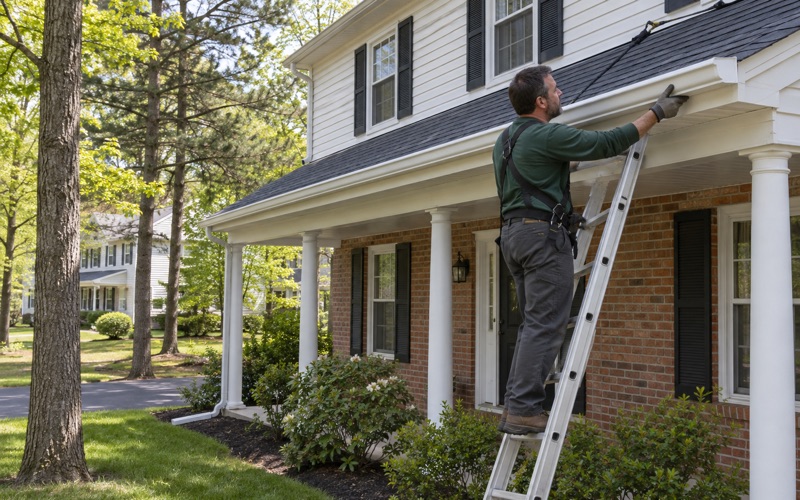
Leak calls get two inspections, one on the shingles and one in the attic, because water often runs along a rafter or the deck before it shows on a ceiling. We find where it enters before we put a number on fixing it.
Leisure Village East’s Attached Homes and Detached Houses
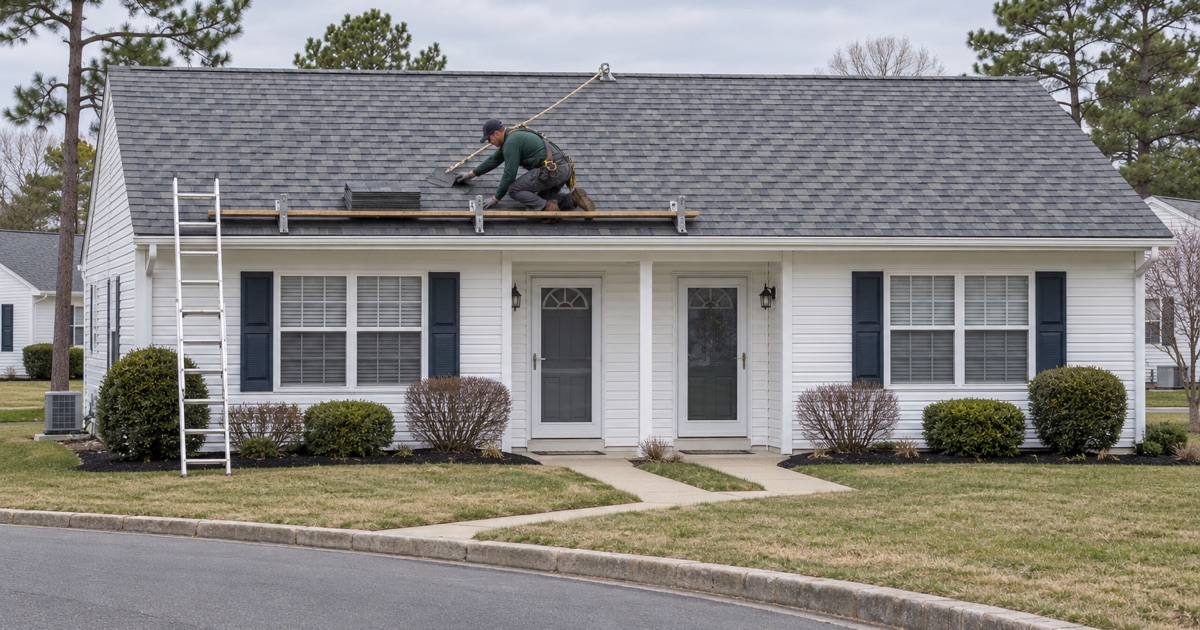
Leisure Village East is a census-designated place inside Lakewood Township, in Ocean County, and it is one of several active adult communities nearby that carry similar names. The census area and the adult community it is named for are not quite the same thing, and that difference matters for every roof question on this page.
The 1970-1974 community homes
The community was built between 1970 and 1974, and 55places counts 1,412 attached homes across five models ranging from 630 to 1,690 square feet. In an attached row, one roof plane runs over several owners’ homes, so a repair on one unit touches the flashing, ridge and drainage of the units beside it.
Listings describe the monthly fee as covering siding and roof maintenance. We treat that as a reason to ask questions rather than an answer, because what a fee covers and what the governing documents say about a particular roof are separate things.
The detached houses in the same census area
The 2024 five-year American Community Survey counts 1,334 detached houses in the Leisure Village East CDP, 1,058 of them owner-occupied, alongside 1,710 attached units. It also counts 1,237 housing units built in the 1990s, well after the community’s original construction.
We do not know which development holds those detached houses or whether an association governs them, and we do not assume either way. For an owner of a detached house in this census area, the starting point is whatever documents came with the deed, if any.
Who holds the roof
Because the census area mixes attached community homes with detached houses of unknown association status, we check the governing documents before we price anything. If the association handles roofs, the estimate goes to the people who approve the work, and if the owner does, it comes to you.
That same check is what answers the solar question below. The law that protects rooftop solar in New Jersey associations turns on the very same documents.
Looking for roofing closer to Red Bank? See Red Bank Roofing.
The Two Roofs New Jersey’s 2007 Solar Law Protects
In 2007 the Legislature passed P.L.2007, chapter 153, now N.J.S.A. 45:22A-48.2, to keep homeowners’ associations from prohibiting solar collectors on certain roofs. It did not reach every roof in an association. It names two kinds, and both depend on the governing documents.
A single-family home solely owned
The first is the roof of a single-family dwelling solely owned by an individual or individuals, where the roof is not designated a common element or common property in the association’s governing documents. Both halves of that test have to be met, so a detached house whose documents make the roof common property falls outside it.
Whether any detached house in Leisure Village East meets that test depends on that house’s own documents, which we have not read. Nobody should take the census count of detached houses as a count of protected roofs.
A townhouse whose roof repair is the owner’s job
The second is a townhouse, described in the statute as attached on at least one side with at least two sides unattached, where the governing documents make roof repair the owner’s responsibility rather than the association’s. Here the deciding question is not who owns the unit but who is assigned the roof repair.
In a community where listings say the fee covers roof maintenance, that assignment is exactly the line to find in the documents. If the association carries roof repair, the townhouse prong may not apply, and if the owner carries it, it may; we do not settle that for you, and we suggest an owner weighing panels have the documents reviewed.
What the association still decides
Even where a roof qualifies, subsection b of the statute leaves the association room to set rules. It may set requirements for the installer’s qualifications and insurance, decide where on the roof the collectors go, and require that supports and piping be concealed.
Those rules shape the roofing as much as the solar work. A required placement can put panels over a valley or close to a ridge, and a concealment rule can change how conduit crosses the roof, so we ask to see any such rule before we plan the flashing around the mounts.
The 2016 Bill That Would Have Covered Senior Communities
Nine years after the 2007 law, Assembly Bill A210 in the 2016-2017 session took up a gap specific to senior communities. Its sponsors included Daniel Benson and Wayne DeAngelo.
What the bill’s summary said
The summary said that, apparently, the homeowners’ associations of some senior communities had determined the statute’s language did not prohibit restrictions on solar collectors on the roofs of single-family homes and townhouses in those communities, contrary to what the Legislature intended in 2007. A210 would have extended the protection to any single-family home or townhouse in such a community.
The summary names no community. Nothing in it says Leisure Village East was among the associations it described, and we have found no solar rule from this association either way.
Where it ended
The bill was introduced on January 27, 2016, crossed over to the Senate on September 15, 2016, and was referred to the Senate Community and Urban Affairs Committee on September 26, 2016. It went no further and died on January 8, 2018.
So the 2007 text, with its two narrow categories, is still the rule an owner works with. The dispute A210 described is a useful warning about how differently a board and an owner can read the same sentence.
What that means before a project
For a homeowner in a senior community thinking about panels, the order of steps matters. Read the governing documents for who owns the roof and who repairs it, then ask the association which installer, placement and concealment rules apply, and only then price the installation.
We are not a solar installer, and we do not give legal advice on whether a roof qualifies. Our part is the roof underneath: whether it is sound enough to carry panels for their full service life.
Re-Roofing Under Solar Panels
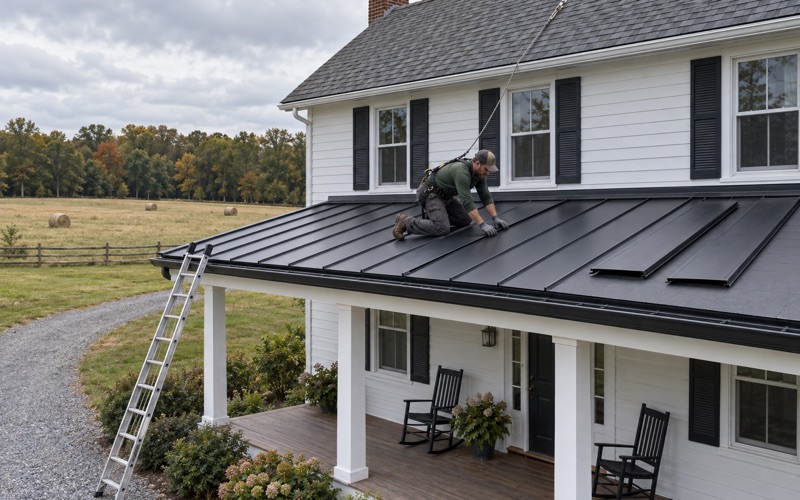
Panels already on a roof have to come off before that roof can be replaced, and they go back on once the new covering is down. On a roof with solar, we put the panel removal and reinstall into the schedule at the estimate stage rather than finding out about it the morning the crew arrives.
Timing the roof and the panels
A roof with only a few years left is a poor base for a new array, since the panels would need to be detached and reset partway through their life. If you are planning solar, we look at the roof first and tell you plainly whether it should be repaired, replaced or left alone before the panels go up.
The removal and reinstall are coordinated with whoever services the solar system, and in an association that can include the installer insurance and placement rules the board has set. We build those steps into the written scope so the dates line up.
Mounts, flashing and penetrations
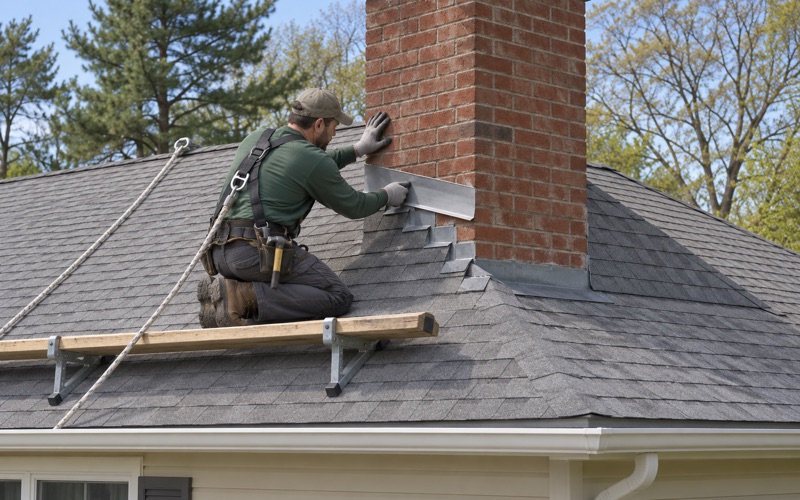
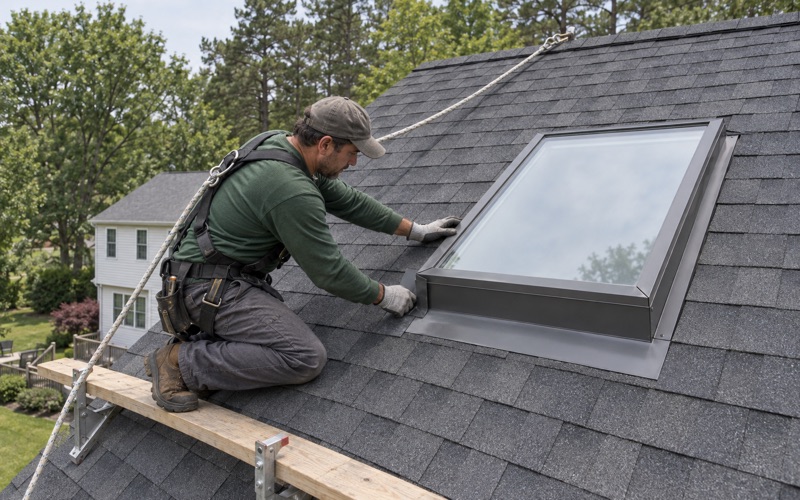
Every mount is a hole through the covering, and each one needs flashing that will last as long as the roof. When we re-roof, step, counter and chimney flashing are replaced rather than reused, and the mount locations are planned so the new layers seal around them cleanly.
In attached rows, where one roof spans several homes, a mount near a party line or a shared ridge deserves extra care. Water that gets past a mount can travel under the shingles into a neighbor’s ceiling before it shows in your own.
Decking and ventilation under the array
Once the old roof is off, damaged decking is photographed and shown to the owner before it is replaced, at a per-sheet price fixed in the contract. Decking under a future array is worth getting right, since reaching it later means taking the panels off again.
We also check attic ventilation on every replacement. A roof that cannot breathe ages from below, and panels shading the surface do not change the need for intake at the soffit and exhaust at the ridge.
Paperwork and cleanup
Our contracts follow New Jersey’s home improvement rules, including the three-business-day cancellation notice. At the end of each day the yard, driveway and gutters are cleaned, with a magnet sweep for nails along the walkways.
If the home is being sold, we can write a roof condition report to hand to the buyer’s inspector. It records the covering, the flashing around any mounts and the ventilation as we find them that day.
- 20+ Years on Monmouth County Roofs
- Line-Item Written Estimates
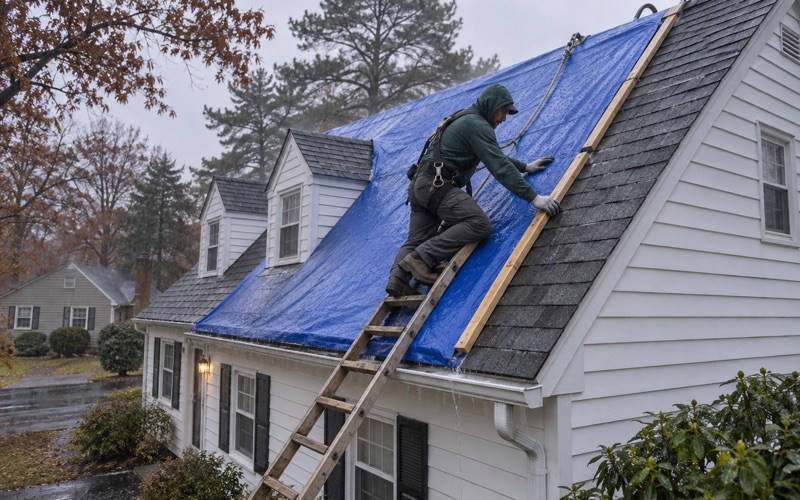
- Same-Day Storm Tarping