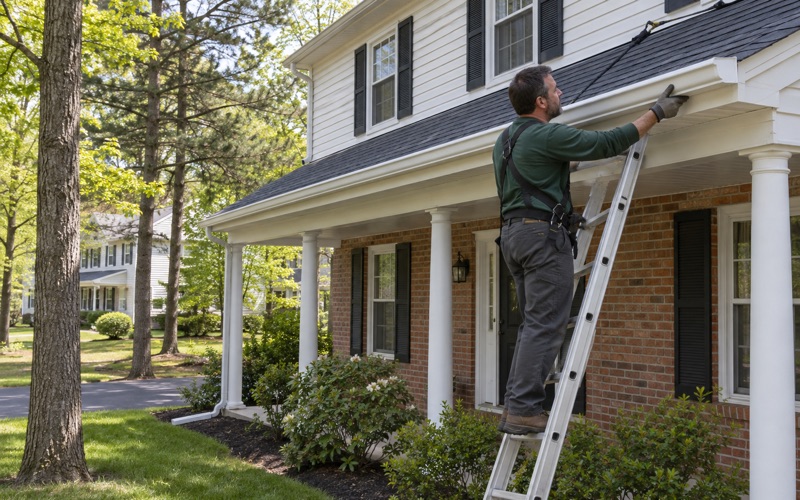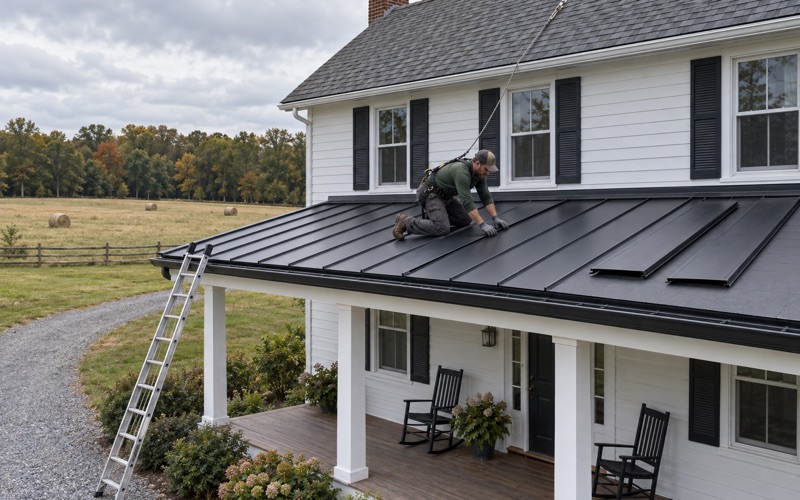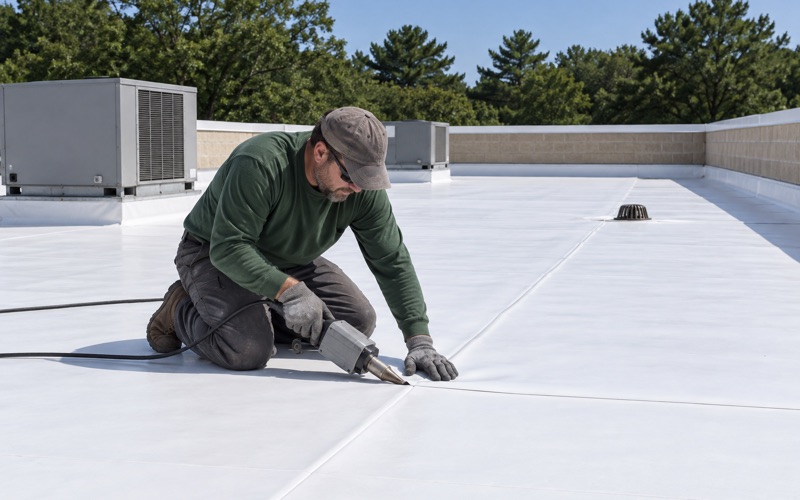
Howell Quality Roofing brings more than 20 years of work to roofing in Lakewood, and the calls that teach us the most about a roof are the ones that come in after hard wind. We inspect, repair and replace roofs on detached houses, attached homes and apartment buildings, and every visit starts with finding out what actually let go before anyone talks about price.
Our first answer is always whether the roof can be repaired. Replacement only comes up when a repair would not hold, and when water is the complaint we look in the attic as well as on the roof, so the leak is traced to the place it really enters instead of the place it happens to drip.
When a roof does need more than a patch, the written scope breaks tear-off, decking, underlayment, flashing, ventilation and gutters into separate lines. That lets an owner, a landlord or a building manager put two estimates side by side and compare them item by item. This page is about wind, because wind is what has opened roofs in this township before.
The February 2011 Microburst and the Apartment Roofs It Opened
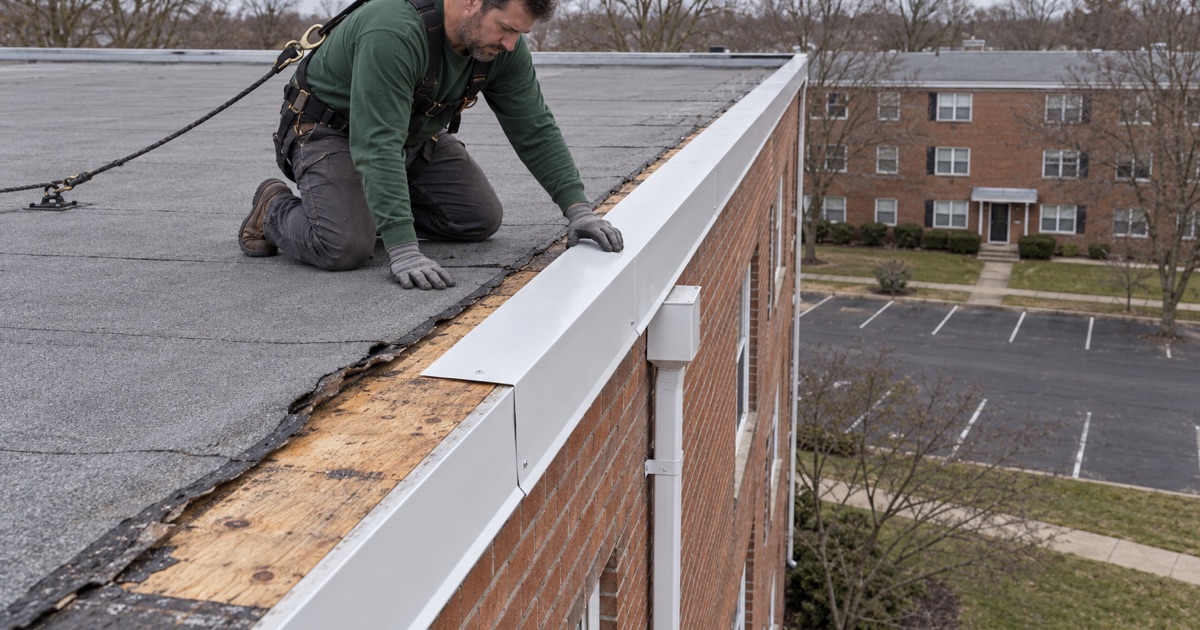
Lakewood has its own documented wind event, and it is worth knowing in detail because of the kind of building it hit. It was not a slow-moving storm or a coastal surge. It was a short, violent burst of wind on a Friday afternoon that left rafters open to the sky.
What NBC New York reported
NBC New York published its account on Saturday, February 26, 2011, describing a storm that moved through Lakewood the day before, Friday, February 25. The report said the microburst carried winds of 75 mph, attributing that figure to the National Weather Service, and that it ripped roofs from homes and toppled trees.
The detail that matters most for roofing is the building. NBC reported that part of the roof ripped away from an entire apartment building, and that the four families who lived in the affected part of it were staying in a hotel. A roof failure on a multifamily building displaces several households at once, which is why repair speed on that kind of roof is never a small question.
What ABC7 saw on Prospect Street and at High Point
ABC7 New York covered a Friday windstorm in Lakewood in a report that carries no date on the page, and its description matches the same afternoon. It said a roof partially blew off an apartment building at 404 Prospect Street, and that the rafters were exposed on building 2 at the High Point apartments. Three buildings were damaged, by its count.
The same report described debris, roof shingles and patio furniture strewn around the hardest-hit building, with an office manager saying the wind ripped up the shingles and blew them off. Trees and branches came down around Kimball Medical Center, which was not damaged itself, though a dozen vehicles in its parking lot were. Families were in temporary housing for repairs that could take weeks, and the National Weather Service had issued a high wind warning for the area for that Friday afternoon and night.
Why apartment roofs are the ones to watch here
The reports name apartment buildings, and Lakewood has a lot of them for a shore-county town. The 2024 American Community Survey counts 6,460 housing units in buildings of five or more units, out of 33,812 in the township. Renters occupy 15,248 of the 31,407 occupied homes.
That mix changes who notices a damaged roof and how quickly. A tenant on the top floor may see a stain long before the owner hears about it, and a building with many units has more ceilings below each square of roof. We treat a wind call on a multifamily building as urgent for exactly that reason.
Looking for roofing closer to Colts Neck? See Roofing in Colts Neck.
How a 75 mph Gust Takes a Roof Apart
No damage survey of the 2011 storm was available to us, so what follows is how wind generally works on a roof rather than a finding about that day. It is also what we look for first on any Lakewood roof after a strong wind event.
Eaves, rakes and corners go first
Wind does not push evenly across a roof. Uplift is strongest along the eaves, up the rakes and especially at the corners, where moving air separates from the surface and pulls on whatever is fastened there. Shingle tabs and edge metal at those spots carry the heaviest load.
That is why the edge details matter so much on a wind repair. Drip edge belongs on every eave and rake, shingles should carry a wind rating such as ASTM D3161 Class F or ASTM D7158 Class H, and the starter course has to be sealed and nailed properly. A roof with weak edges can look fine for years and then fail in a single gust.
When the field starts to peel
Once one course along an edge lets go, the wind has something to grab. It gets under the next row, breaks the adhesive seal, and starts lifting shingles across the open field of the roof. Damage that began as a few loose tabs at a corner can spread up the slope within minutes.
This is the pattern behind shingles strewn across a parking lot. When we find a section of missing shingles, we check the surrounding courses for broken seals and creased tabs too, because those shingles are already loose even if they are still lying in place.
Exposed rafters mean the deck went with it
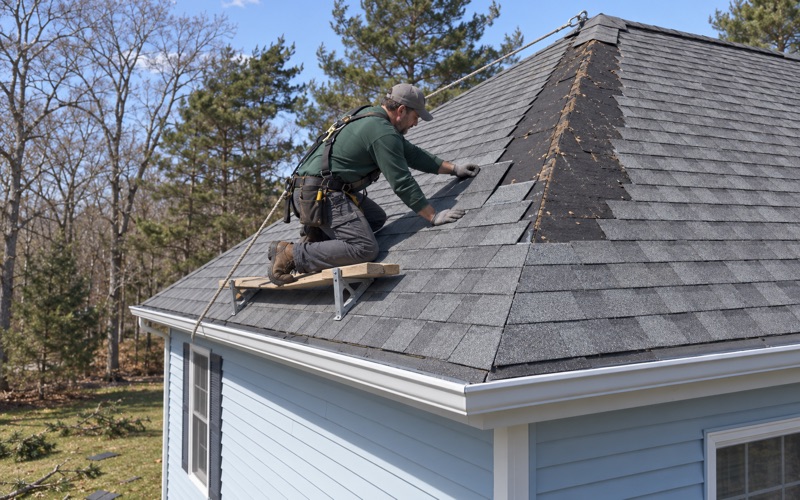
Rafters showing from below or from above tell you the damage went past the covering. The sheathing that the shingles were nailed to has been torn off with them, and the underlayment, flashing and edge metal are gone along that stretch as well.
At that point the job is structural framing and decking, not a shingle patch. The rafters need checking for cracks and pulled fasteners, new sheathing has to be nailed to them on a proper schedule, and only then can underlayment and a new covering go back on. That work takes longer and costs more, and the scope should say so plainly.
Wind Repairs on Lakewood’s Apartment and Attached Roofs
Most of Lakewood’s homes are not detached houses, and that shapes how a wind repair is organized. Attached homes and apartment buildings share roofs, share walls and often involve more than one person who has to agree before work starts.
Tarps the same day, photos first
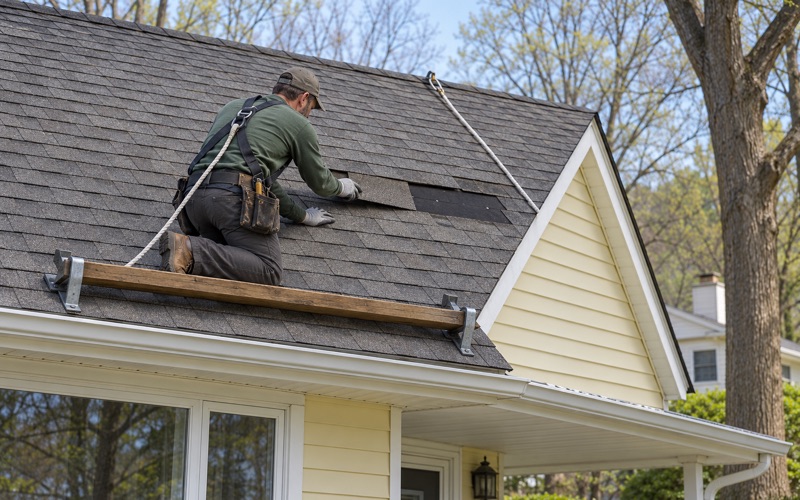
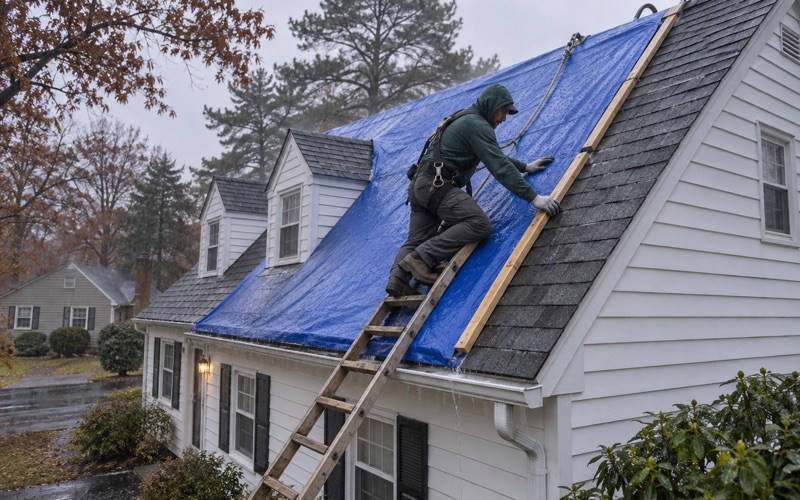
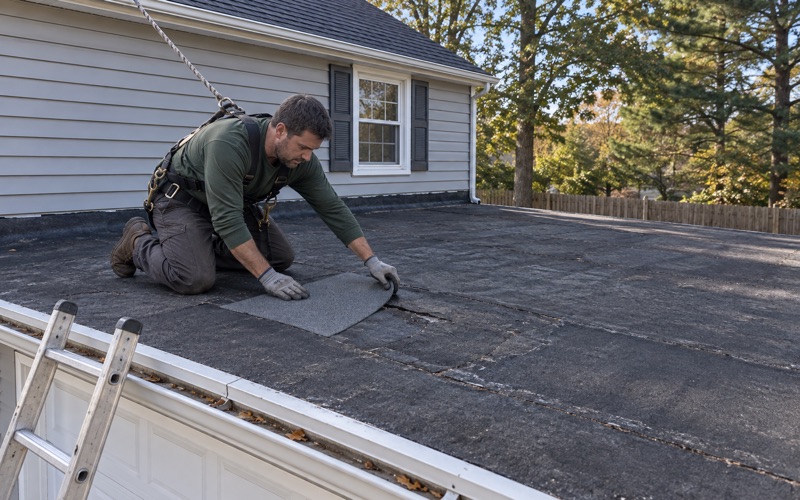
After a wind storm, our crews put tarps and temporary repairs on the same day whenever we can reach the building. Before anything is moved, we photograph the damage as we found it, including loose shingles, bent edge metal and any open decking.
Those photos matter later. They show the owner, the property manager and the insurer exactly what the wind did before the cleanup began, and they keep a temporary patch from being mistaken for the original condition.
Rebuilding the deck and the edge
When the old roof comes off, any damaged decking is photographed and shown to the owner before it is replaced, at a per-sheet price already written into the contract. Nobody gets a surprise line on the final invoice for sheathing they never saw.
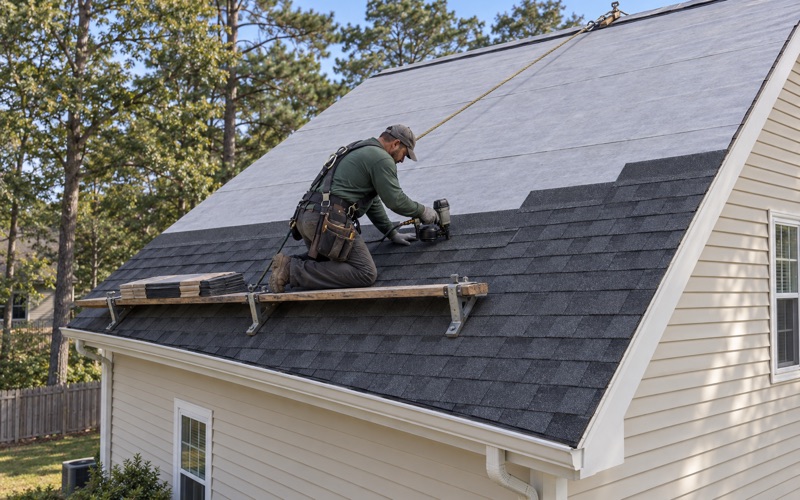
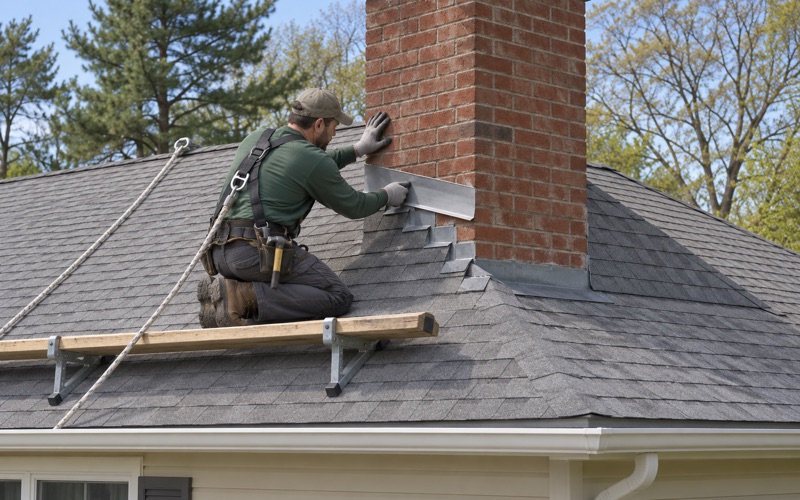
The rebuild then works from the edges in. We install drip edge at the eaves and rakes, an ASTM D1970 self-adhering ice and water barrier where it belongs, wind-rated shingles, and new step and counter flashing rather than reusing the old metal. Attic ventilation gets checked on every replacement, because a roof that cannot breathe ages from underneath.
Permit work on multifamily buildings
New Jersey treats repair or replacement of roof covering as ordinary maintenance only on detached one- and two-family dwellings, under N.J.A.C. 5:23-2.7(c)1.x. Apartment buildings and attached homes fall outside that exemption, so a re-roof or deck repair on one of them goes through the Lakewood construction office.
That affects the schedule after a storm. A tarp can go on right away, but the permanent repair on a multifamily roof has to be planned around the permit and its inspection. We build that into the timeline we give a building owner rather than leaving it as a surprise.
Owners, renters and associations
With nearly half of Lakewood’s occupied homes rented, the person who calls us is often not the person who signs. We confirm who owns the roof and who can authorize the work before an estimate is written, whether that is a landlord, a management company or an individual owner.
In townhouse and condominium settings, the roof may belong to an association rather than the unit owner. We check the association’s documents for who holds the roof before pricing anything, so a damaged section does not sit under a tarp while two parties each wait for the other.
Checking a Lakewood Roof After a High Wind Warning
Lakewood falls in National Weather Service forecast zone NJZ020, served by the Mount Holly office, and that is where any high wind warning for the township is issued. When one passes through, a short look at the roof can catch problems before the next rain does.
What to look for from the ground
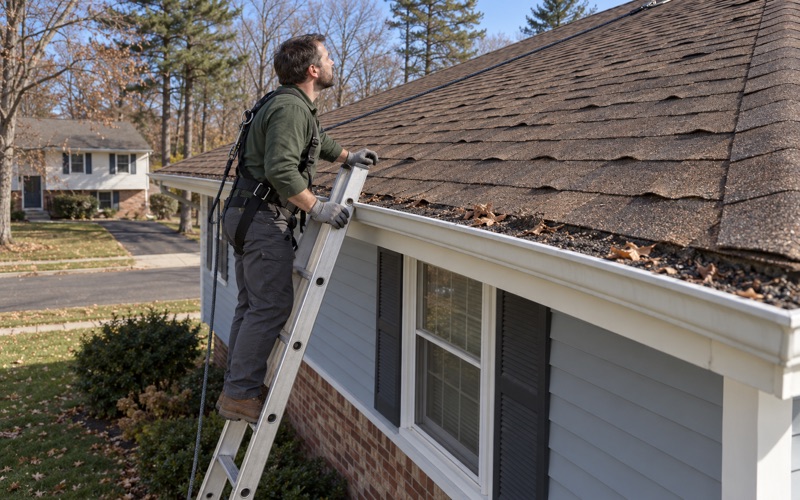
Start with what you can see safely without a ladder. Look for shingles or pieces of shingle in the yard or parking lot, gaps or color changes in the rows along the edges, and drip edge or gutter sections that are bent or hanging. Check corners in particular, since that is where wind pulls hardest.
Inside, look at top-floor ceilings and the tops of exterior walls for new stains, and check the attic if you have access to it. Fallen limbs on the roof or wires pulled from the building are reasons to stay off the roof entirely and call for help.
What we check up close
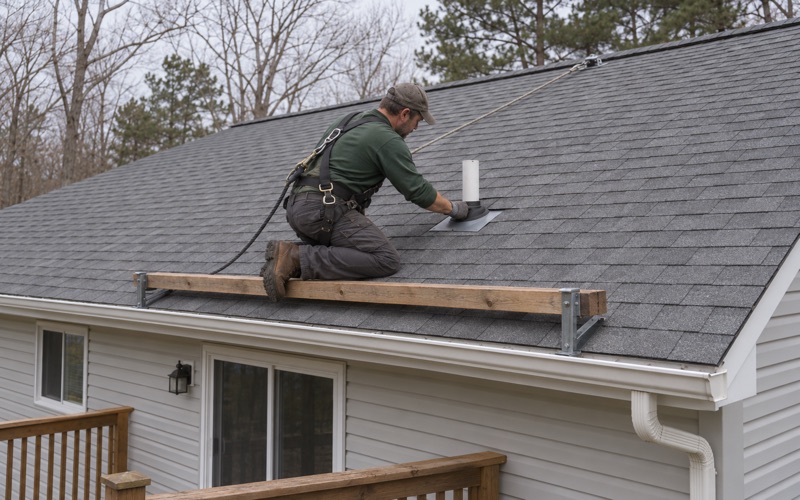
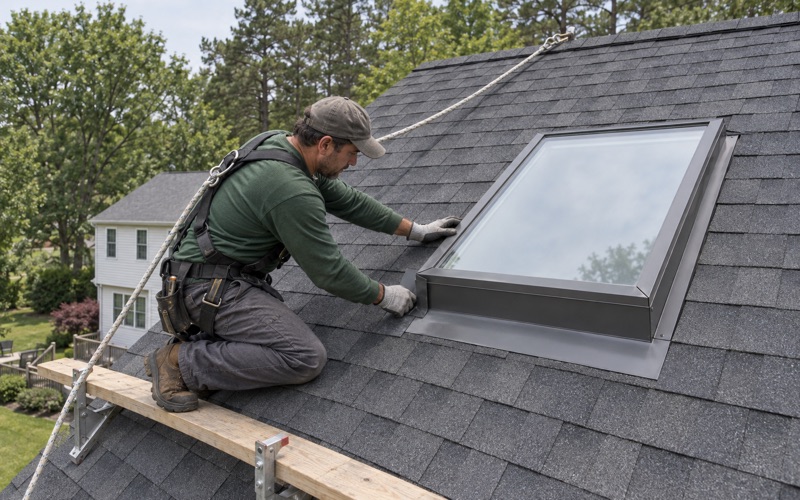
On a post-storm visit we walk the roof from the edges in, testing seals on the courses next to any missing shingles and looking for creased tabs that will fail next time. We check flashing at walls, chimneys and pipe boots, and we look in the attic for daylight, wet sheathing or displaced insulation.
The result is a straight answer about whether the roof can be repaired or whether the damage has reached the deck. If it can be fixed, that is what we recommend. If it cannot, the written scope explains why, line by line.
Claims, adjusters and the contract
Storm damage is photographed and written up for the owner’s own insurance claim, and our crew will meet the adjuster on site when the owner asks us to. The claim itself stays between the owner and the insurer, and we do not promise what any policy will pay.
Every contract is written to New Jersey’s home improvement rules, including the three-day cancellation notice. At the end of each work day the driveway, lot and gutters are cleaned, with a magnet sweep for roofing nails, which matters on a property where tenants and their cars are coming and going all day.
- 20+ Years on Monmouth County Roofs
- Line-Item Written Estimates
- Same-Day Storm Tarping