Howell Quality Roofing has spent more than 20 years on roofing in Jackson and the towns around our Howell base, and the work here is shaped by trees as much as by weather. A lot of Jackson houses sit on wooded lots, and the needles, leaves and shade those lots bring change how a roof wears and what we look for when we climb it.
We start every job by deciding whether the roof actually needs replacing. If a repair will hold, you hear that first, along with what it costs and how long it should last. If the roof is done, we say so plainly and show you why, from the attic side as well as from the shingles.
What follows covers what roofing near the pines means in practice: how embers find a roof, why pine needles in gutters matter more than they look, which small openings deserve attention, and what a re-roof involves in the parts of the township that fall inside the Pinelands.
The Shotgun Fire and Jackson’s Pine Barrens Edge
Jackson is partly a Pine Barrens township. The New Jersey Pinelands Commission lists it among the municipalities in the state-designated Pinelands Area, and the south and west of the township run into forest, preservation land and small Pinelands Villages such as Cassville, Legler and Vanhiseville. For homeowners on that side, wildfire is a local fact rather than a western story.
What happened in November 2024
The Shotgun Fire started around noon on November 6, 2024, near the Central Jersey Rifle Range on Stump Tavern Road. Investigators traced it to magnesium from a Dragon’s Breath shotgun round igniting material behind a berm, and the Ocean County prosecutor’s office brought an arson charge.
The fire burned about 350 acres of the Colliers Mills Wildlife Management Area, just south of Six Flags Great Adventure. Reports at the time said at least 25 homes were threatened, Stump Tavern Road was closed between Route 571 and Route 528, and the evacuation orders issued that first night were later lifted.
Why the conditions mattered
The fire came during a record stretch without rain, with statewide burn restrictions in place. The New Jersey Forest Fire Service described conditions as the driest in its history, which is the kind of setting where a small ignition travels fast through pine litter.
We bring this up because it changes what a roof inspection in Jackson should include. A roof that sheds rain well can still hold dry needles in its valleys and gutters, and that material is exactly what a drifting ember looks for.
Looking for roofing closer to South Amboy? See Roofing Services in South Amboy.
How Embers Reach a Roof, and Why Needles Matter
Most of the risk to a house near a woodland fire comes from embers carried ahead of the flames, not from the flame front itself. Embers land on roofs, settle in gutters and get pulled into small openings, so the roof and its edges are where prevention starts.
Pine needles in gutters and valleys
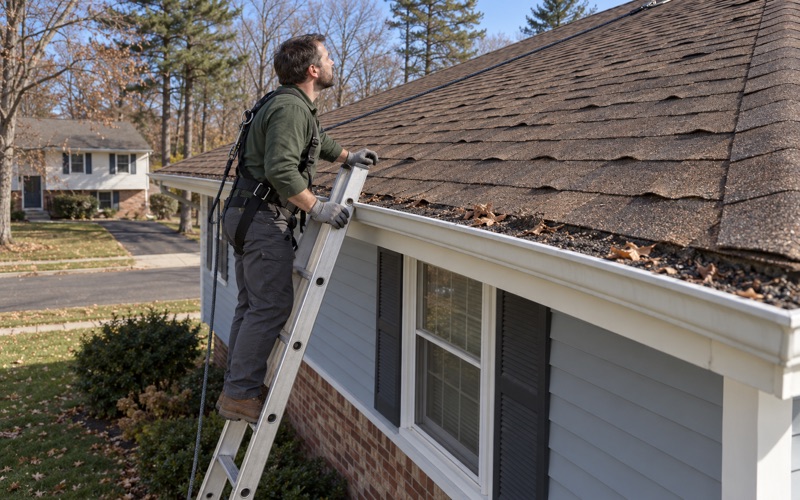
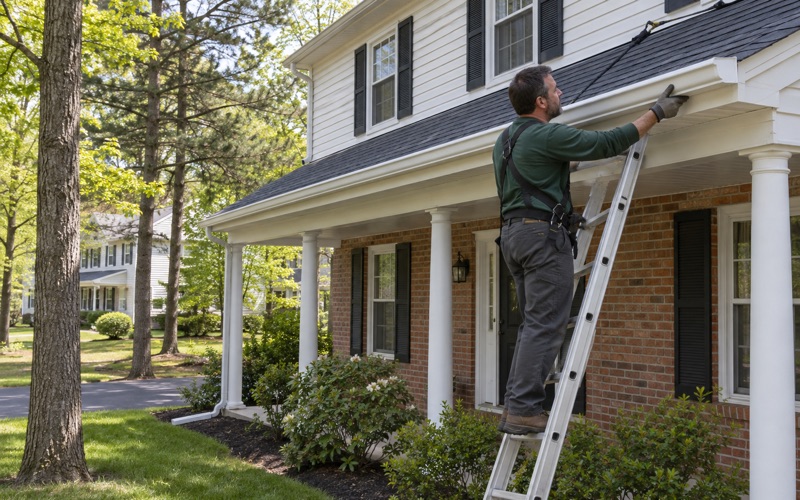
The Forest Fire Service’s Firewise guidance for the area closest to the house tells owners to clean roofs and gutters of dead leaves, debris and pine needles that could catch embers. On a wooded Jackson lot, a gutter can fill with needles in a single season, and a roof valley under an overhanging pine can hold a mat of them for years.
When we inspect a roof on a wooded lot, we write the needle-packed valleys, overhanging limbs and shaded, mossy slopes into the estimate as their own items. That way you can see what is a roofing problem, what is a tree problem and what simply needs regular cleaning.
Keeping gutters clear after the work
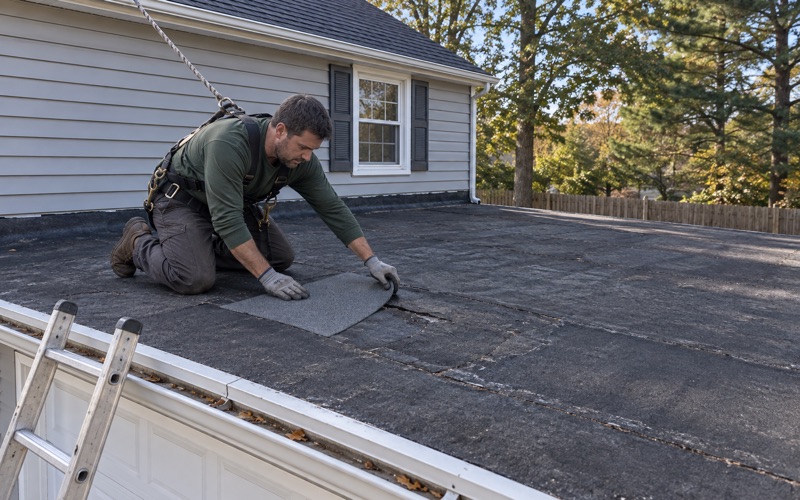
New or rehung seamless aluminum gutters and leaders only help if they stay open. On lots that drop a lot of needles, we talk through how often the gutters will realistically need clearing and whether the layout makes that job easier or harder.
A gutter that overflows also pushes water behind the fascia and into the roof edge, so needle buildup is a leak question as well as a fire question. Drip edge at the eaves and rakes helps keep that water off the wood, and we check it on every inspection.
Debris on a shaded roof
Needles that sit on a shaded slope hold moisture against the shingles and feed moss. Over time that shortens shingle life on the north-facing and tree-covered sides of a roof, which is why we often see one slope wearing out well before the others.
We look at those slopes closely before recommending anything. Sometimes the answer is a cleaning and a few replaced shingles, and sometimes the worn side is a sign the whole roof is closer to replacement than it appears from the street.
Loose Shingles and Open Eave Vents
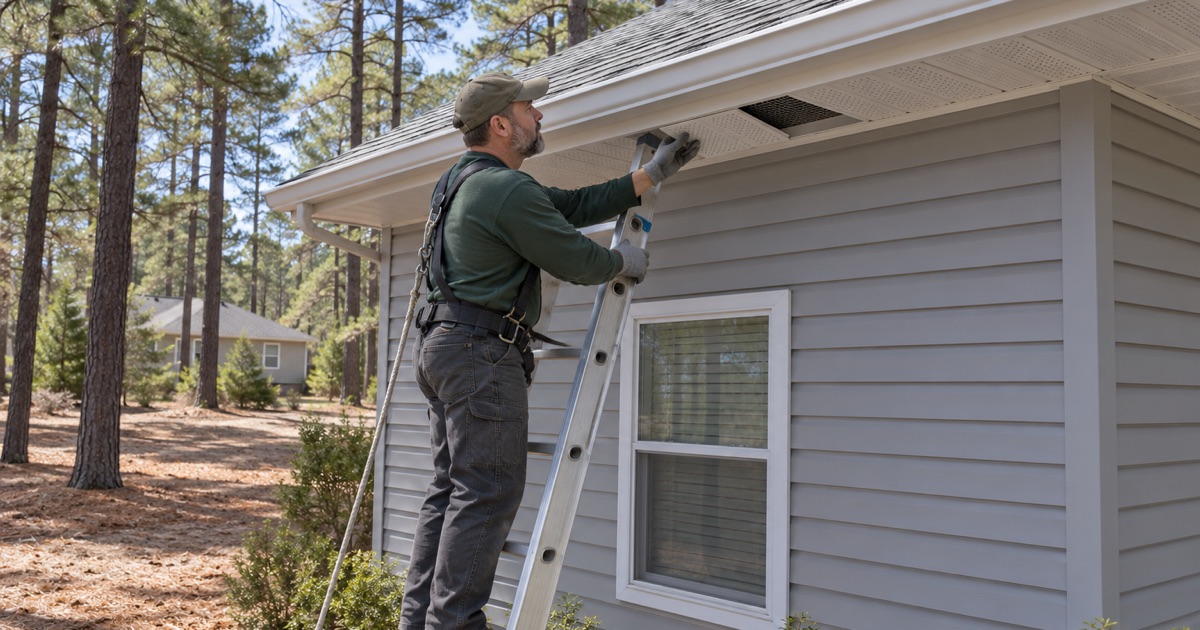
The same Firewise guidance points to two openings in particular: damaged roof covering and unscreened vents. Both are ordinary maintenance items that most homeowners can have checked in a single visit.
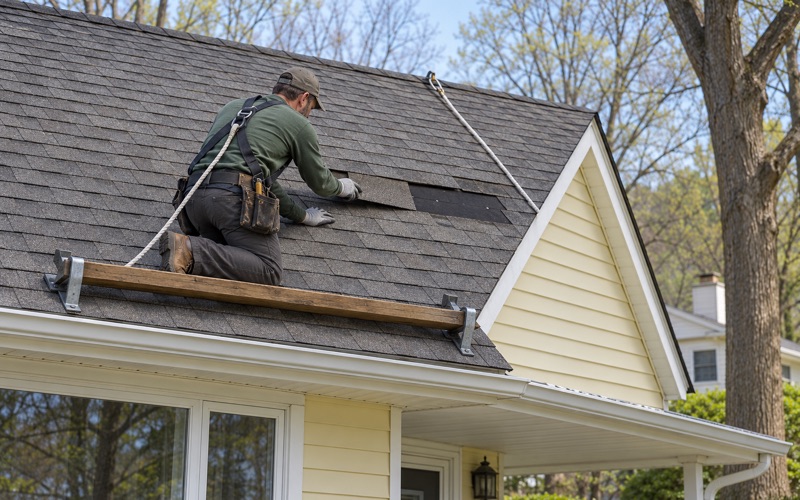
Loose or missing shingles
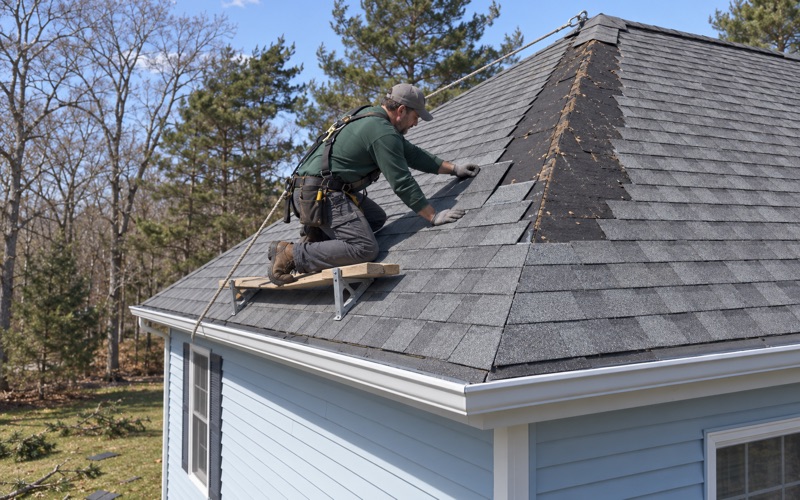
The guidance tells owners to replace or repair loose or missing shingles to keep embers from getting under the roof covering. A lifted tab or a gap at the ridge is a place where wind-driven rain gets in, and it is also a place where an ember can lodge against the underlayment.
When we answer a leak call, we look in the attic as well as on the roof, so the water is traced to where it actually enters before anything is priced. That same attic look tells us whether a loose shingle has already let water reach the decking.
Screening eave vents with 1/8-inch metal mesh
The Forest Fire Service also recommends reducing embers that could pass through eave vents by installing 1/8-inch metal mesh screening. Soffit intake vents are part of how an attic breathes, so the goal is to screen them without choking the airflow the roof depends on.
We check attic ventilation on every replacement, because a roof that cannot breathe ages from underneath. If screening is added, we look at the ridge vent and soffit intake together so the net free area still works for the attic.
Flashing and other gaps
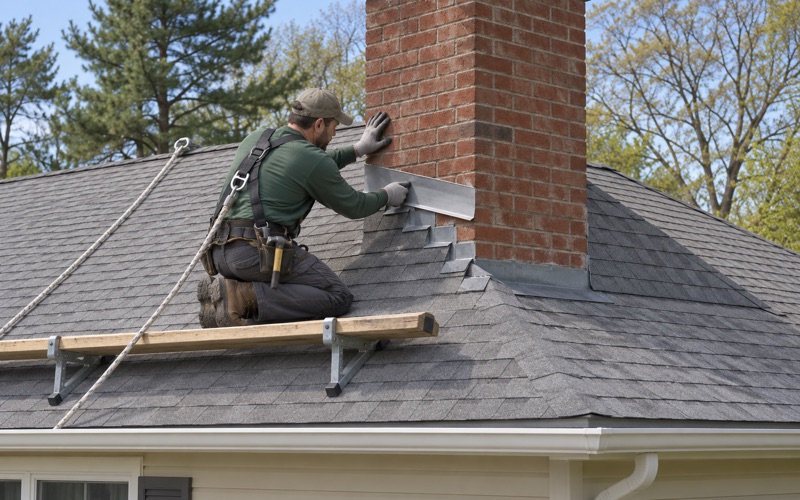
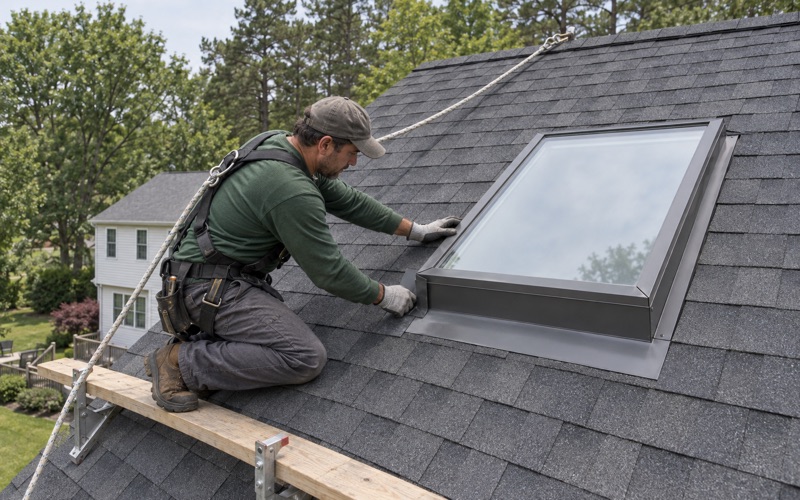
Old step flashing, counter flashing and chimney flashing can open small gaps at walls and chimneys as they age. On a replacement, we put new flashing in rather than reusing the old metal under new shingles.
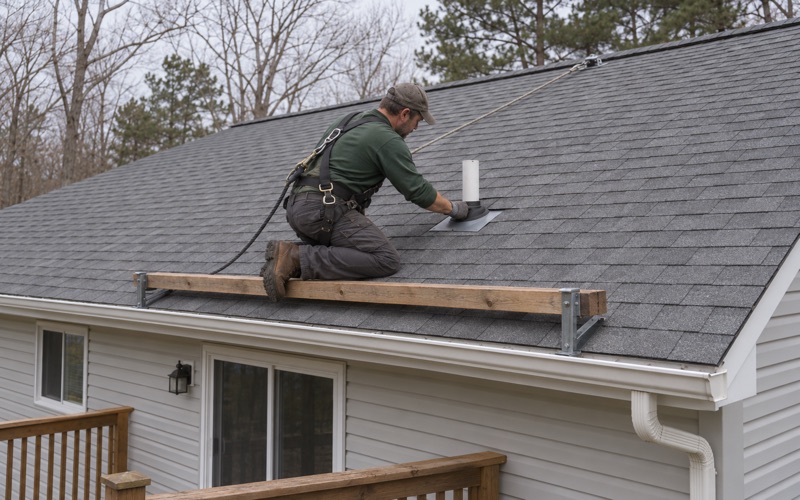
Pipe boots are another common weak point. A cracked rubber boot lets in water long before it shows on a ceiling, and it leaves an opening at the deck that we would rather close while the roof is already open.
Re-Roofing in Jackson’s Pinelands Section
Homeowners in the southern and western parts of Jackson sometimes ask whether being in the Pinelands changes what a re-roof requires. For a single-family house, the Pinelands rules exempt the work from a Pinelands Commission application under N.J.A.C. 7:50-4.1(a), so a roof replacement there runs much like one anywhere else in the township.
What the township points to
Jackson’s own Building Permits page publishes no separate roofing rule. It sends readers to the Uniform Construction Code sections on ordinary maintenance and on when construction permits are required, and the township’s Division of Construction Inspections enforces that code.
Under N.J.A.C. 5:23-2.7, re-covering a detached one- or two-family house is treated as ordinary maintenance. Attached, multifamily and commercial roofs are a different matter, and if a project falls into one of those categories we sort out the paperwork with you before the work is scheduled.
Choosing a roof covering near the woods
Firewise is guidance, not a code requirement, and we found no Jackson or New Jersey rule that makes a fire-rated roof mandatory for a house. Still, many owners near the pines ask about it, and it is a fair question to raise before choosing a shingle.
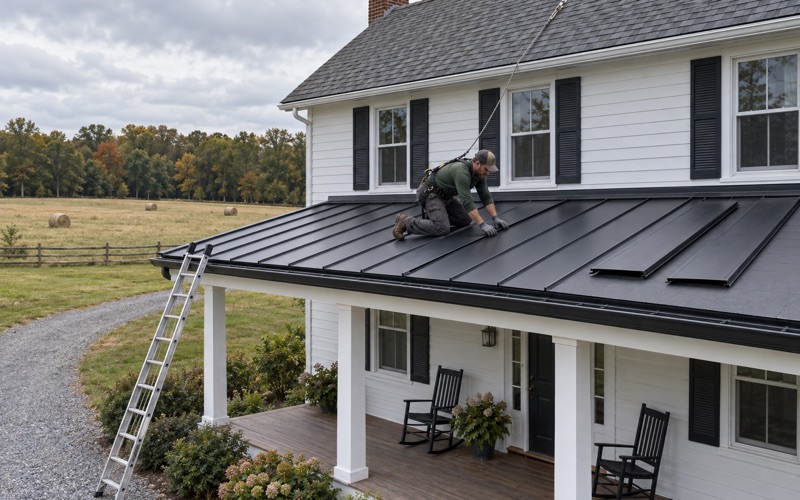
Common Class A roof coverings, rated under ASTM E108 and UL 790, include asphalt fiberglass composition shingles, concrete tiles and flat or barrel tiles. Architectural shingles such as GAF Timberline HDZ, Owens Corning Duration and CertainTeed Landmark fall into that asphalt group, and we can walk through standing seam metal as well if you are weighing options.
How we write and run the job
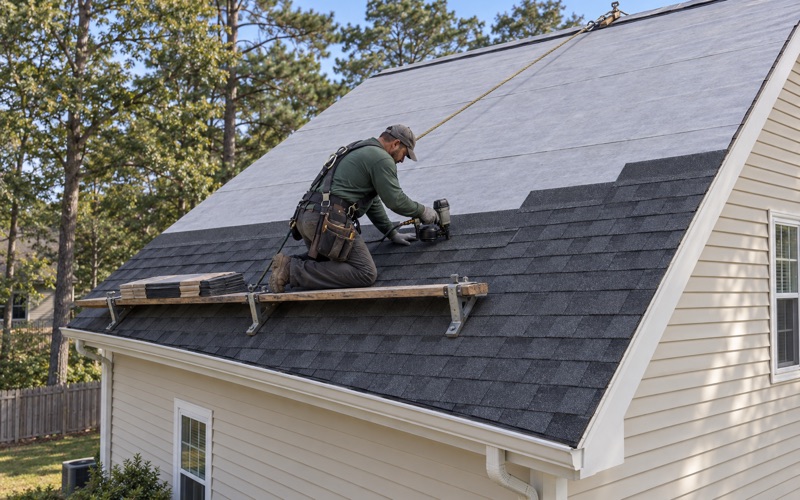
Our written scopes list tear-off, decking, underlayment, flashing, ventilation and gutters as separate lines, so you can compare two estimates item by item. If damaged decking turns up once the old roof is off, we photograph it and show you before replacing it, at the per-sheet price already set in the contract.
Contracts follow New Jersey’s home improvement rules, including the three-day cancellation notice. At the end of each work day we clean the driveway, yard and gutters and run a magnet sweep for roofing nails, which matters on a wooded lot where nails disappear into needle litter.
After a storm
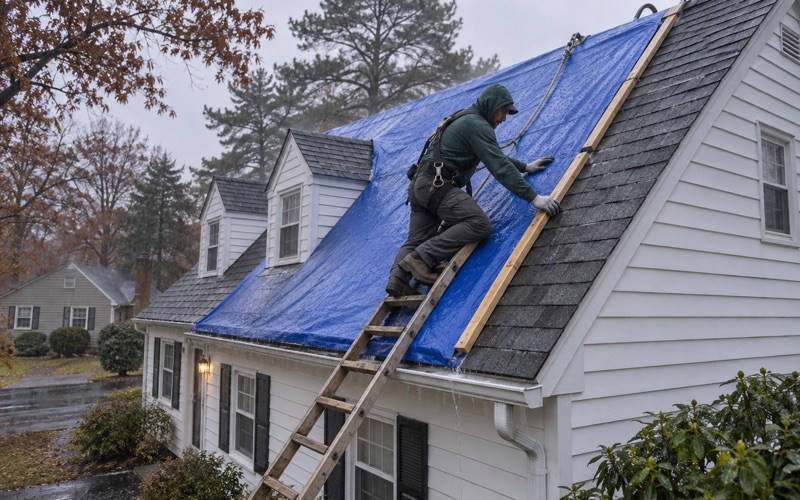
When wind brings a limb down, we put tarps and temporary repairs on the same day, taking photos before anything is moved. Those photos and a written description of the damage are yours to use for your own insurance claim.
If you ask, our crew will meet the insurance adjuster at the house to show what we found. Decisions about the claim itself stay between you and your insurer, and we keep our part to documenting the roof accurately.
- 20+ Years on Monmouth County Roofs
- Line-Item Written Estimates
- Same-Day Storm Tarping