
Howell Quality Roofing provides emergency roof repair in Howell, NJ, serving surrounding cities including Ramtown, Freehold Township, Wall, West Freehold and Vista Center, and after more than 20 years of storm calls we know the first hours decide how much damage the inside of a house takes. When wind tears off shingles, a limb punctures the deck or water starts pouring through a ceiling, our first job is to stop the water.
That means a secured tarp or temporary repair the same day whenever conditions allow, with photos taken before anything is moved. The photos protect you: they show the adjuster exactly what the storm did, before cleanup and temporary work changed the scene.
Once the house is protected, we come back to assess the damage properly, from the attic and the roof, and give you a written scope for the permanent repair. Emergency work and permanent work are billed separately, so your insurer can see each one clearly.
When to Call for Emergency Roof Service
Missing Shingles After a Wind Storm
High winds break the seal strips on shingles and peel them off in strips, often starting at the edges and ridge. Exposed felt or bare decking will leak in the next rain. We cover the open area, fasten loose shingles that are still sound, and note every damaged section for the permanent repair.
Wind damage is often worse than it looks from the yard. Creased shingles may still lie flat but have lost their seal and will lift again in the next storm, so we document those too.
Howell has seen confirmed tornado damage as well as ordinary wind storms. On April 1, 2023, an EF-2 tornado surveyed by the National Weather Service office in Mount Holly began in Jackson and ended in Howell, and surveys like that one become part of the record behind a claim.
Trees and Limbs on the Roof
A fallen tree or large limb can crack rafters and punch through the decking. Never climb onto the roof or try to cut the limb yourself. After the utility has cleared any wires, we work with a tree crew to lift the weight off safely, then tarp the opening and check the framing below.
A cracked rafter or a broken ceiling joist can carry less weight than it looks, so we check the framing from inside before anyone works above it. Where a member is badly damaged, we add temporary support so the roof can be tarped safely and the structure holds until the permanent repair.
Sudden Leaks Through the Ceiling
Water pouring through a light fixture or a bulging ceiling needs attention fast. We locate the source from the attic, divert or contain the water, and seal or tarp the entry point on the roof. A temporary fix now keeps insulation, drywall and flooring from soaking any longer than they already have.
Flashing and Vent Failures
Sometimes a storm lifts a section of chimney or wall flashing, or tears a vent cap loose, and water pours in through a gap that was dry yesterday. We secure or temporarily seal the opening and replace the damaged flashing or vent as part of the permanent repair.
What Happens on an Emergency Call
Protecting the House First
On arrival we check the inside of the house to see where water is entering and how far it has spread. If it is safe to go up, we tarp or seal the damaged area. If it is not, because of lightning, high wind or an unstable structure, we help protect the interior and return as soon as conditions allow.
Inside, that can mean moving furniture away from the leak, spreading plastic over floors and belongings, and opening a small hole in a bulging ceiling so trapped water drains into a bucket instead of bringing the whole ceiling down. Those small steps often save more than the tarp does.
Tarps That Stay Put
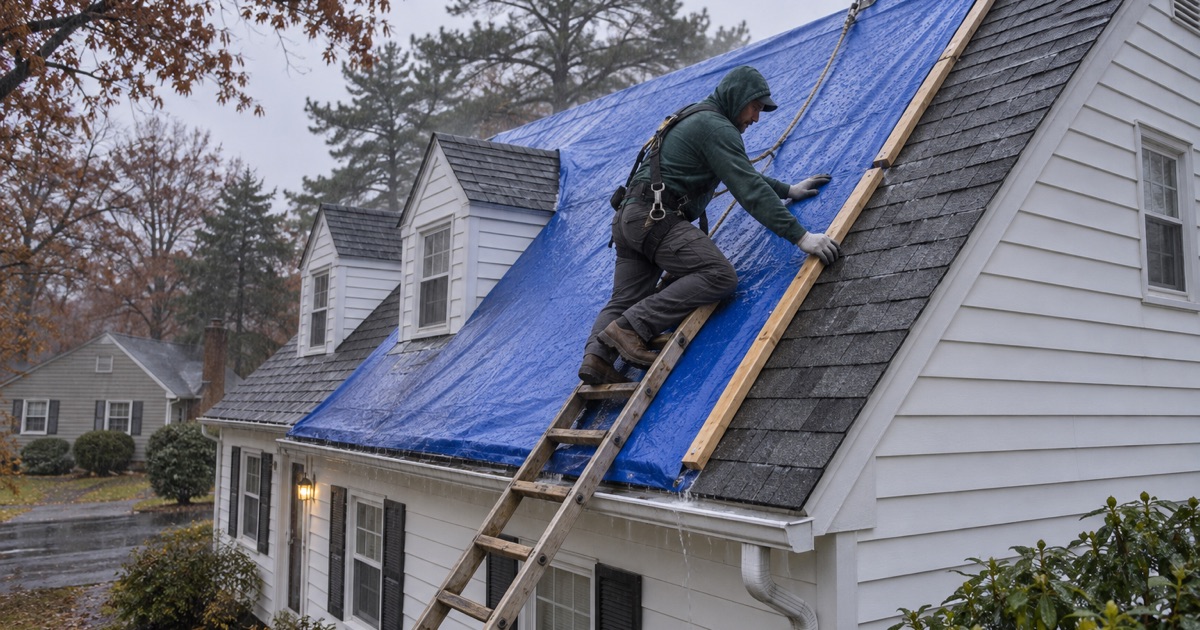
A tarp that blows off in the next gust protects nothing. We extend tarps over the ridge where possible, fasten them with battens rather than loose nails, and overlap them so water runs over the tarp and not under it. The goal is a cover that holds through the days or weeks before the permanent repair.
Photos Before Anything Moves
Before we remove debris or put down a tarp, we photograph the damage from the ground, the roof and the attic. Those dated photos, together with a written description, go to you for your own claim. If you ask, we can meet your insurance adjuster on the roof later to walk through them.
After the Emergency
The Permanent Repair
Once the roof is dry and the claim is under way, we return to make the permanent repair. That might be replacing shingles and underlayment, rebuilding flashing, replacing cracked rafters or decking, or, when the damage is widespread, a full replacement. The written scope lists each item so you and your adjuster can compare it with the damage report.
Storm Claims in New Jersey
New Jersey’s Department of Banking and Insurance publishes guidance for homeowners filing storm claims, including what to document and how the process works. A separate hurricane deductible applies only in narrow circumstances set out in DOBI Bulletin 11-16. Only a licensed public adjuster may negotiate a claim on your behalf; we document and inspect, but the claim stays yours.
Keeping Records
Keep every receipt from the emergency: the tarp, any water cleanup, hotel costs if the house was unlivable, and damaged belongings. Insurers usually ask for proof of what was spent to prevent further damage. Our invoice for the emergency work is itemized and separate from the permanent repair so it can go straight into your claim file.
- 20+ Years on Monmouth County Roofs
- Line-Item Written Estimates
- Same-Day Storm Tarping