Howell Quality Roofing has handled roofing in East Freehold for more than 20 years, and many of the calls we take here begin the same way: something came down in the night, and an owner wants to know what it did to the roof overhead. We repair what can be repaired, replace what has run its course, and tell you which of the two you are looking at before any price is written.
On a leak, we go into the attic as well as onto the shingles, because water rarely shows up on a ceiling directly below the spot where it got in. Tracing it first means the quote covers the actual entry point instead of a guess made a few feet away from it.
When a replacement is the right call, our written scope breaks the job into separate lines for tear-off, decking, underlayment, flashing, ventilation and gutters. That makes it simple to set our estimate beside anyone else’s and compare the work item by item, not just the total at the bottom.
The July 2012 Downburst and What the Storm Reports Recorded
On Saturday night, July 28, 2012, a severe thunderstorm swept through the Freehold area while the Monmouth County Fair was still running. At 10:00 p.m. a trained spotter sent the National Weather Service office in Mount Holly a report from East Freehold that said a great deal in four words: multiple large trees down. It was the first in a string of storm reports from the area that hour.
A string of reports inside the hour
Over the next 45 minutes, the National Weather Service storm reports logged trees down west of Freehold, large branches broken in Freehold, and a tree on top of a car. Hail was reported in Marlboro, and shortly before 10:45 p.m. a spotter filed a partial roof collapse at a gas station onto a car, listed under Freehold.
That last report carries a garbled intersection, and nothing we have read places it within East Freehold. Here, the record is trees, and that is the part an owner on a wooded lot should pay attention to.
What the forecasters called it
A few days later, National Weather Service forecasters told Patch the storm was a strong downburst, a rush of air that drops out of a thunderstorm and spreads out hard at ground level. They traced the damage from near the county correctional institution on Waterworks Road southeast toward the East Freehold Showgrounds on Kozloski Road, where the fair was set up.
No wind speed appeared in anything we read, and we will not put a number on it either. What matters for a roof is the kind of damage a downburst leaves behind: broad, straight-line damage where trees and limbs fall the same way across a whole neighborhood.
The state of emergency that followed
By Sunday, Freehold Township had declared a state of emergency. CBS New York reported a 10 p.m. curfew because of downed wires, the fair’s final day canceled, and 1,400 township customers still without power that afternoon, with Freehold Regional High School opened as a shelter.
Patch also passed along a practical warning that week: if a service pole or meter was pulled off the side of a house, that is a job for an electrician before anyone else touches it. We give the same advice today, and we stay off any roof where a wire is still lying across it.
Looking for roofing closer to Lakewood? See Lakewood Roofing.
East Freehold’s Houses and the Trees Above Them
East Freehold is a census-designated place in the northeast corner of Freehold Township, which governs it, with Route 18 along its northeast edge and most of its land draining east to Yellow Brook. There is no separate local government here, so permits and inspections run through Freehold Township.
Detached, owner-occupied, and built before 2000
The housing is almost entirely single-family. Census estimates from 2024 count 1,546 of 1,653 units as detached houses and 1,441 of 1,555 occupied homes as owner-occupied. Every unit was built between 1950 and 1999, and 620 of them went up in the 1990s.
That means roof decisions here are mostly made by the people living under them, on houses where the original roof or its first replacement is well along in its life. Owners of the 1990s houses in particular are reaching the point of weighing a repair against a full new roof.
Decades of tree growth over the roofline
Lots landscaped in the 1960s or the 1990s have had decades for shade trees to grow tall over the house. A big tree that cools a slope is pleasant in August and a liability in a downburst, because the limb that breaks is usually the one already hanging over the roof.
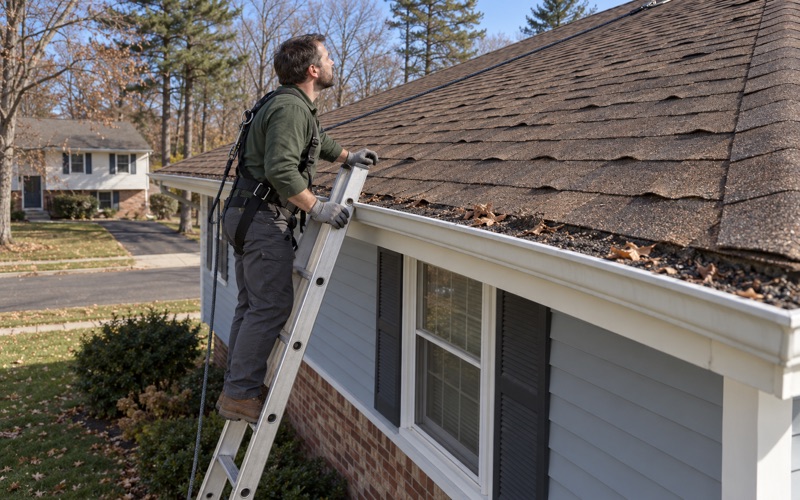
We plan for that on every estimate here. Overhanging limbs, valleys packed with leaves and needles, and shaded slopes holding moss are written into the scope, so the owner knows which tree is a roofing problem before it turns into a storm problem.
Checking a Roof After Wind and Fallen Limbs
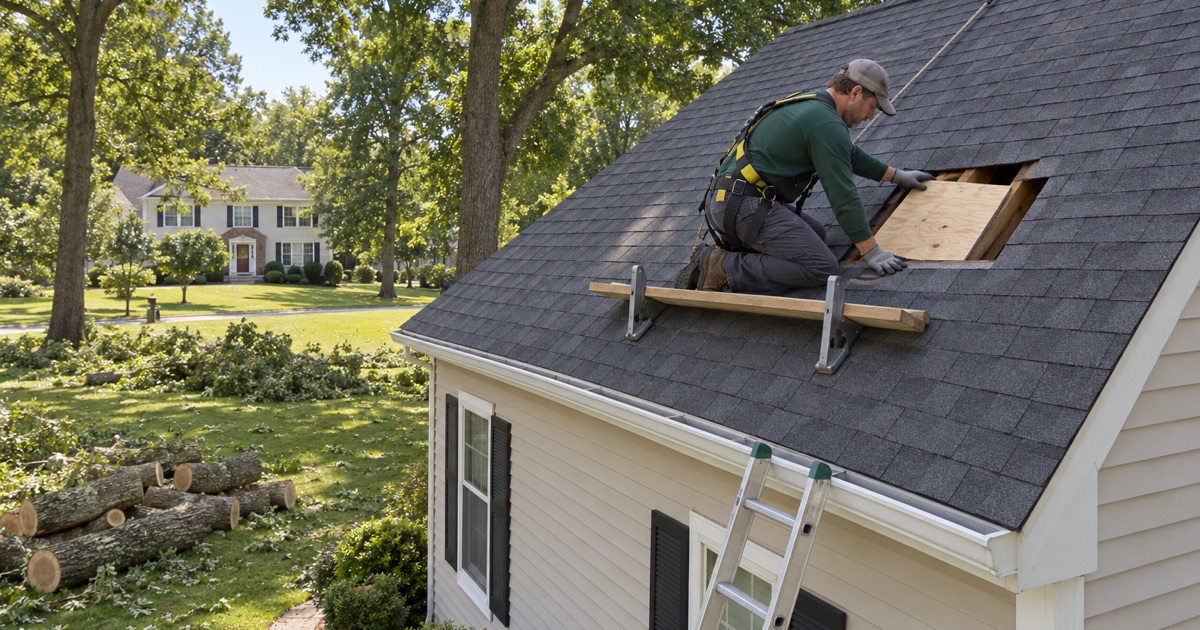
After a storm like the one in 2012, the roof check is about what came down onto the house, not only what blew off it. A shingle tab lifted by wind is easy to spot from the driveway, but a limb that struck the ridge and rolled off can leave damage that only shows from the roof deck or the attic.
Same-day tarps, photographs first
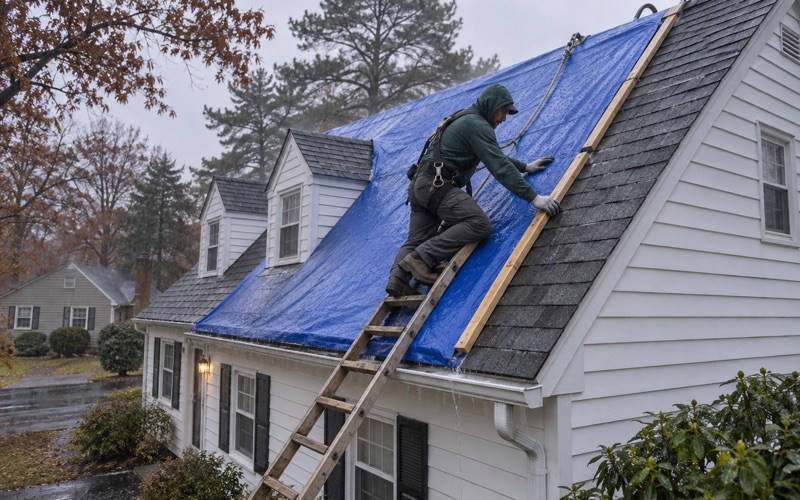
When a tree or large branch lands on a roof, we come out the same day to tarp the opening or make a temporary repair. Before anything is moved, we photograph the roof as we found it, limb and all, so the record exists before the cleanup changes it.
Those photos and a written description of the damage go to the owner for their own insurance claim. If you want us there when the adjuster inspects, we will meet them on site and walk the roof with them, but the claim and the decisions on it stay yours.
What we look for on the roof
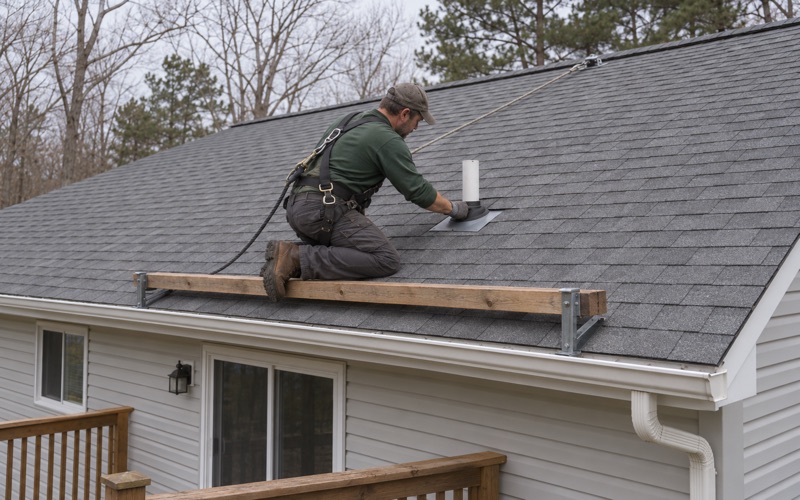
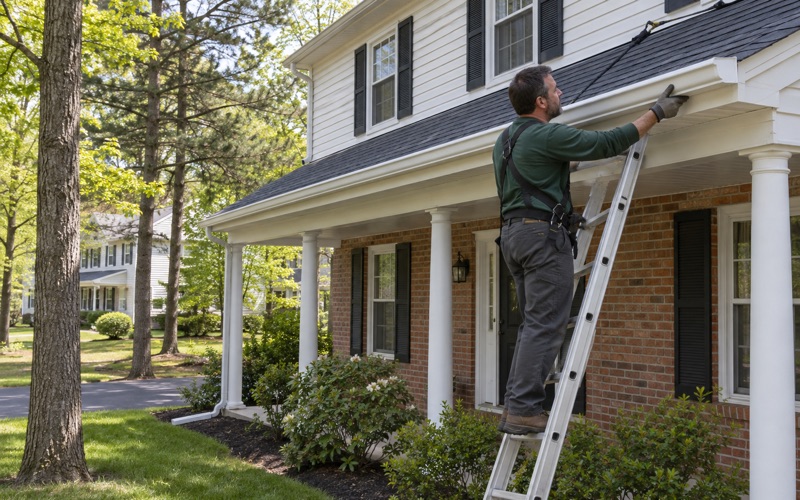
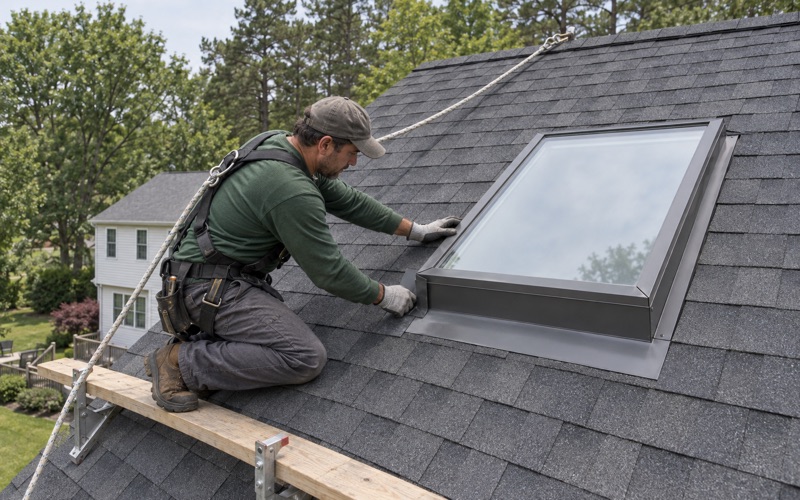
On top, we check for cracked or punctured shingles, broken seal strips along the path where a limb slid, bent drip edge, crushed ridge vent, torn pipe boots and loosened step flashing at walls and chimneys. Gutters and leaders often take the first hit from a falling branch and can pull away from the fascia.
We also look at the decking under any impact. A heavy limb can crack a sheet of plywood without breaking through the shingles, and a cracked sheet flexes underfoot and lets fasteners work loose over the following seasons.
Inside the attic
Under the roof, we look at the underside of the deck for fresh splits, daylight around nail points, and damp insulation. A ceiling stain that appears weeks after a storm often traces back to an impact point that looked minor from the yard.
If the attic shows nothing and the roof has lost only a few shingles, we will say so and price a repair. A storm does not automatically mean a new roof, and we tell you plainly when it does not.
Roof Repair and Replacement in East Freehold
Most of our work in East Freehold falls into three kinds of jobs: storm and tree repairs, planned replacements on aging roofs, and the flashing and ventilation fixes that keep either one from leaking down the line.
When a repair makes sense
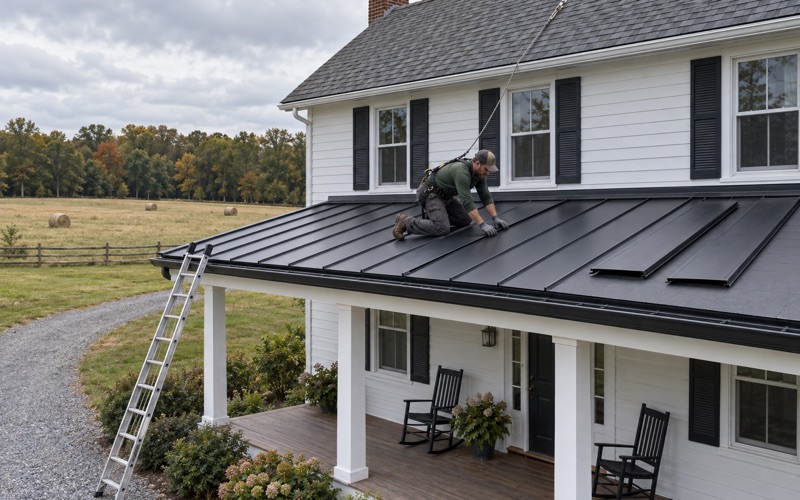
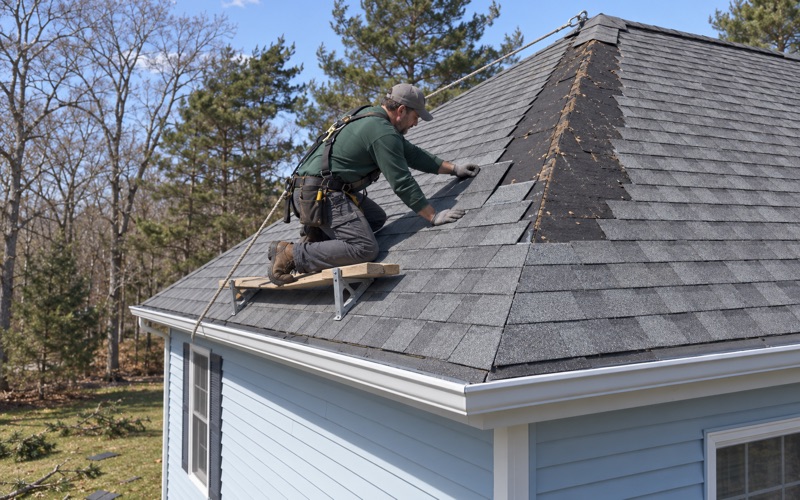
A repair is the right answer when the damage is local and the rest of the roof has life left. Replacing a run of shingles, resealing a pipe boot, rebuilding the flashing at one chimney or patching a section of decking are all reasonable jobs on a roof that is otherwise sound.
We give you that answer first. Replacement only comes up once a repair would cost close to a new roof, or the roof is failing in more places than one.
Full replacements
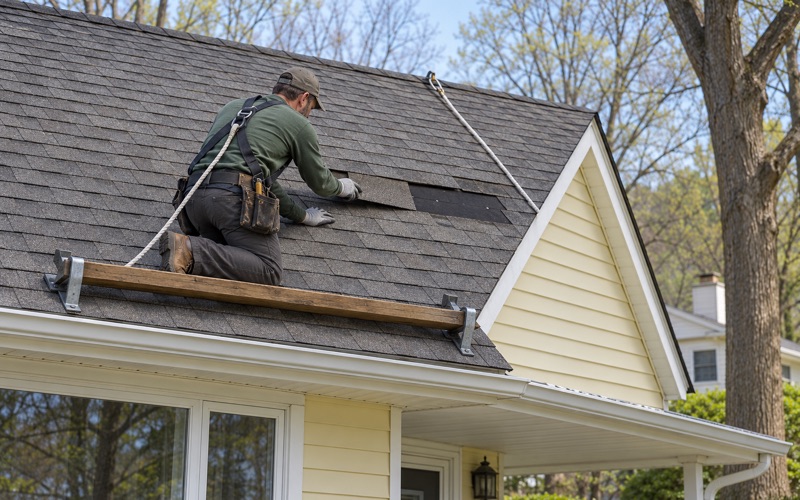
On a replacement, we strip to the deck and inspect every sheet. Damaged decking is photographed and shown to you before it is replaced, and the price per sheet is already set in the contract, so no surprise number appears after the tear-off.
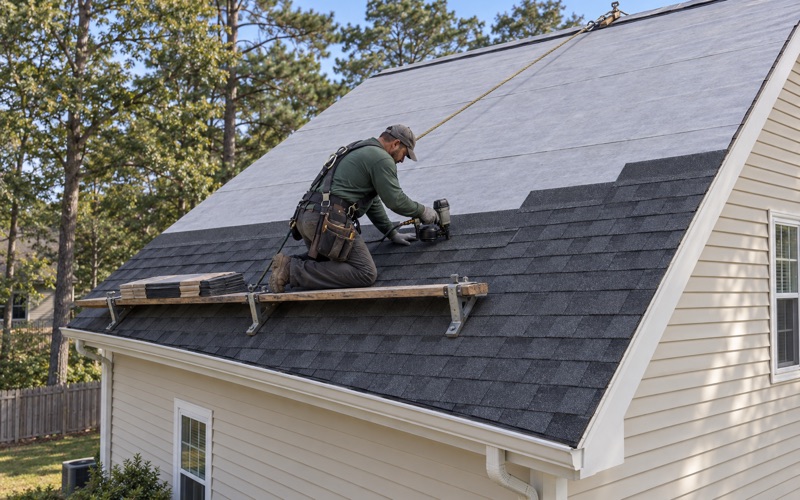
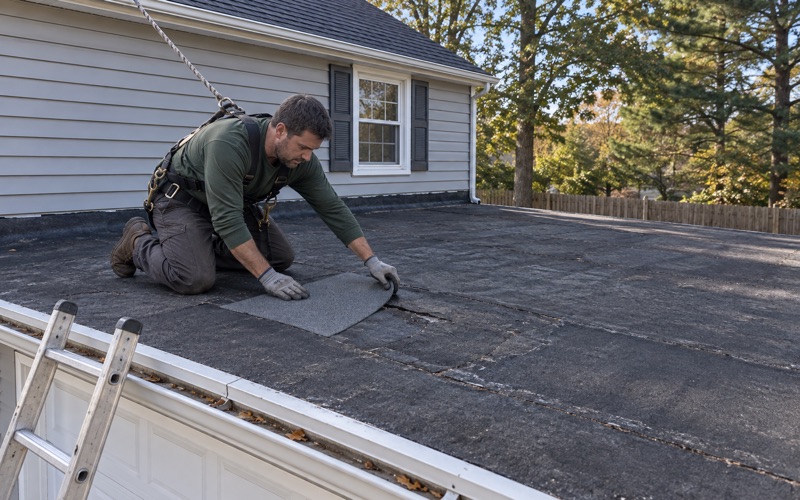
We install self-adhering ice and water barrier at the eaves and valleys, synthetic underlayment over the field, new drip edge at eaves and rakes, and architectural shingles such as GAF Timberline HDZ, Owens Corning Duration or CertainTeed Landmark. For owners who want extra margin against the next storm, shingles rated to ASTM D7158 Class H wind resistance are worth pricing.
Flashing and ventilation
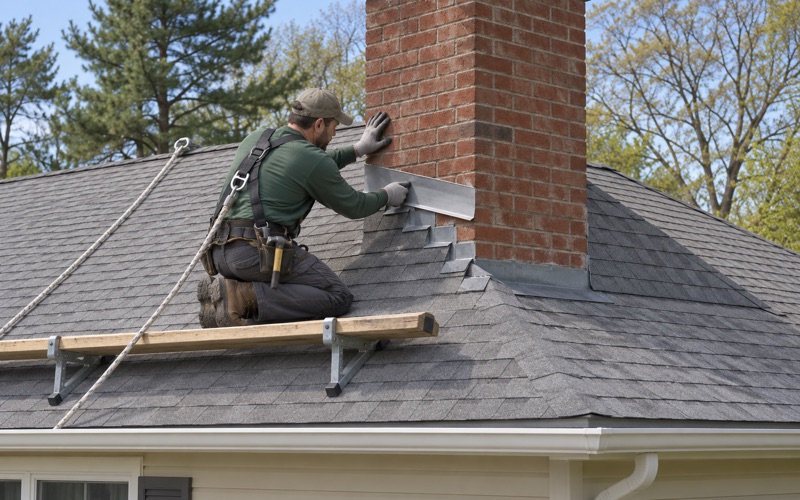
Step, counter and chimney flashing is replaced along with the roof rather than reused under new shingles, and a chimney wider than 30 inches gets a cricket behind it to split the water. Old flashing tucked under new material is one of the most common sources of a leak on a roof that is only a year or two old.
We also check attic ventilation on every replacement, balancing ridge vent with soffit intake. A roof that cannot breathe bakes from underneath in summer and holds moisture in winter, and both shorten the life of new shingles.
Contracts, cleanup and scheduling
Our contracts are written to New Jersey’s home improvement rules, including the three-day cancellation notice. If solar panels sit on the roof, their removal and reinstall go into the schedule from the start, and if you are selling, we can provide a written roof condition report to hand to the buyer’s inspector.
At the end of every work day the driveway, yard and gutters are cleaned, and a magnet sweep picks up loose nails. On a wooded East Freehold lot that sweep matters, because nails hide in leaf litter and mulch beds long after the crew has gone home.
- 20+ Years on Monmouth County Roofs
- Line-Item Written Estimates
- Same-Day Storm Tarping