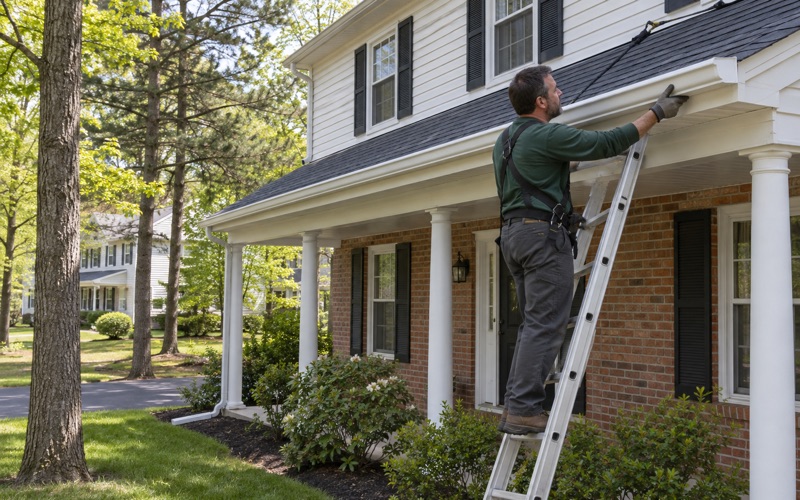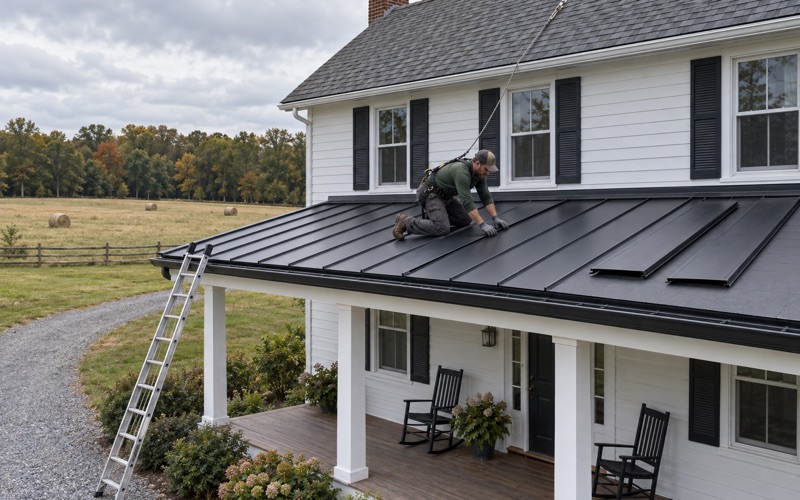
Howell Quality Roofing brings more than 20 years of work to roofing in Brick, and not every roof we are called to here is a pitched shingle roof. Some sit on single-wide homes with a roof so low it reads as flat from the street, and those need a different kind of job than a tear-off and a fresh layer of architectural shingles.
Before anything is priced, you get a plain answer on whether the roof can be repaired. A leak on a low-slope roof often traces back to one seam, one vent or one tired patch, and finding it means looking from the inside as well as from the top, so the water is followed to the spot where it actually gets in.
When a coating, a membrane or a full replacement is the right call, our written scope breaks the job into separate lines: removal, decking or substrate, underlayment or membrane, flashing, ventilation and gutters. That lets you set a second bid beside ours and compare it line by line, and every contract is written to New Jersey’s home improvement rules, three-day cancellation notice included.
Brick’s Manufactured Homes and Princeton Beach Estates
Brick is overwhelmingly a township of detached houses, but it holds a small manufactured-home segment too. The Census Bureau’s 2024 American Community Survey five-year estimates count 222 mobile homes in the township, 83 of them occupied by their owners and 119 rented.
Where the Township’s Mobile Homes Sit
Most of that segment has a single address. The same survey places 139 mobile homes, with a wide margin of error of 94, in Census Tract 7135, and the Census geocoder puts 50 Princeton Avenue inside that tract. That address is Princeton Beach Estates, which listings describe as a 55+ adult community mobile home park located off Princeton Avenue.
The tract figure is an estimate for the whole tract, not a tally of homes in the park, and we read it that way. What it does tell us is that when a Brick owner calls about a mobile home roof, there is a good chance the home stands on one of the park’s lettered trails.
What the Listings Tell Us
Recent listings fill in what the Census cannot. A home on E Trail that sold in August 2026 for $63,000 lists its roof type as flat and mentions a newer roof. A listing on B Trail describes its lot as oversized and on leased land, and the MHVillage park directory calls the community quiet, secluded and family owned since 1977.
Those details shape the work more than the sale prices do. A flat roof on a home that sits on leased land raises questions about access, timing and who signs off on exterior changes that a house on its own lot never raises, and we take them up before the estimate rather than after it.
A Roof Unlike the Houses Around It
One-unit detached homes make up 77.8% of Brick’s housing units, and most carry pitched roofs framed on site. A manufactured home is built in a factory to the federal HUD code, with a roof engineered as part of the unit, and that is why a mobile home roof here is a job of its own rather than a smaller version of a house re-roof.
Looking for roofing closer to East Freehold? See Roofing Services in East Freehold.
Flat and Low-Slope Roofs on Single-Wide Homes
Why a Flat Roof Leaks Differently
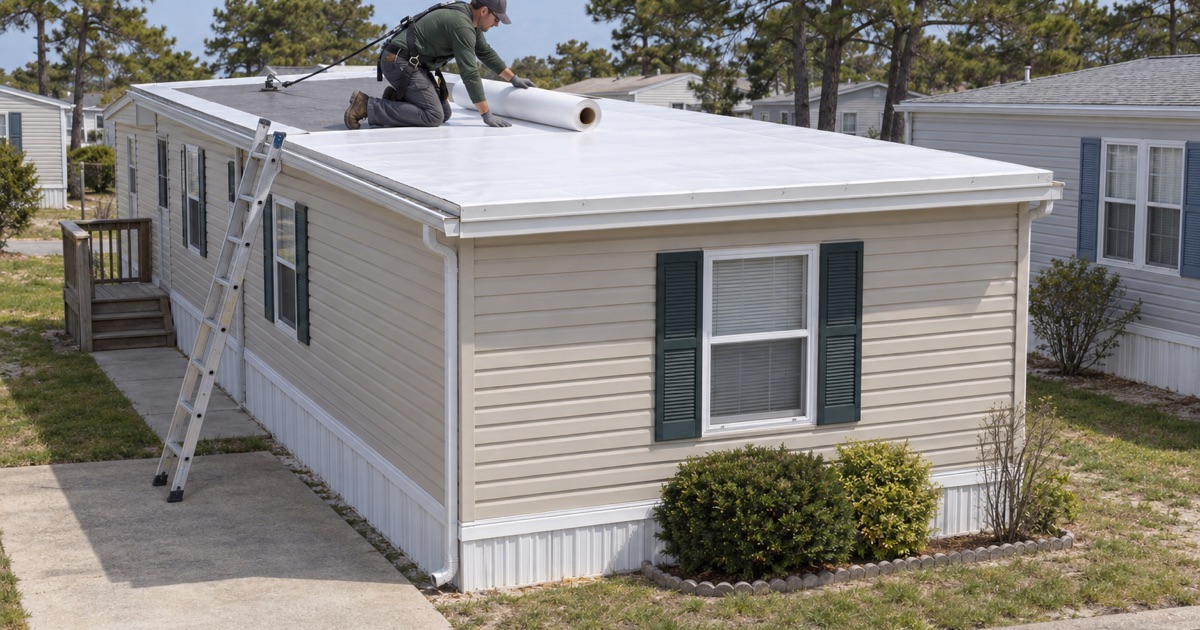
A single-wide home’s roof is often nearly flat or only slightly crowned, typically a metal or membrane skin over light framing. Water does not run off it the way it runs off a steep shingle roof; it lingers, and any weak point at a seam, fastener, vent stack or skylight gets more time to work its way inside.
Ponding is the usual suspect. Where the crown has flattened or a section has settled, water sits for a day or two after a rain, and the rims of those puddles are where coatings crack and seams lift first.
Tracing the Leak From Inside
Most manufactured homes have no attic you can stand in, so we inspect what can be reached from the living space: the ceiling panels, the trim around vents and light fixtures, and any stain pattern that hints at which way the water is traveling. A stain in the middle of a ceiling may come from a seam several feet away.
Only after the source is pinned down do we talk about the fix. A loose vent flange or a split seam is a repair, and we say so before anyone brings up a new roof.
Ventilation Under a Low Roof
Moisture in a manufactured home’s roof cavity has little room to escape, and condensation dripping from the underside can pass for a leak. We check roof venting on every replacement and on any leak call where the evidence does not line up with a hole in the surface, because a roof that cannot breathe wears out from underneath.
When the cause turns out to be trapped moisture rather than rain, the answer may be added or cleared vents rather than any new roofing at all, and the estimate reflects that.
Coatings, Membranes and Roof-Overs on a Mobile Home
There are three common ways to renew a flat roof on a single-wide, and they differ in cost, lifespan and how much they change the home’s shape.
Roof Coatings
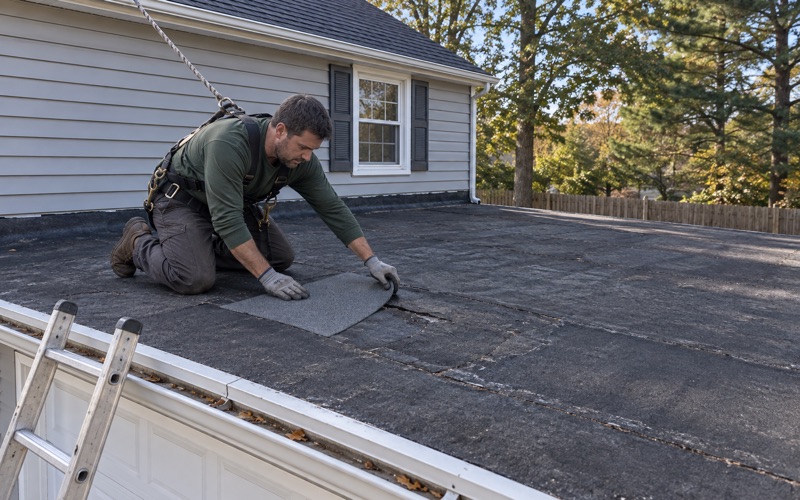
A roof coating is a liquid-applied layer, usually elastomeric acrylic or silicone, rolled or sprayed over a cleaned and repaired metal or membrane surface. It seals seams and fasteners, reflects summer sun, and suits a roof whose underlying skin is still sound.
Coating is not a cure for a roof that is already soft or badly ponded. We check the substrate before recommending one, and if damaged decking turns up once old material comes off, we photograph it and show it to you before replacing anything, at the per-sheet price set in the contract.
EPDM and TPO Membranes
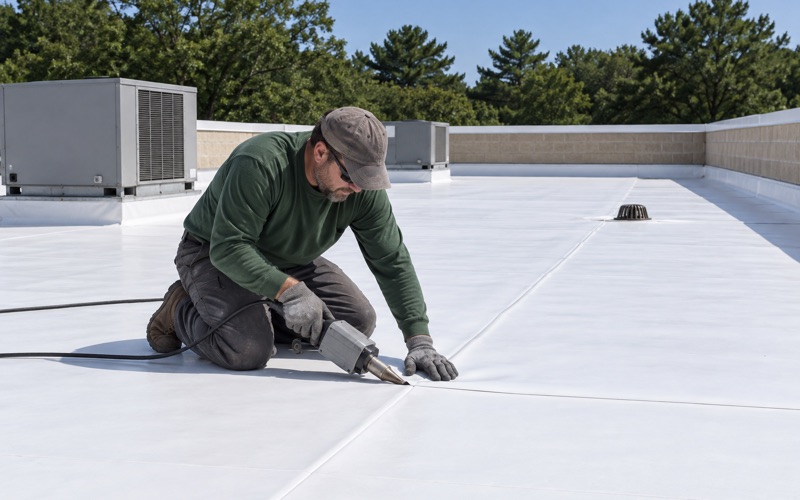
Where the old surface is past coating, an EPDM rubber membrane or a TPO single-ply sheet can go down over insulation board, with seams and edges flashed to the vents and walls. A membrane is heavier and thicker than a coating, but it gives the home a new waterproof layer rather than a refreshed old one.
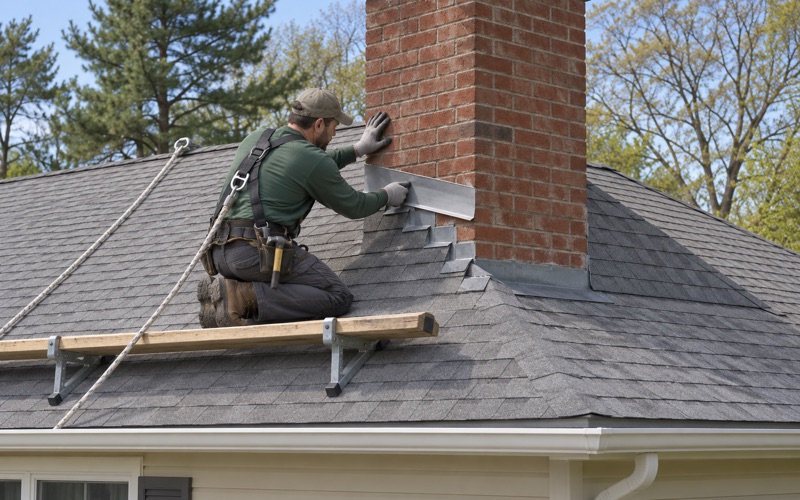
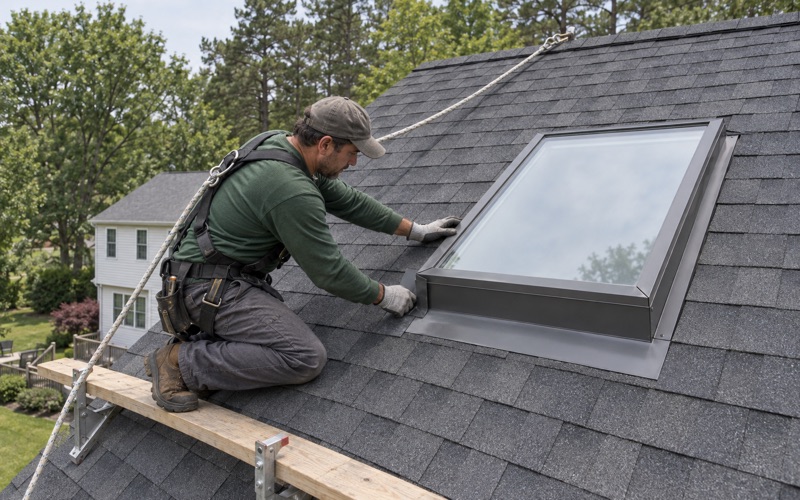
Membrane edges are where these roofs tend to fail, so the perimeter metal and the flashing around vent stacks and any skylight are replaced along with the new membrane instead of being reused underneath it.
Pitched Roof-Overs
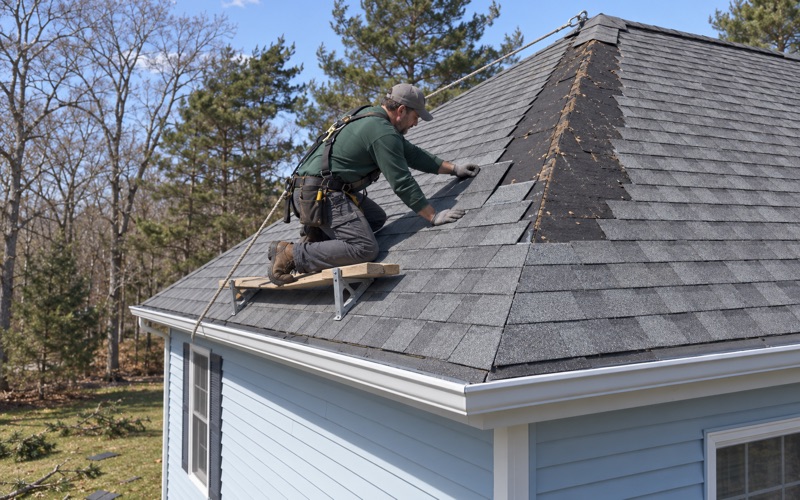
A manufactured home roof-over system builds a new pitched frame on top of the existing roof and covers it with metal or shingles, turning a flat roof into one that sheds water. It changes the home’s profile and adds load to the walls, so it is the most involved of the three and the one with the most to settle before work begins.
In a park, a roof-over is also the option most likely to touch the community’s own expectations about height and appearance. We have not read Princeton Beach Estates’ rules, so we ask owners to check with park management before we draw one up.
Owned Home, Leased Land and New Jersey’s Code
What the Park Fee Covers
The E Trail listing gives a $735 monthly fee covering trash, management fees, property taxes, sewer, snow removal and water, and another listing gives the fee as $775. The roof does not appear on that list of inclusions, but who answers for a roof on leased land is a question for the lease itself, which we have not read.
Checking the Documents First
In any adult community, we confirm who holds the roof against the community’s own documents before writing an estimate. At a leased-land park that means your lease and anything management has put in writing about exterior work, crew access, material deliveries and work hours.
Bring those papers to the first visit, or ask the office for them ahead of time. An estimate written around what they say is one you can act on; an estimate written without them may have to be redone.
Manufactured Homes and the Uniform Construction Code
New Jersey treats manufactured homes differently from site-built houses. Under N.J.A.C. 5:23-2.2(a)2, homes built and installed under the federal manufactured-housing standards fall outside the state Uniform Construction Code, while the rehabilitation of a manufactured home falls within it.
No state text we have read settles exactly how a re-roof on a manufactured home is classified under that split, and we will not guess at it for you. Before work starts, we suggest a call to the Brick Township Building Department, also known as the Division of Inspections, so the question is answered by the office that enforces the code here.
Selling a Home in the Park
Listings for homes in Princeton Beach Estates mention the roof as a selling point, and one calls out a newer roof by name. When an owner is selling, we write a roof condition report the seller can hand to the buyer’s inspector, covering the surface, seams, vents, flashing and any signs of past leaks.
Tidy Lots, Close Neighbors
Homes in a park sit close together, and a dropped nail or a strip of old membrane can land on a neighbor’s lot in seconds. Each work day ends with the yard, drive and gutters cleaned and a magnet sweep for roofing nails, so the trail looks the way it did before we arrived.
- 20+ Years on Monmouth County Roofs
- Line-Item Written Estimates
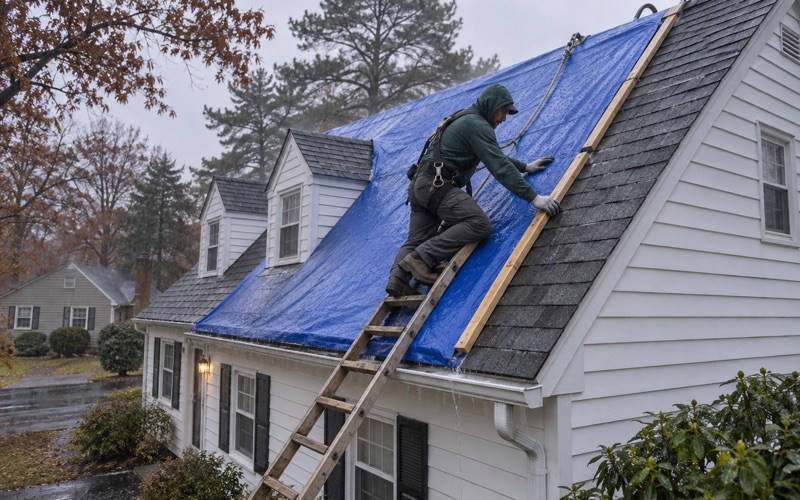
- Same-Day Storm Tarping