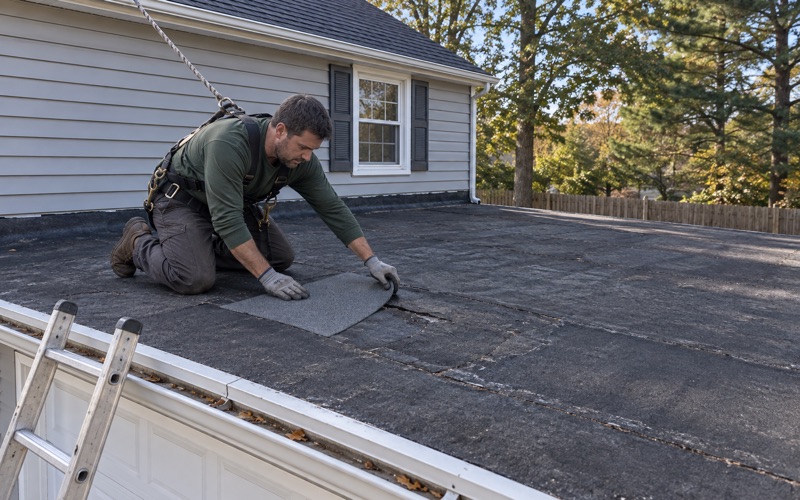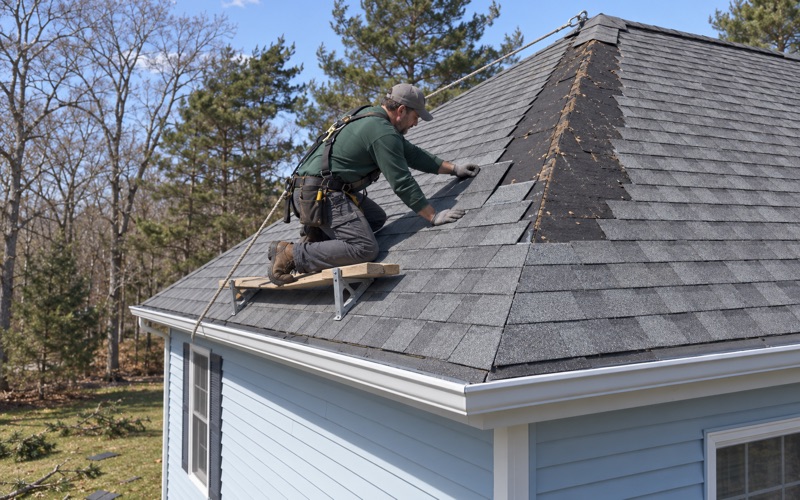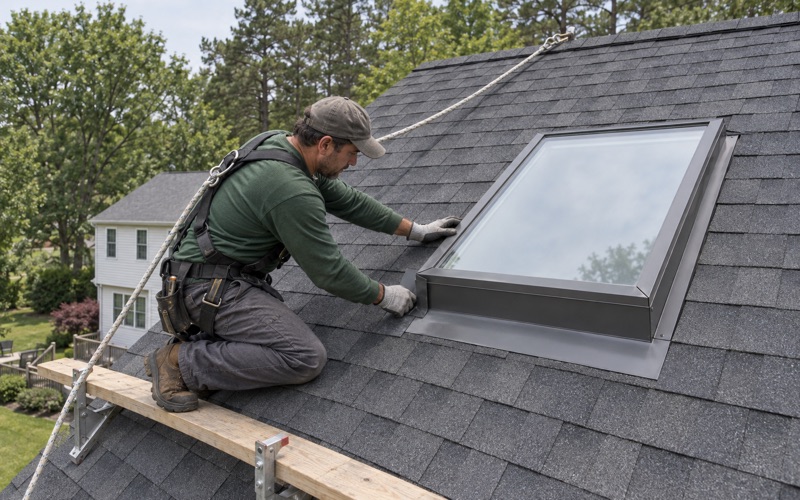
Howell Quality Roofing has spent more than 20 years on roofing in Bordentown Township and across this part of New Jersey, and the jobs that run cleanly here are the ones planned before the first shingle comes off. A replacement is a roof, and it is also a large box of old roofing sitting outside your house for several days. In this township, that box has its own set of rules.
We start every roof the same way, whatever the town. If there is a leak, we look in the attic as well as on the roof, so the water is traced to where it actually enters before a dollar is priced. You get a plain answer on whether the roof can be repaired before anyone mentions a replacement.
When replacement is the right call, our written scope breaks the job into separate lines for tear-off, decking, underlayment, flashing, ventilation and gutters. That lets you hold our estimate next to anyone else’s and compare them item by item. The sections below cover what is particular to this township: the permit for the container that holds the tear-off, where it can sit, and how big it can be.
A Permit for the Roll-Off, Even in Your Driveway
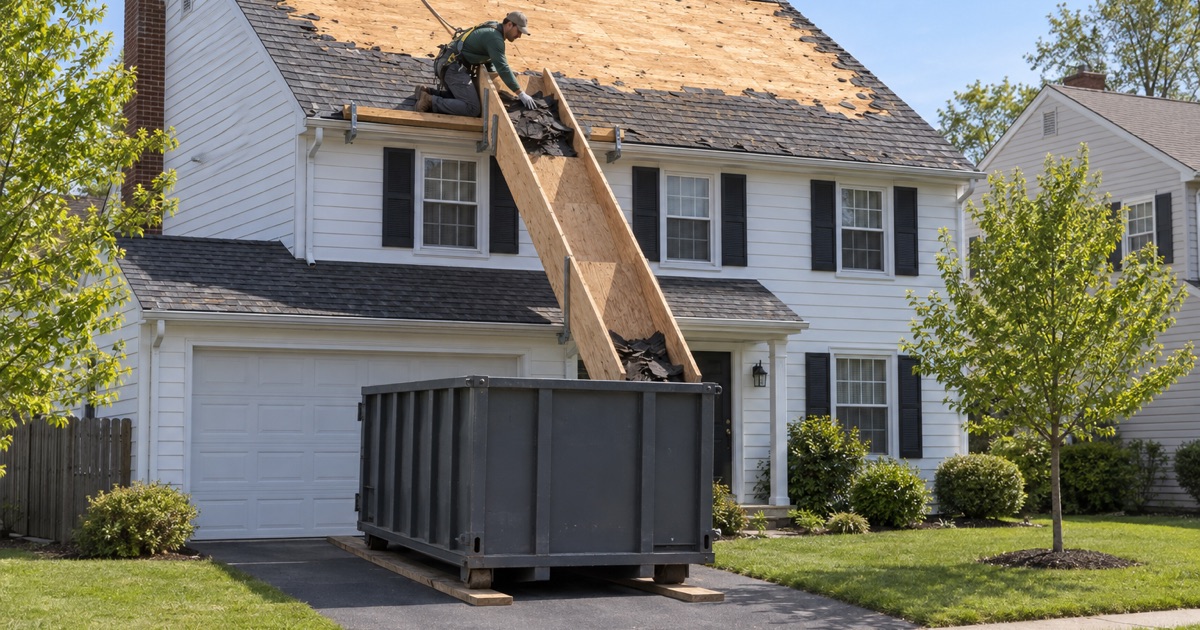
Many homeowners assume a dumpster on their own driveway is their own business. In Bordentown Township it is not. Ordinance 2019-11, introduced June 10, 2019 and adopted June 24, 2019, requires a permit before any dumpster, pod, roll-off container or similar temporary container is placed on any property in the township, or on a street or right-of-way.
The ordinance names who applies: the owner of the property using the container, or the person contracting for the container. The permit comes from the township’s Community Development Office. The ordinance’s own preamble recognizes that these containers are needed when people move and when a property is being renovated, so the rule is about how a container is placed, not whether you may have one.
What the Application Asks For
The township’s Application for Storage Pod/Trash Container, the version marked Rev. 3/22, is a short form. It asks for the block, lot and zone, the work site address, whether the container is a pod or a dumpster, and whether it will sit in the driveway or on the street. It also asks for the start and end dates and whether the house is on a corner lot.
The applicant checks off what is attached, with a plot plan and any homeowners association approval listed on the form. The ordinance also calls for a 24-hour emergency contact. A Zoning Officer signs the application, and there is a box for whether police approval is needed.
Up to 30 Days, a $10 Fee and a 90-Day Ceiling
Under the ordinance, a permit is valid for up to 30 days. Extensions can be requested, but the total time may not exceed 90 days, unless the Code Enforcement Official uses the discretion the ordinance allows for an emergency home repair or other extenuating circumstances.
The ordinance sets the application fee at $10, and the Rev. 3/22 form lists the same $10, exact cash or check. Those are the figures we have read in the 2019 ordinance and on that form. The township’s codified fee schedule was not part of what we reviewed, so confirm the amount with the office when you apply.
Fitting a Tear-Off Inside the Window
A typical house replacement uses only a small part of a 30-day permit. The risk is the job that slips: a week of rain, a material delay, or rotted decking that takes longer than expected. We set the container dates with some slack on either side of the work, so a short delay does not push the box past the dates on the permit.
We also try not to have the container arrive long before the crew does. A container that sits empty for a week is using permit days and blocking your driveway for nothing. Our scheduling puts the drop as close to tear-off day as the hauler allows.
Looking for roofing closer to Metuchen? See Roofing Services in Metuchen.
Where the Container Can Sit
Placement is the part of the ordinance that changes the most from house to house. The default is simple, and the exceptions depend on the shape of your lot. It helps to know which case you are in before the hauler’s truck shows up.
Driveways and Paved Areas Off the Street
The ordinance says a container must be placed on a driveway or other suitably paved area, at a point off the street. It must not block the sidewalk, the driveway entrance or the line of sight from the roadway. For most houses that means the driveway, set back far enough that a driver backing out of the next house can still see the road.
We look at the driveway during the estimate, not on drop day. A short driveway, a slope toward the street or a tight turn can decide which end of the house the tear-off comes down on and where the crew carries debris. ACS 2024 figures count 2,492 detached houses in the township, and lot layouts on those houses vary enough that the plan is worth settling early.
Corner Lots and Houses Without a Driveway
If a lot has no driveway, sits on a corner, or has a driveway where placement is impracticable, the ordinance requires the Code Enforcement Official to preapprove where the container goes. The exception is an emergency home repair caused by a fire or similar event. The question on the application about a corner lot is there for this reason.
A corner lot matters because a container near the curb can block the view of drivers coming around the turn. If your house is on a corner, expect the location to be part of the approval rather than something the hauler decides when the truck backs in. A plot plan showing the spot makes that conversation shorter.
Street Placement and Association Rules
Putting a container on the street, a right-of-way or other public property takes preapproval from the Bordentown Township Police Department. The ordinance also requires reflectors or other safety markings on a container in the street. That is a separate step from the Community Development permit, which is why the form has its own police approval box.
In multifamily districts without a dedicated driveway or garage, or where a condominium or homeowners association owns the parking, the association’s placement rules also apply. In townhouse communities we check the association’s documents for who holds the roof before writing an estimate. The same documents often say where a container may go.
One Container, Six Feet High: Sizing a Tear-Off for the Rule
Two lines in the ordinance shape how a tear-off is staged. Only one container may sit at a residential property at a time, and a disposal container has a size limit. Both affect how the debris leaves the roof and how often the box gets swapped.
The Dimension Limits on a Disposal Container
The ordinance says a temporary disposal container may be no more than six feet high, 22 feet long and 7.5 feet wide. Storage containers such as pods carry different limits. The six-foot height is the one to watch on a roofing job, because a container’s height is what decides how much it holds on a given footprint.
We have not seen anything that compares a given hauler’s containers to that cap, and sizes vary by company. When we order a container, we give the hauler the township’s height, length and width limits and ask for one that meets all three. We would rather confirm the dimensions before the drop than learn about them from a code officer.
Only One Container at a Time
The ordinance allows only one container at a residential property at one time, except where the Code Enforcement Official approves more for an emergency home repair. On a roof with two or three layers, or heavy decking replacement, one box can fill before the tear-off is finished. That means a swap, not a second box beside the first.
We plan the tear-off in sections when a swap is likely, so the crew is not stacking debris on your lawn while the hauler is on the way. Old shingles go straight from the roof edge into the container wherever the layout allows. Anything that cannot go in right away is tarped and kept off planting beds.
What Goes in the Box, and What We Show You First
Once the old roof is off, we can see the decking. Damaged sheets are photographed and shown to you before they are replaced, at a per-sheet price already written into the contract. The old decking then goes into the same container as the shingles.
Flashing is not saved for reuse. Step, counter and chimney flashing is replaced with the new roof, so the old metal goes in the box too. At the end of each work day the driveway, yard and gutters are cleaned, and we run a magnet over the ground to pick up roofing nails.
Who Answers for the Container
The ordinance does not leave liability on the hauler alone. It makes the contractor and the property owner jointly responsible for compliance. That is a reason for everyone on the job to know the rules before the container is ordered.
Contractor and Owner, Jointly Responsible
A violation can bring a fine of up to $500, and each day is a separate offense. A container left after its permit expires can be removed by the township after notice, with the owner given up to five days, and the removal and storage charges come on top of any fines. A container that overstays by a week can cost far more than the permit did.
That is why the container dates sit in our schedule next to the work dates. Who applies on a particular job is a detail we settle with each owner, since the ordinance names the owner or whoever contracts for the container. Either way, we make sure the permit dates and the crew’s plan agree.
The Container Permit Covers the Container
The Ordinance 2019-11 permit governs the dumpster: its placement, its size and how long it stays. It is a township rule about a temporary container. It does not describe the roofing work, and it should not be read as a substitute for anything else a particular job may need.
Our contracts are written to New Jersey’s home improvement rules, including the three-day cancellation notice. The scope, the decking price and the schedule are in writing before work begins. If storm damage brings you to us, we photograph it and write it up for your own claim, and we will meet your adjuster on site when you ask.
What Every Bordentown Township Roof Still Gets
The container rules change the logistics, not the roof. On every replacement we check attic ventilation, because a roof that cannot breathe ages from underneath. If you have solar panels, removal and reinstallation are built into the schedule rather than discovered on the day.
If you are selling, we can write a roof condition report for you to hand to the buyer’s inspector. After a wind storm, tarps and temporary repairs go on the same day, with photos taken before anything is moved. Call Howell Quality Roofing, and we will plan the roof and the container together.
- 20+ Years on Monmouth County Roofs
- Line-Item Written Estimates
- Same-Day Storm Tarping