Howell Quality Roofing has spent more than 20 years on roofing in Beachwood and across Ocean County, and a good share of that work starts after a storm rather than on a maintenance calendar. We repair and replace shingle roofs, flashing and gutters on detached houses, and we tell an owner plainly whether a roof can be repaired before replacement ever comes up.
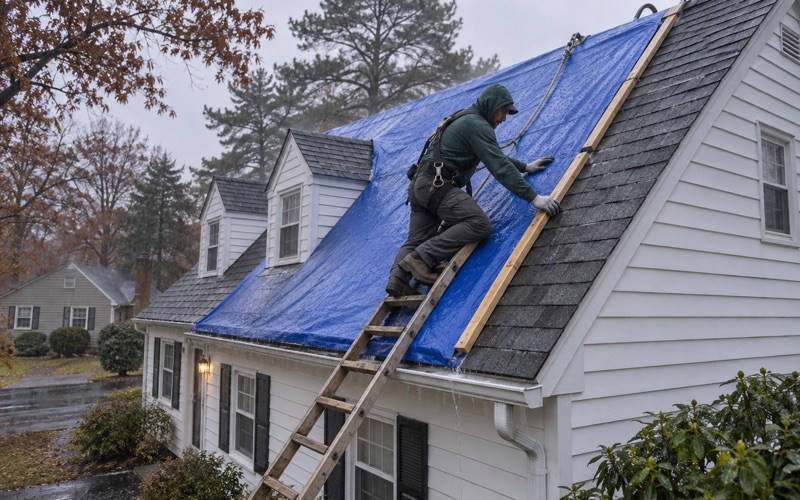
When wind has been through, the first job is keeping water out. Our crews put tarps and temporary repairs on the same day after a wind storm, and we photograph the roof before anything is moved, so the record shows the damage the way the storm left it.
This page follows one storm in particular, the line of thunderstorms that crossed the borough on June 3, 2020. It shows what a fast wind event can do to a roof, what to check once the lights are back on, and how we write up storm repair so an owner can compare estimates line by line.
June 3, 2020: the derecho over Beachwood
For many households here, that afternoon meant lost power and trees coming down. The weather record behind it is short, but it is specific enough to explain why a roof check made sense afterward.
A thunderstorm line, not a hurricane
A derecho is a long-lived line of thunderstorms that drives damaging straight-line wind across a wide area. The one on June 3, 2020 crossed New Jersey in under an hour, reaching the Delaware River around 12:30 p.m. and Long Beach Island by 1:15 p.m., and the Wikipedia account of the storm says it was most severe in Ocean County.
It was never a named hurricane, and that distinction matters when an owner later reads a homeowners policy. The storm cut power to about 200,000 New Jersey customers, and the next day roughly 100,000 New Jersey homes and businesses were still waiting for it to come back.
Trees down in the borough
The National Weather Service office in Mount Holly keeps local storm reports, and the entry for Beachwood that afternoon is brief: several trees down, at about 1:00 p.m., with the time estimated from radar. Minutes later, a utility report from Toms River listed numerous trees and power lines down.
That is the whole Beachwood record. It holds no wind measurement inside the borough and describes no damage to any roof, so we do not claim either one. What it does tell an owner is that falling trees were part of that afternoon here, and a tree that comes down near a house can reach the roof on its way.
The gusts measured nearby
The wind readings came from instruments just outside the borough. A New Jersey Weather Network sensor in Berkeley Township recorded a gust of 67 mph, and the automated weather station at the Ocean County Airport logged 59 mph, both within a few minutes of the Beachwood report.
Those are readings at a gauge, not at any particular house. How hard a given roof was hit depended on its height, the direction its slopes faced and how many tall trees stood around it, which is why we look at each roof rather than at a map.
Looking for roofing closer to Wanamassa? See Roofing Services in Wanamassa.
What a fast wind line does to a shingle roof
A derecho does not need to blow for hours to cause trouble. A few minutes of strong gusts, plus whatever the trees drop, is enough to open up a roof in ways that are easy to miss from the driveway.
Lifted and missing shingles
Asphalt shingles are held by nails and by a factory sealant strip that bonds each course to the one below it. A strong gust gets under an edge, breaks that bond and folds the tab back; sometimes the shingle tears away, but often it settles back down looking almost normal with its seal broken.
A shingle that has lost its seal is usually the next one to go. On a roof that has already spent many summers in the sun, the sealant and the shingle mat are both less forgiving, so we treat any creased or loose course as something to check by hand rather than judge from the ground.
Limb strikes
A falling limb does damage that wind alone does not. It can crack shingles, punch through to the decking, bend the drip edge and crush a ridge vent, and a heavy one can split a rafter even when the shingles above it look mostly intact.
Smaller branches cause quieter problems. They scrape granules loose, pile up in valleys and hold water against the roof, which is why we call out overhanging limbs and debris-packed valleys in the written estimate on any wooded lot.
Gutters and roof edges
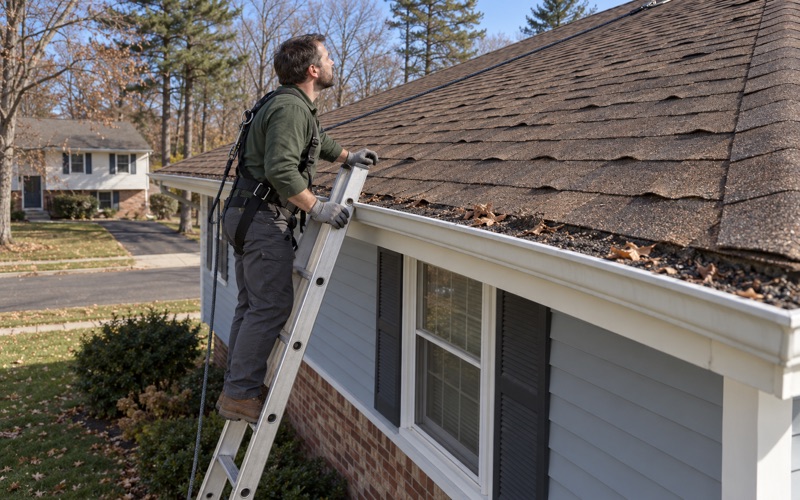
Wind and branches both work at the edges of a roof. Gutters pull away from the fascia, hangers bend and leaders come loose, so the water the roof sheds lands against the siding and foundation instead of being carried off.
The eaves and rakes are also where wind gets its first grip. A loose drip edge or a lifted starter course is often the first visible sign that a gust worked its way under the field shingles, and it is one of the first places we look.
Checking a roof after the power comes back
Once the storm has passed and the roads are clear, a calm, orderly check is worth more than a hurried climb. Here is how we suggest owners start, and what we do when we arrive.
What an owner can safely look for
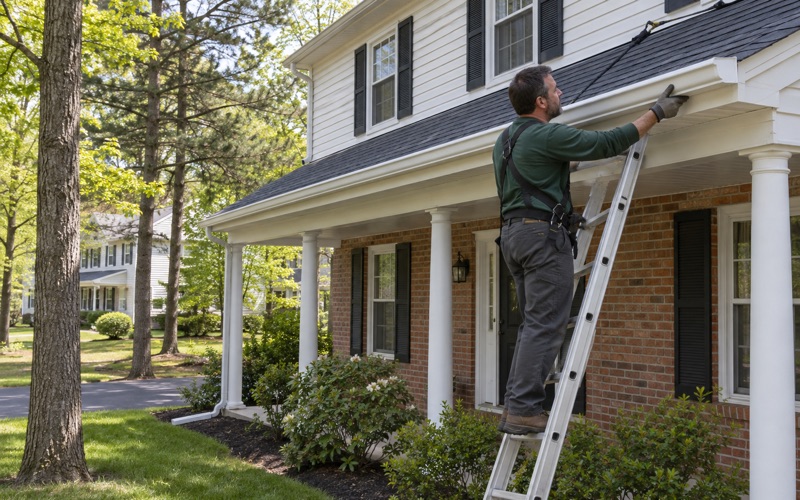
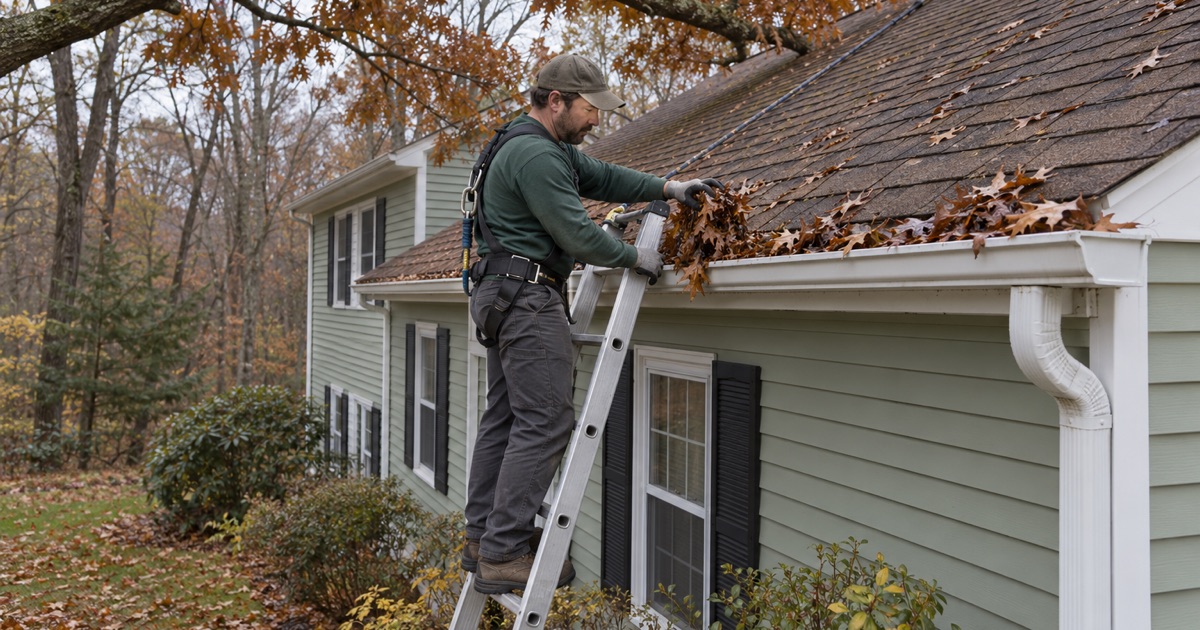
The first look should come from the yard and from inside the house, never from a ladder on a wet roof. Look for shingle pieces on the lawn, dark gaps or creases on the slopes, limbs resting on the roof, sagging gutters and any new stain on a ceiling or around a chimney.
Take dated photos before you clean anything up. Pictures of the yard, the roof and the inside of the house as the storm left them are what you will want for your own records and for any claim you decide to file.
Our inspection, roof and attic
When we come out after a wind event, we check the roof surface and we also go into the attic. Daylight through the decking, wet insulation or a fresh stain on a rafter shows where water actually got in, which is not always under the shingle that looks worst from outside.
We photograph what we find and put it in writing for the owner. If the owner asks, our crew will meet the insurance adjuster on site, but the claim stays the owner’s to file and manage with their own insurer.
Temporary repairs the same day
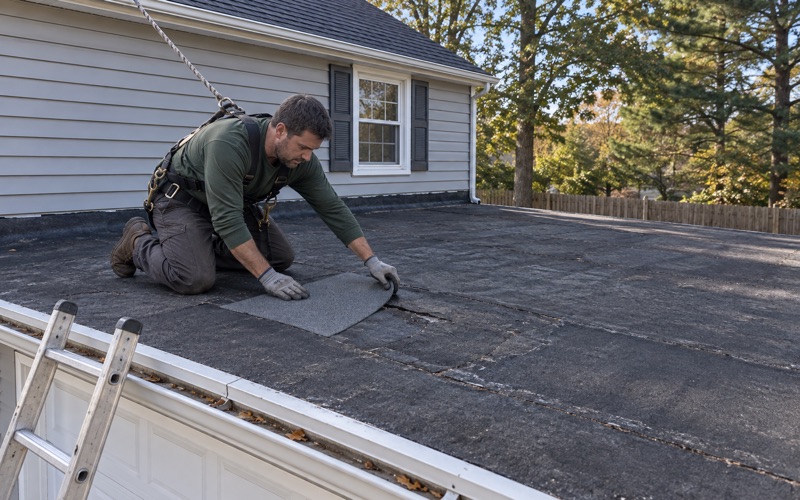
An open spot on a roof cannot wait for an estimate to be signed. We put tarps or temporary patches on the same day after a wind storm, photographing the damage first so nothing is lost from the record.
A temporary repair buys time to price the permanent work properly. It also keeps rain out of the decking and insulation, which is where a small storm repair tends to grow into a large one.
Storm repair on Beachwood’s detached houses
Beachwood began as a planned summer colony on land bought from Berkeley Township in 1914, and it was incorporated as a borough in 1917. Today it is mostly owner-occupied houses, and the way those houses were built shapes how storm repair goes.
Houses from the 1970s
Beachwood is almost entirely detached houses: census estimates count 4,245 detached homes out of 4,258, and 1,182 of them were built in the 1970s, the largest single decade in the borough’s housing. Many of those houses have been reroofed since, but the framing, decking and attic ventilation they were built with are still under whatever is on top today.
Age like that tends to show during a storm repair. On houses of that era we often find decking softened at the eaves, vents too small for the attic they serve and chimney flashing that has been reused more than once, so we look for all three before we price anything.
Repair first, replacement when it is needed
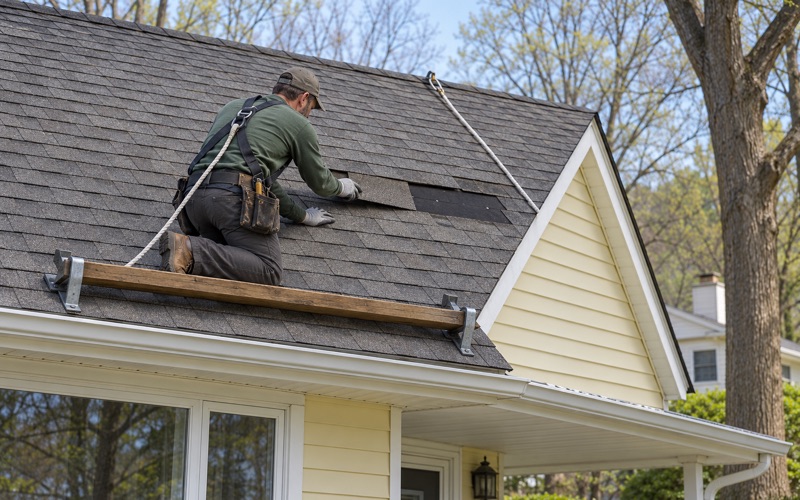
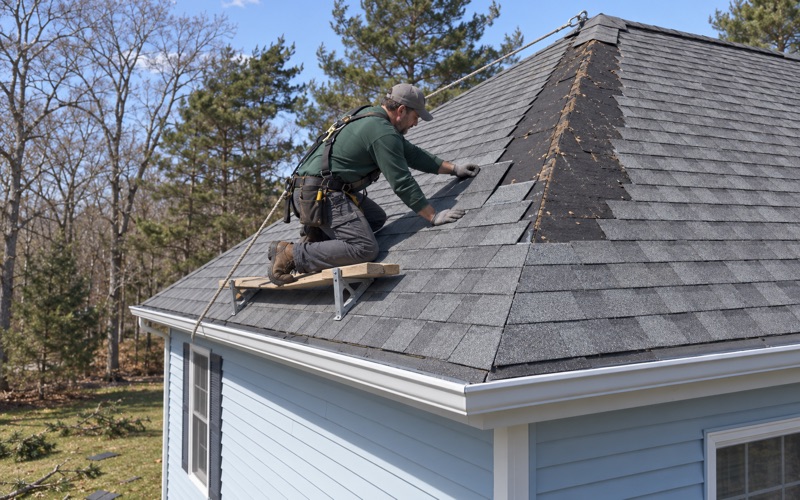
Much of the wind damage we see is a repair: a group of shingles replaced, an edge resealed, a gutter rehung. We say so plainly when a roof can be repaired, and we raise replacement only when the damage or the roof’s overall condition makes another repair a poor use of money.
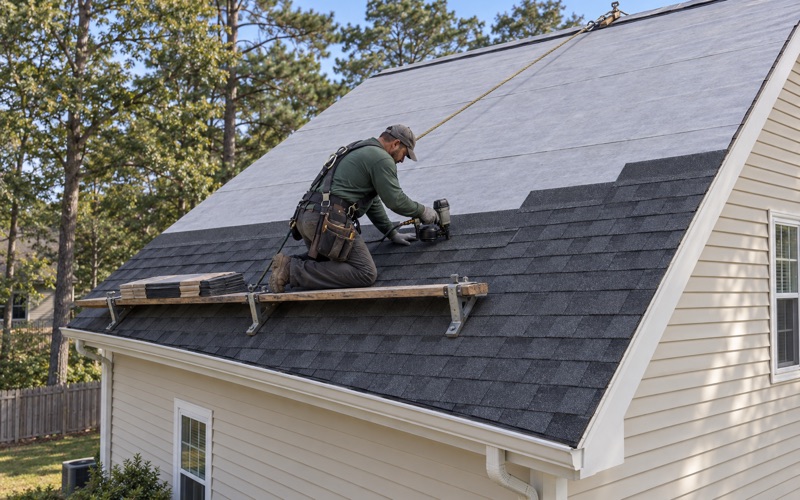
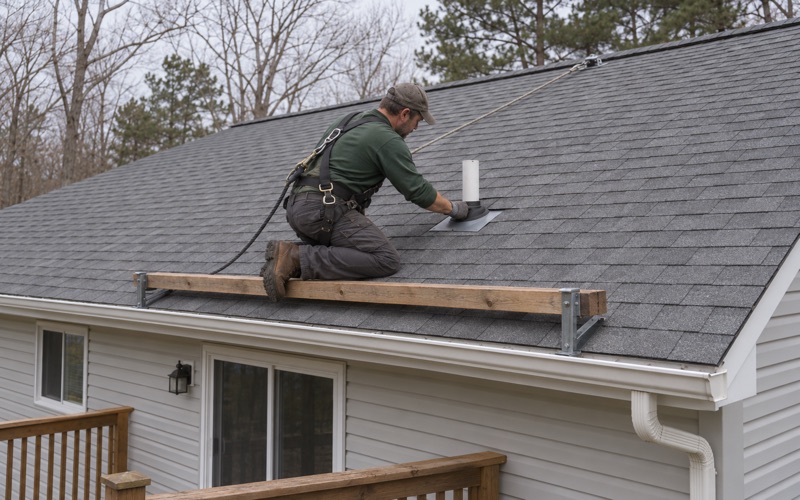
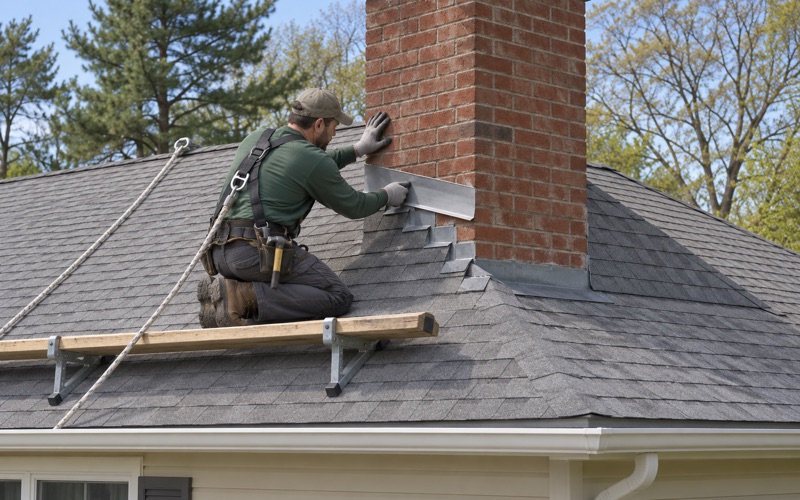
When a full replacement is the right call, we replace step, counter and chimney flashing along with the roof instead of reusing it under new shingles, and we check attic ventilation, because a roof that cannot breathe ages from the underside. Under New Jersey’s construction code, re-roofing a detached one- or two-family house is ordinary maintenance that does not call for a building permit.
Estimates you can compare
Our written scopes list tear-off, decking, underlayment, flashing, ventilation and gutters as separate lines, so two bids after the same storm can be set side by side item by item. If rotted decking turns up once the old roof is off, we photograph it and show the owner before replacing it, at a per-sheet price already set in the contract.
Contracts follow New Jersey’s home improvement rules, including the three-day cancellation notice. At the end of every work day the crew cleans the driveway, yard and gutters and runs a magnet across the ground to pick up stray roofing nails.
Wooded lots and the next storm
The trees that came down across the borough that June afternoon are a reminder of how close many roofs sit to large limbs. Where branches hang over a roof, we note them in the estimate so the owner can arrange trimming before the next line of storms comes through.
Shingle choice helps as well. Architectural shingles rated to ASTM D3161 Class F or ASTM D7158 Class H are tested for higher wind, and we install them with the starter strip and nailing pattern their manufacturers call for, since a wind rating depends on the shingle being fastened the way it was tested.
- 20+ Years on Monmouth County Roofs
- Line-Item Written Estimates
- Same-Day Storm Tarping