Howell Quality Roofing brings more than 20 years in the trade to roofing in Allenwood, and one of the most useful calls we get here comes before any work is due at all. It comes from an owner weighing a rooftop solar array who wants to know whether the shingles under it will outlast the panels. That question is far cheaper to answer now than after the array is bolted down.
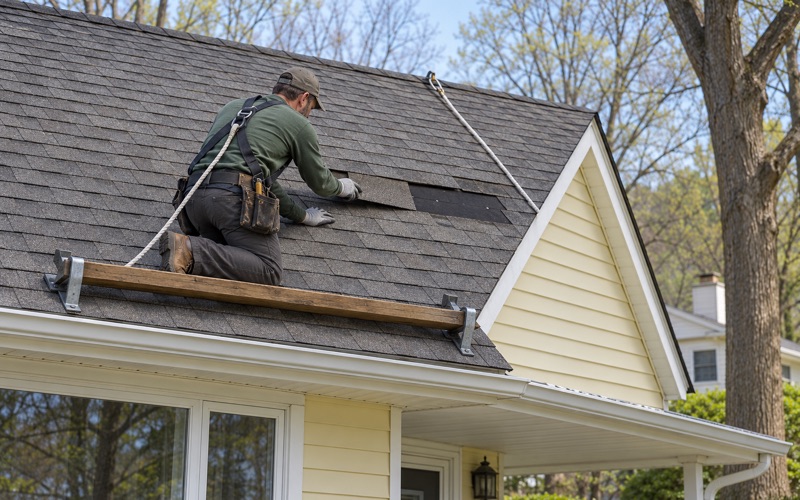
Our first answer is always about repair. If a roof has years left and needs a few courses of shingles, a new pipe boot or a rebuilt valley, we say so before replacement comes up. On any leak call we also go into the attic, so the water is traced to the point where it actually enters before a single line is priced.
When replacement is the right call, our written scope breaks the job into tear-off, decking, underlayment, flashing, ventilation and gutters as separate lines. That lets an owner set two estimates side by side and compare them item by item. Where panels are involved, their removal and reinstall go into the schedule from the start rather than surfacing on the morning of the tear-off.
Allenwood Houses and Wall Township Paperwork
Allenwood is an unincorporated community and census-designated place in the southern part of Wall Township, in Monmouth County. It has no government of its own, so every permit, zoning question and code answer for an Allenwood address runs through Wall Township. Its edges are easy to picture: Route 34 along the northeast, the Garden State Parkway along the northwest, and the Manasquan River along part of its southern border.
The housing is about as uniform as it gets. The Census Bureau’s 2024 five-year estimates count 265 housing units in Allenwood, and every one of them is a single-family detached house. Of 237 occupied homes, 226 are owner-occupied.
Owners decide for themselves
With no condominiums, townhouses or apartment buildings in that count, there is no association standing between an Allenwood owner and the roof. Nobody else holds the shingles, the decking or the decision to put panels on top of them. That makes the owner the one person who has to weigh the roof and the array together.
It also means the timing is entirely the owner’s. A homeowner who plans to stay in a house for the life of an array has every reason to make sure the roof underneath can last as long as the panels do.
An older housing stock
The same estimates put 88 of Allenwood’s 265 units before 1940, and 121 before 1950, which fits a crossroads with a long history. The margins at a place this size are wide, so we treat those numbers as a rough picture, not a count of any one street. Even so, a good share of the houses here have older framing and roofs that have likely been redone more than once.
On an older house, a tear-off sometimes turns up two or more layers of shingles, or plank sheathing that has to be evaluated before anything new goes on. Finding that out on an inspection, rather than mid-job, is part of judging how much life a roof really has left.
Looking for roofing closer to Brick? See Roofing in Brick.
Solar Panels on Wall’s Residential Zoning Permit
In Allenwood, a rooftop array starts in Wall Township’s land-use office. Wall’s Zoning Permit Application for residential property lists the kinds of proposed construction it covers, and item 15 on that list is Solar Panels. It sits alongside sheds, decks, generators and additions on the same form.
Wall’s Building Department page describes this zoning permit as separate from construction permits. In other words, the zoning application is one piece of the paperwork, and whatever construction permits apply are their own matter.
What the zoning form asks for
The application’s checklist calls for two copies of an accurately scaled survey or plot plan showing setbacks, plus one set of construction drawings. The form also asks whether the property is on septic and whether it is on a well. The fee list names fences, decks, generators, pools, accessory buildings, additions and new homes, but it does not name solar panels.
We have not seen a fee set out specifically for solar, so we do not quote one. Your installer or Wall’s zoning office can tell you what applies to your application.
What we do not answer
We have not read Wall’s rules on whether an array also needs electrical or building permits, and we will not guess at them. That is a question for your solar installer and for Wall Township’s construction office. We sell roofing, not panels, and the array itself belongs to the company that designs and installs it.
What we can do is make sure the roof is ready to carry an array for its full working life. That part of the decision belongs on the calendar before the survey and drawings are gathered.
Why the roof comes before the application
The construction drawings for an array show it sitting on a specific roof. If that roof has only a few years left, the array will have to come off again soon after it goes up, and the owner pays for that removal and reinstall in addition to the new roof.
Settling the roof’s remaining life first keeps the order simple. Either the roof is sound and the application goes ahead, or the roof is replaced and the array goes onto new material that should last as long as it does.
Judging Remaining Life Before Panels Go On
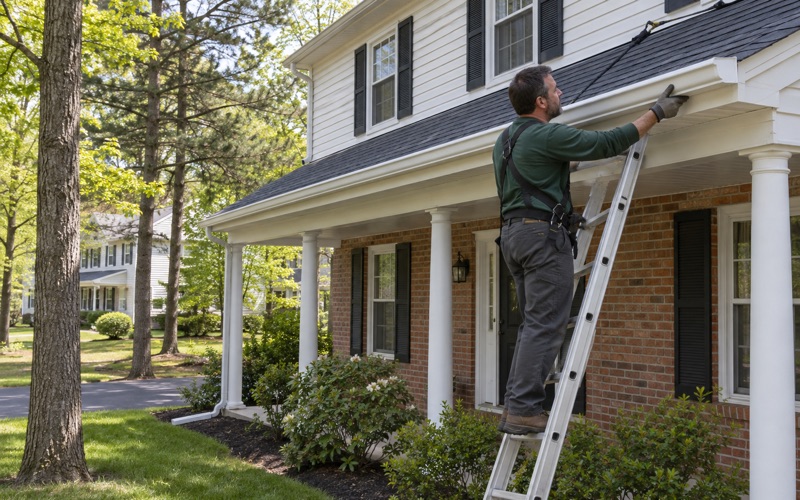
A roof can look fine from the driveway and still be closer to the end than an owner expects. Our inspection is built to answer one practical question: will this roof outlast the panels about to be mounted on it?
Starting in the attic
We go into the attic on these inspections, not just onto the roof. Old staining on the decking, darkened nail tips, soft spots and daylight around penetrations all tell us more about the roof’s age than the shingle surface does.
The attic is also where ventilation shows itself. A roof that cannot breathe ages from underneath, so we check intake at the soffits and exhaust at the ridge on every replacement, and we note it on a pre-solar inspection as well.
Reading the shingles and flashing
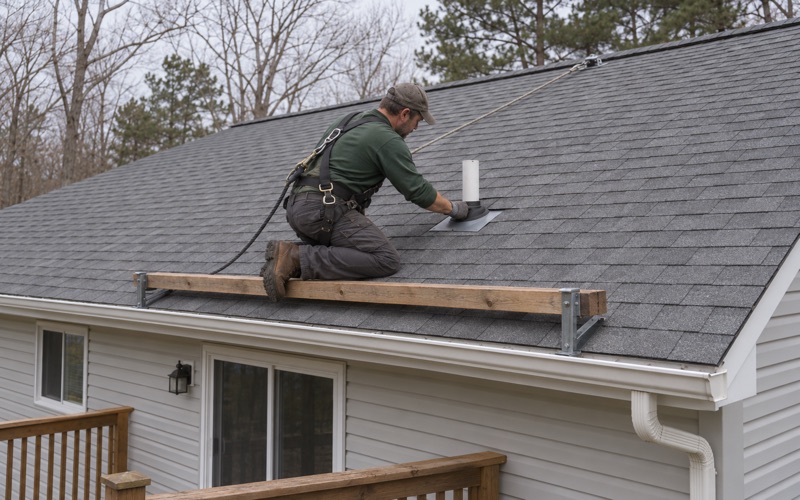
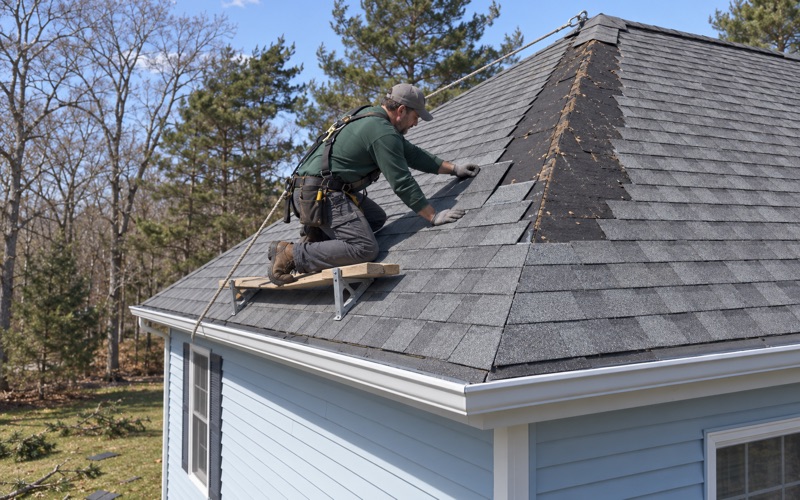
On the roof we look at granule loss, curled or cupped edges, lifted tabs with broken seal strips and brittle shingles that crack when bent. Pipe boots are a common weak point, since the rubber collars often fail well before the field shingles do.
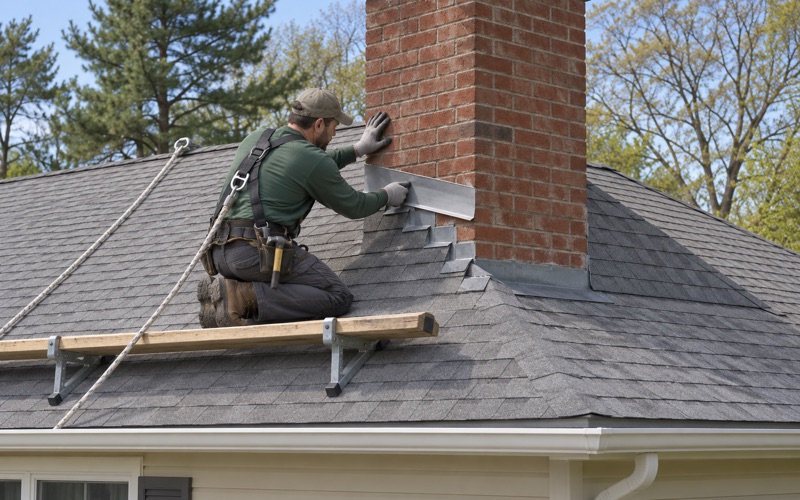
Flashing gets the same attention. Step flashing along walls, counter flashing at a chimney and the apron at the base of a dormer are all places where a roof can leak long before its shingles wear out. Any of them sitting under a planned array is worth fixing first.
A straight answer on repair or replace
If the roof has solid years ahead and needs a repair, we tell you that and price the repair. If it is near the end, we say so plainly and explain what we saw, with photos, so you can share them with your installer.
What we will not do is push a full replacement onto a roof that does not need one. The point of the inspection is to settle the question honestly, whichever way it falls.
Replacing ahead of an array
When the roof does need to be replaced, doing it before the array goes up is usually the cleanest order. The new roof goes on without anything in the way, and the panels are mounted onto fresh underlayment and shingles rather than worn ones.
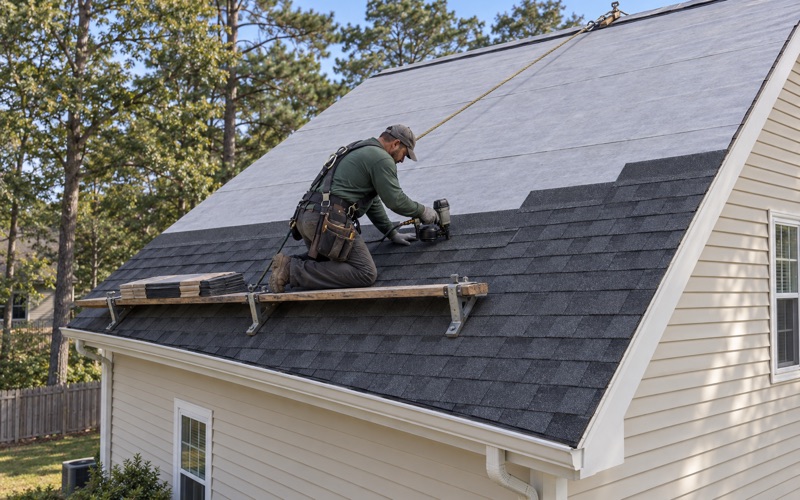
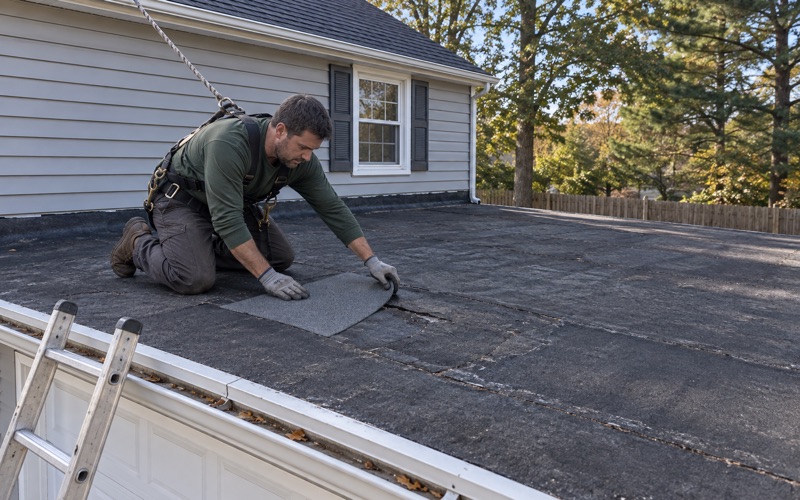
On a replacement we tear down to the deck, put a self-adhering ice and water barrier meeting ASTM D1970 at the eaves and valleys, add drip edge at eaves and rakes, and lay synthetic underlayment under the field. Step, counter and chimney flashing are replaced with the roof rather than reused.
Removing and Resetting Panels for a Later Re-Roof
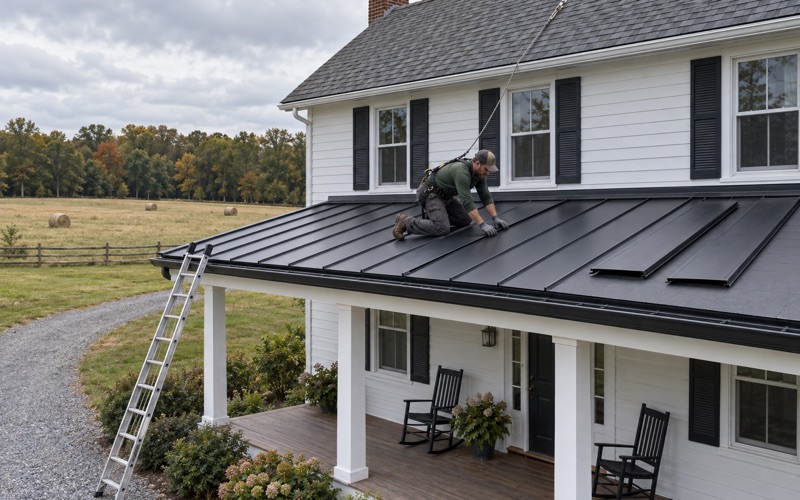
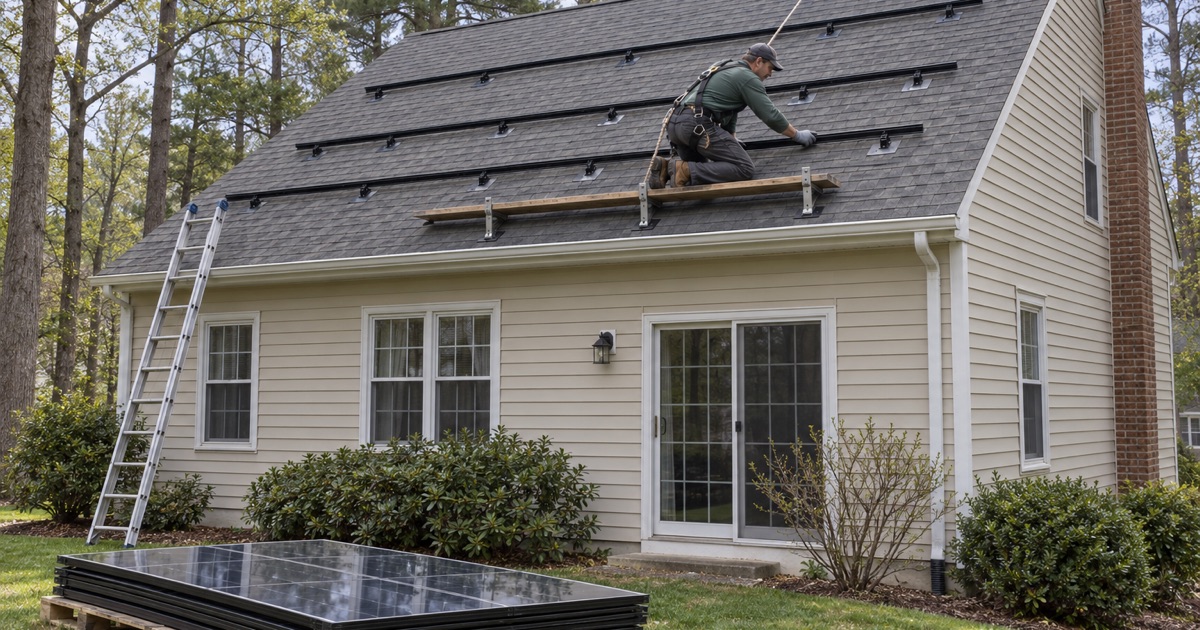
Panels bolted through a roof have to come off and go back on before that roof can be replaced. For owners whose arrays are already up, that is simply part of the job, and we plan it as one from the first visit.
Putting the panel work in the schedule
Our estimate names the panel removal and reinstall as its own step, with the dates set around it. The owner arranges that work with the solar company or another qualified party, and we line up the tear-off for when the roof is clear.
This keeps a crew from arriving to find panels still mounted, and it keeps the array from sitting off the roof longer than it needs to. Everyone knows the order before the first shingle comes up.
What we find under the array
Once the panels and old shingles are off, we look closely at the decking, especially around the old mounting points. Any damaged sheets are photographed and shown to the owner before they are replaced, at a per-sheet price already written into the contract.
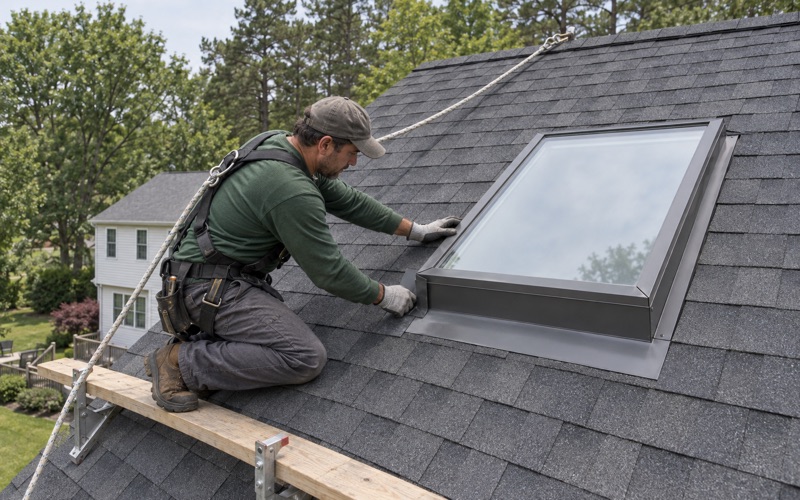
The spots where mounts went through the old roof need careful attention. We make sure the new roof is sound and watertight across the whole surface, so the array goes back onto a roof that is ready to carry it again.
Contracts and cleanup
Our contracts are written to New Jersey’s home improvement rules, including the three-day cancellation notice. The scope lists every part of the job separately, so an owner can see exactly what the roof portion costs apart from anything to do with the panels.
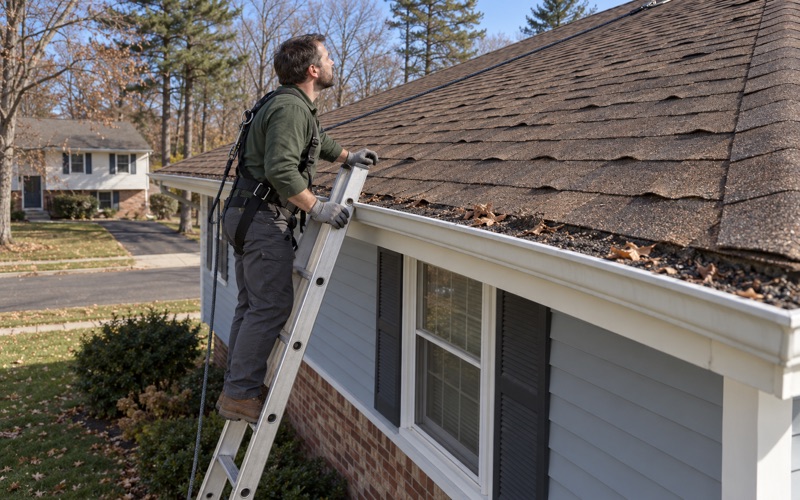
At the end of each work day we clean the driveway, the yard and the gutters, and we run a magnet sweep for roofing nails. With a roof and an array both being handled on the same house, a clean site matters to everyone working there.
When the house is being sold
If you are selling an Allenwood house, with or without an array, we can write up a roof condition report that you can hand to the buyer’s inspector. It sets out what we saw and what is left in the roof, which tends to settle questions before they become negotiations.
- 20+ Years on Monmouth County Roofs
- Line-Item Written Estimates
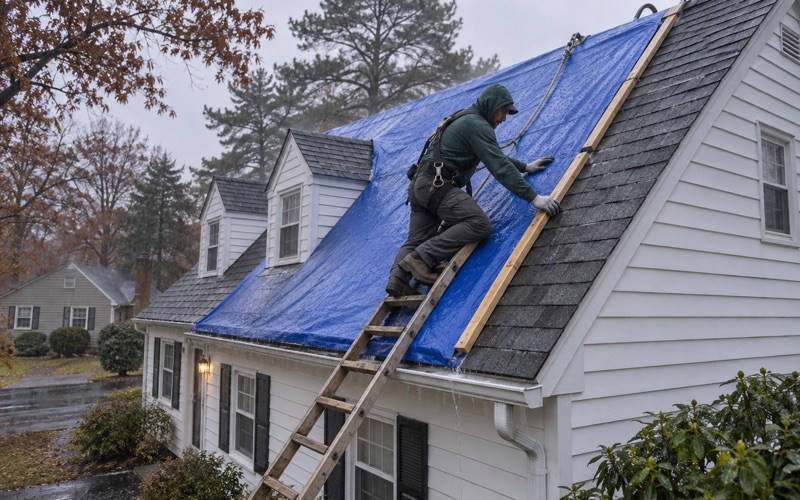
- Same-Day Storm Tarping